Committee hears National Guard-backed bill to broaden counter-drone authority, draws public opposition
January 23, 2026 | Legislative Sessions, Washington
This article was created by AI summarizing key points discussed. AI makes mistakes, so for full details and context, please refer to the video of the full meeting. Please report any errors so we can fix them. Report an error »
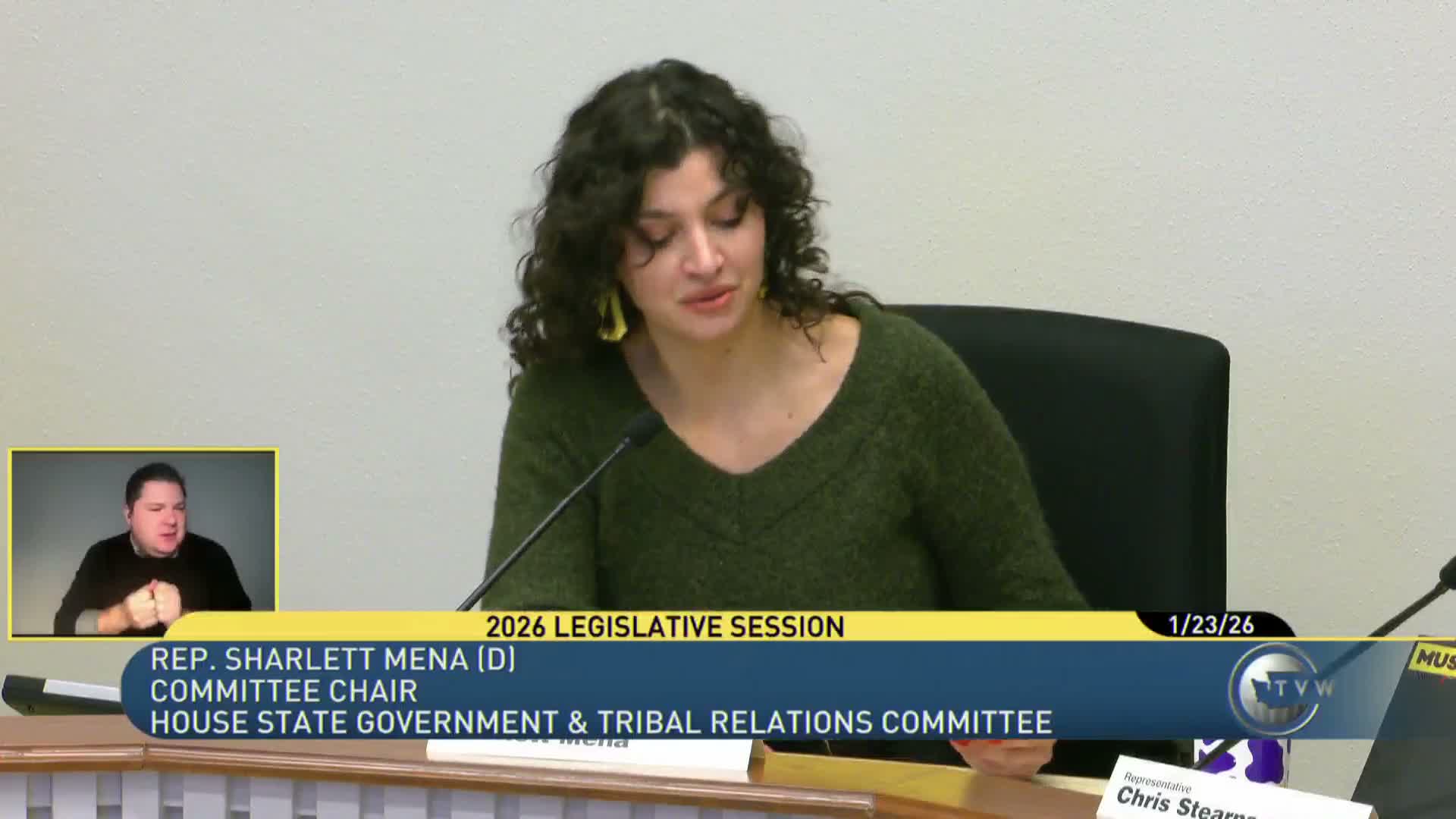
House Bill 24-62, which would require the governor to promulgate rules allowing the state and National Guard to assist law enforcement in countering unmanned aircraft systems, was the subject of a committee hearing that balanced operational safety concerns against civil-liberty questions.
Committee counsel opened the hearing by outlining the bill’s core elements: rules for organizing and training Guard units, detection and mitigation protocols, and authorization for the governor to order Guard forces into active service to support law enforcement when UAS pose credible threats to people, facilities, large events or critical infrastructure. Counsel described the bill as limited to use of federally authorized technologies and actions necessary to mitigate credible threats.
Representative Christine Reeves (30th Legislative District), the bill’s prime sponsor, said the measure is meant to give trusted state actors tools to protect residents and visitors, citing preparations for major events such as an upcoming FIFA tournament. "I wanna make sure that the folks that we trust in our government to do this work have the tools and resources necessary to protect every citizen in the state of Washington," Reeves said, while also acknowledging "nearly 600 plus people signed in in opposition to this" and that many opponents are concerned about transferring deployment authority to the governor.
Lieutenant Colonel Denny Fry of the Washington National Guard testified in support, describing operational gaps in current federal law and mutual-aid systems when local resources are overwhelmed. Fry said the bill "fixes these gaps while still respecting federal law" and would allow the governor, through the Adjutant General, to set clear rules and to authorize Guard support to aid incident commanders at law-enforcement request.
Committee members pressed witnesses about safeguards. Fry said Guard counter-UAS actions would be performed at the request of law enforcement and under governor direction and that coordination with tribal authorities would use an established tribal liaison and WebEOC mutual-aid processes.
Seattle resident Robert Cruz, testifying remotely, said he supports the bill with amendments and urged the committee to clarify rules, add a partner web portal for sharing information, and address data-privacy concerns. "I could also see ability to address data and data privacy concerns," Cruz said, and offered to submit written amendments.
The committee closed the hearing on HB 24-62 after receiving testimony and moved to other agenda items. No amendment votes or floor actions were taken on HB 24-62 during this meeting.
Committee counsel opened the hearing by outlining the bill’s core elements: rules for organizing and training Guard units, detection and mitigation protocols, and authorization for the governor to order Guard forces into active service to support law enforcement when UAS pose credible threats to people, facilities, large events or critical infrastructure. Counsel described the bill as limited to use of federally authorized technologies and actions necessary to mitigate credible threats.
Representative Christine Reeves (30th Legislative District), the bill’s prime sponsor, said the measure is meant to give trusted state actors tools to protect residents and visitors, citing preparations for major events such as an upcoming FIFA tournament. "I wanna make sure that the folks that we trust in our government to do this work have the tools and resources necessary to protect every citizen in the state of Washington," Reeves said, while also acknowledging "nearly 600 plus people signed in in opposition to this" and that many opponents are concerned about transferring deployment authority to the governor.
Lieutenant Colonel Denny Fry of the Washington National Guard testified in support, describing operational gaps in current federal law and mutual-aid systems when local resources are overwhelmed. Fry said the bill "fixes these gaps while still respecting federal law" and would allow the governor, through the Adjutant General, to set clear rules and to authorize Guard support to aid incident commanders at law-enforcement request.
Committee members pressed witnesses about safeguards. Fry said Guard counter-UAS actions would be performed at the request of law enforcement and under governor direction and that coordination with tribal authorities would use an established tribal liaison and WebEOC mutual-aid processes.
Seattle resident Robert Cruz, testifying remotely, said he supports the bill with amendments and urged the committee to clarify rules, add a partner web portal for sharing information, and address data-privacy concerns. "I could also see ability to address data and data privacy concerns," Cruz said, and offered to submit written amendments.
The committee closed the hearing on HB 24-62 after receiving testimony and moved to other agenda items. No amendment votes or floor actions were taken on HB 24-62 during this meeting.
View the Full Meeting & All Its Details
This article offers just a summary. Unlock complete video, transcripts, and insights as a Founder Member.
✓
Watch full, unedited meeting videos
✓
Search every word spoken in unlimited transcripts
✓
AI summaries & real-time alerts (all government levels)
✓
Permanent access to expanding government content
30-day money-back guarantee
