Builders back deferring water/sewer connection fees; utilities warn of shifted risk
January 23, 2026 | Legislative Sessions, Washington
This article was created by AI summarizing key points discussed. AI makes mistakes, so for full details and context, please refer to the video of the full meeting. Please report any errors so we can fix them. Report an error »
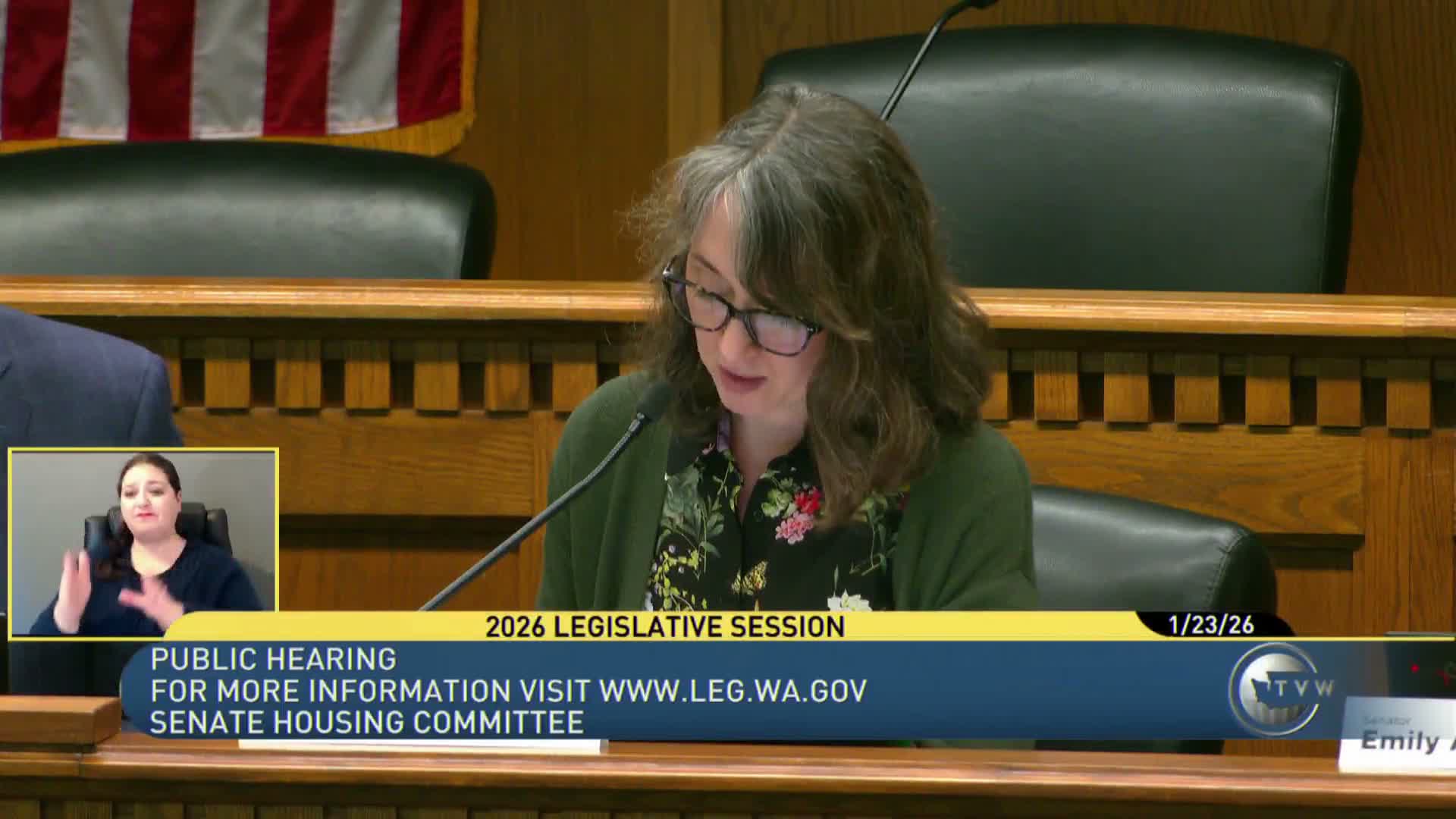
The committee heard SB 6,096 on Jan. 23, a bill that would require cities and towns to adopt a system by 2030 permitting deferred collection of water and sewer connection charges for qualifying residential construction, with options to defer until final inspection or certificate of occupancy.
Sponsor Senator Gaynor said the measure is meant to ease affordability and financing pressures on small builders by shifting the timing of connection charges, not eliminating them. "This bill simply moves the payment from the beginning of a project to the end, or near the end,” a supporter said, arguing the change frees capital for smaller builders.
Building industry groups — including the Building Industry Association of Washington and business associations — strongly supported the bill as a practical tool to reduce financing costs and lower barriers to housing production. Andrea Smiley said deferral improves cash flow and can translate into lower housing prices.
Water and sewer districts and city public‑works directors opposed the bill. Devin Gomboski of the Washington Association of Sewer and Water Districts warned deferral would require districts to build and finance projects upfront without certainty of developer payments, shifting private development risk to utilities and ratepayers. Maria Serra, Public Works Director for the City of Pasco, said connection charges fund expensive growth infrastructure and delaying revenue creates planning and financial risks for cities.
Committee members asked whether other states have similar programs and requested staff follow‑up on evidence about nonpayment or defaults; staff said they would provide additional information. Public testimony concluded and the committee closed the hearing without action.
Sponsor Senator Gaynor said the measure is meant to ease affordability and financing pressures on small builders by shifting the timing of connection charges, not eliminating them. "This bill simply moves the payment from the beginning of a project to the end, or near the end,” a supporter said, arguing the change frees capital for smaller builders.
Building industry groups — including the Building Industry Association of Washington and business associations — strongly supported the bill as a practical tool to reduce financing costs and lower barriers to housing production. Andrea Smiley said deferral improves cash flow and can translate into lower housing prices.
Water and sewer districts and city public‑works directors opposed the bill. Devin Gomboski of the Washington Association of Sewer and Water Districts warned deferral would require districts to build and finance projects upfront without certainty of developer payments, shifting private development risk to utilities and ratepayers. Maria Serra, Public Works Director for the City of Pasco, said connection charges fund expensive growth infrastructure and delaying revenue creates planning and financial risks for cities.
Committee members asked whether other states have similar programs and requested staff follow‑up on evidence about nonpayment or defaults; staff said they would provide additional information. Public testimony concluded and the committee closed the hearing without action.
View the Full Meeting & All Its Details
This article offers just a summary. Unlock complete video, transcripts, and insights as a Founder Member.
✓
Watch full, unedited meeting videos
✓
Search every word spoken in unlimited transcripts
✓
AI summaries & real-time alerts (all government levels)
✓
Permanent access to expanding government content
30-day money-back guarantee
