Committee reports out bills on scissor stairs, embodied carbon, permitting, heat plans and crash prevention zones
January 23, 2026 | Legislative Sessions, Washington
This article was created by AI summarizing key points discussed. AI makes mistakes, so for full details and context, please refer to the video of the full meeting. Please report any errors so we can fix them. Report an error »
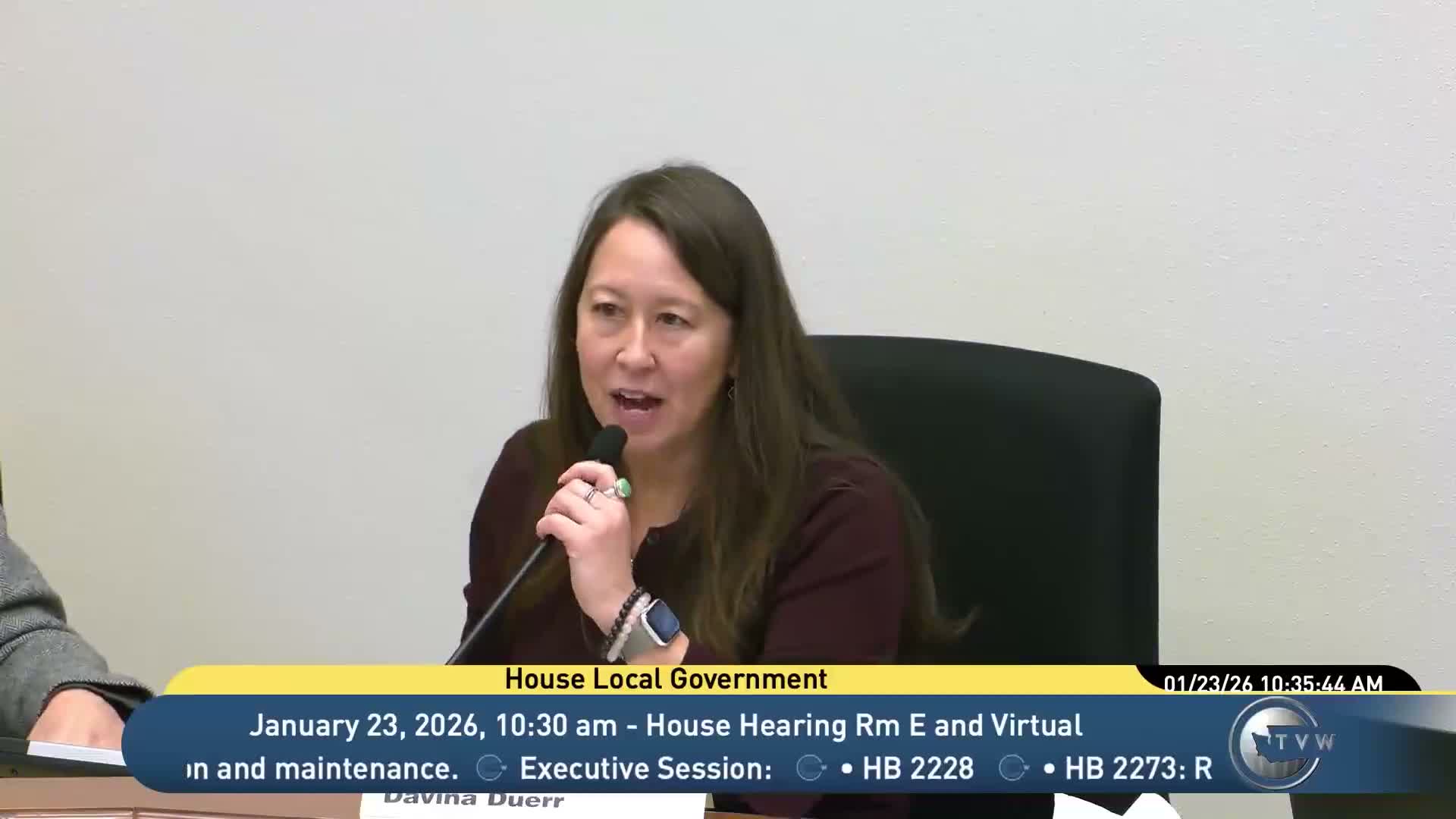
A House executive committee on Friday advanced a package of bills addressing building codes, permitting processes and public-safety measures, reporting each to the full House with recommendations for passage.
The committee reported substitute House Bill 3,079.2 for HB 2228 — a measure to allow the use of interlocking “scissor” stairs in certain occupancies — out of committee by voice vote. Vice Chair Zahn, who moved the substitute, said the change would “allow more of the floor plates of the buildings to be used for housing instead of stairs,” and noted the substitute requires those stairs to be “separately enclosed and divided by fire resistant rated assemblies.” Staff announced the tally as 7 ayes, 0 nays.
On embodied carbon, the committee voted to report House Bill 2273, which directs the state building code council to adopt rules reducing embodied carbon in building projects, create a reporting form and establish a database. Chair (unnamed) framed the measure as a way to account for greenhouse gases produced in construction, saying “embodied carbon can be reduced by 19% to 46% in buildings” and noting examples where cost premiums were “less than 1%.” After floor discussion that included industry concerns raised by Representative Griffey, the roll call was 4 ayes and 3 nays and the bill was reported out with a due-pass recommendation.
The committee also moved a substitute for House Bill 2381 to create a performance-based appendix to the International Building Code for low-rise residential buildings and to allow demonstrated reductions in embodied carbon to offset modeled energy requirements. The committee adopted amendment REN56 to allow regional flexibility in applying the performance pathway but rejected REN57, which would have removed mandatory adoption of the appendix by local governments. The substitute passed 4–3.
Permitting reforms in House Bill 2418 were advanced as a proposed substitute (H-3143.1) with amendment RICK 420 adopted to clarify that an applicant may waive review timelines at any time prior to permit denial. The substitute removes a vesting provision, defines “procedural completeness” for permit applications, and clarifies refund obligations for agencies that do not charge review fees; the committee reported the bill out unanimously, 7–0.
On public-safety and planning, House Bill 2183 was advanced with multiple stakeholder-sponsored amendments that (among other changes) replace the phrase “pregnant women” with “pregnant individuals,” reference existing Department of Labor and Industries heat-safety rules for outdoor workers, emphasize planning to avoid brownouts or blackouts during extreme heat, and clarify which county body develops the heat response plan; the substitute was reported out 4–3. Representative Parsley emphasized lessons from the 2021 heat dome, saying counties need plans to protect residents who cannot reach cooling centers.
Lawmakers also advanced House Bill 2224 (fire-protection districts) and House Bill 2174 (renamed crash prevention zones), adopting stakeholder changes to reduce conflicts over levy revenue and setting a $73 penalty for certain infractions in crash-prevention zones; HB 2224 passed out of committee 6–1 and HB 2174 passed 6–1.
Votes at a glance:
- HB 2228 (sub H-3079.2, scissor stairs): reported out, 7–0.
- HB 2273 (embodied carbon reductions): reported out, 4–3.
- HB 2381 (performance-based appendix / embodied carbon offsets): reported out, 4–3 (REN56 adopted; REN57 rejected).
- HB 2418 (permit review reforms, sub H-3143.1): reported out as amended, 7–0 (RICK 420 adopted).
- HB 2183 (county heat response plans): reported out as amended, 4–3 (multiple RIC amendments adopted).
- HB 2224 (fire protection districts, sub H-3142.1): reported out, 6–1.
- HB 2174 (crash prevention zones, sub H-3144.1): reported out, 6–1.
What’s next: Each bill will be placed on the House floor calendar for further consideration by the full chamber. The committee adjourned for the week.
Speakers quoted above are drawn from committee proceedings and staff briefings recorded in the session transcript.
The committee reported substitute House Bill 3,079.2 for HB 2228 — a measure to allow the use of interlocking “scissor” stairs in certain occupancies — out of committee by voice vote. Vice Chair Zahn, who moved the substitute, said the change would “allow more of the floor plates of the buildings to be used for housing instead of stairs,” and noted the substitute requires those stairs to be “separately enclosed and divided by fire resistant rated assemblies.” Staff announced the tally as 7 ayes, 0 nays.
On embodied carbon, the committee voted to report House Bill 2273, which directs the state building code council to adopt rules reducing embodied carbon in building projects, create a reporting form and establish a database. Chair (unnamed) framed the measure as a way to account for greenhouse gases produced in construction, saying “embodied carbon can be reduced by 19% to 46% in buildings” and noting examples where cost premiums were “less than 1%.” After floor discussion that included industry concerns raised by Representative Griffey, the roll call was 4 ayes and 3 nays and the bill was reported out with a due-pass recommendation.
The committee also moved a substitute for House Bill 2381 to create a performance-based appendix to the International Building Code for low-rise residential buildings and to allow demonstrated reductions in embodied carbon to offset modeled energy requirements. The committee adopted amendment REN56 to allow regional flexibility in applying the performance pathway but rejected REN57, which would have removed mandatory adoption of the appendix by local governments. The substitute passed 4–3.
Permitting reforms in House Bill 2418 were advanced as a proposed substitute (H-3143.1) with amendment RICK 420 adopted to clarify that an applicant may waive review timelines at any time prior to permit denial. The substitute removes a vesting provision, defines “procedural completeness” for permit applications, and clarifies refund obligations for agencies that do not charge review fees; the committee reported the bill out unanimously, 7–0.
On public-safety and planning, House Bill 2183 was advanced with multiple stakeholder-sponsored amendments that (among other changes) replace the phrase “pregnant women” with “pregnant individuals,” reference existing Department of Labor and Industries heat-safety rules for outdoor workers, emphasize planning to avoid brownouts or blackouts during extreme heat, and clarify which county body develops the heat response plan; the substitute was reported out 4–3. Representative Parsley emphasized lessons from the 2021 heat dome, saying counties need plans to protect residents who cannot reach cooling centers.
Lawmakers also advanced House Bill 2224 (fire-protection districts) and House Bill 2174 (renamed crash prevention zones), adopting stakeholder changes to reduce conflicts over levy revenue and setting a $73 penalty for certain infractions in crash-prevention zones; HB 2224 passed out of committee 6–1 and HB 2174 passed 6–1.
Votes at a glance:
- HB 2228 (sub H-3079.2, scissor stairs): reported out, 7–0.
- HB 2273 (embodied carbon reductions): reported out, 4–3.
- HB 2381 (performance-based appendix / embodied carbon offsets): reported out, 4–3 (REN56 adopted; REN57 rejected).
- HB 2418 (permit review reforms, sub H-3143.1): reported out as amended, 7–0 (RICK 420 adopted).
- HB 2183 (county heat response plans): reported out as amended, 4–3 (multiple RIC amendments adopted).
- HB 2224 (fire protection districts, sub H-3142.1): reported out, 6–1.
- HB 2174 (crash prevention zones, sub H-3144.1): reported out, 6–1.
What’s next: Each bill will be placed on the House floor calendar for further consideration by the full chamber. The committee adjourned for the week.
Speakers quoted above are drawn from committee proceedings and staff briefings recorded in the session transcript.
View the Full Meeting & All Its Details
This article offers just a summary. Unlock complete video, transcripts, and insights as a Founder Member.
✓
Watch full, unedited meeting videos
✓
Search every word spoken in unlimited transcripts
✓
AI summaries & real-time alerts (all government levels)
✓
Permanent access to expanding government content
30-day money-back guarantee
