Senate committee advances substitute for signature-gathering reform after hours of amendment votes
January 23, 2026 | Legislative Sessions, Washington
This article was created by AI summarizing key points discussed. AI makes mistakes, so for full details and context, please refer to the video of the full meeting. Please report any errors so we can fix them. Report an error »
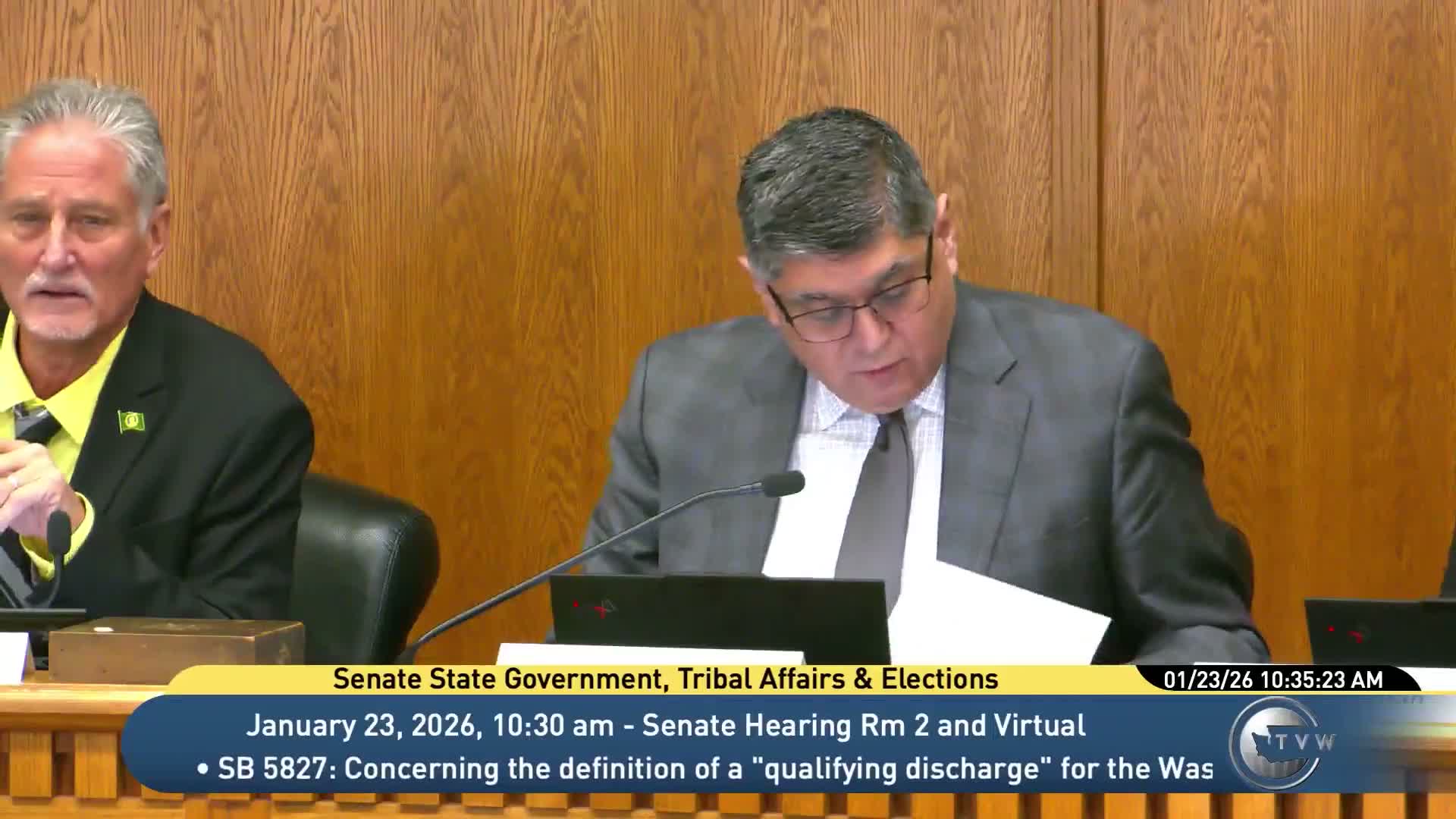
The Senate State Government, Tribal Affairs and Elections Committee on Jan. 23 advanced a proposed substitute to Senate Bill 5,973, a package of reforms aimed at the collection of signatures for initiatives and referenda, sending the substitute to the Rules Committee with a due-pass recommendation.
Committee staff summarized the bill as prohibiting pay-per-signature practices and (in the bill’s original form) requiring 1,000 signatures as a pre-filing threshold for initiatives. During an extended executive-session review, staff described proposed Substitute A (sponsored by Senator Valdez) and a set of 12 amendments to the substitute and 13 amendments to the underlying bill. The substitute removes the pre-filing requirement for referenda and specifies that any signatures collected to meet a pre-filing requirement would be counted toward the total required to file an initiative measure.
Debate focused on trade-offs between preventing fraudulent or commercially driven signature-gathering practices and preserving access to the initiative process. Senators offering amendments sought changes that included: creating a private right of action for intentional collection of invalid signatures; lowering the pre-filing threshold from 1,000 to 100; narrowing or eliminating citizen suits tied to paper signatures in favor of fraud-based civil actions; requiring paid gatherers to disclose payment status to signers; requiring petition signers to present identification; mandating online training and certification for gatherers; and increasing criminal penalties for paying or inducing signatures.
Senator Fortunato, who moved several amendments, described a citizen’s right of action to target intentional collection of invalid signatures and later sought to criminalize paying someone to sign an initiative. “If somebody is going out there and intentionally gathering signatures…that becomes a…crime,” Fortunato said while urging support for tougher post-filing remedies. Opponents, including the chair and several members, argued repeatedly that removing the 1,000-signature pre-filing safeguard would weaken the bill’s preventive framework and defer enforcement to a weaker, after-the-fact litigation model.
A series of voice votes rejected the amendments individually. Amendments that would have reduced penalties, required gatherer training, or imposed a $1,000 cap on damages were all presented and debated but were not adopted. After floor-length discussion on constitutional footing and process history, Senator Kaufman moved adoption of proposed Substitute A and a due-pass recommendation to Rules. The chair ruled that the substitute passed subject to signatures.
The committee record shows multiple members voiced concern that the bill could unduly burden the initiative process; others emphasized the bill’s goal of reducing the role of money and fraud in signature gathering. The committee’s action moves the substitute forward in the legislative process; the full Senate or Rules Committee will determine the bill’s next steps.
Votes and formal actions taken in committee were by voice and recorded as the chair’s rulings (the transcript records the voice votes and chair rulings but does not list roll-call tallies by name).
Committee staff summarized the bill as prohibiting pay-per-signature practices and (in the bill’s original form) requiring 1,000 signatures as a pre-filing threshold for initiatives. During an extended executive-session review, staff described proposed Substitute A (sponsored by Senator Valdez) and a set of 12 amendments to the substitute and 13 amendments to the underlying bill. The substitute removes the pre-filing requirement for referenda and specifies that any signatures collected to meet a pre-filing requirement would be counted toward the total required to file an initiative measure.
Debate focused on trade-offs between preventing fraudulent or commercially driven signature-gathering practices and preserving access to the initiative process. Senators offering amendments sought changes that included: creating a private right of action for intentional collection of invalid signatures; lowering the pre-filing threshold from 1,000 to 100; narrowing or eliminating citizen suits tied to paper signatures in favor of fraud-based civil actions; requiring paid gatherers to disclose payment status to signers; requiring petition signers to present identification; mandating online training and certification for gatherers; and increasing criminal penalties for paying or inducing signatures.
Senator Fortunato, who moved several amendments, described a citizen’s right of action to target intentional collection of invalid signatures and later sought to criminalize paying someone to sign an initiative. “If somebody is going out there and intentionally gathering signatures…that becomes a…crime,” Fortunato said while urging support for tougher post-filing remedies. Opponents, including the chair and several members, argued repeatedly that removing the 1,000-signature pre-filing safeguard would weaken the bill’s preventive framework and defer enforcement to a weaker, after-the-fact litigation model.
A series of voice votes rejected the amendments individually. Amendments that would have reduced penalties, required gatherer training, or imposed a $1,000 cap on damages were all presented and debated but were not adopted. After floor-length discussion on constitutional footing and process history, Senator Kaufman moved adoption of proposed Substitute A and a due-pass recommendation to Rules. The chair ruled that the substitute passed subject to signatures.
The committee record shows multiple members voiced concern that the bill could unduly burden the initiative process; others emphasized the bill’s goal of reducing the role of money and fraud in signature gathering. The committee’s action moves the substitute forward in the legislative process; the full Senate or Rules Committee will determine the bill’s next steps.
Votes and formal actions taken in committee were by voice and recorded as the chair’s rulings (the transcript records the voice votes and chair rulings but does not list roll-call tallies by name).
View the Full Meeting & All Its Details
This article offers just a summary. Unlock complete video, transcripts, and insights as a Founder Member.
✓
Watch full, unedited meeting videos
✓
Search every word spoken in unlimited transcripts
✓
AI summaries & real-time alerts (all government levels)
✓
Permanent access to expanding government content
30-day money-back guarantee
