Fire chiefs urge 60-day reimbursement timeline as committee hears mobilization-pay delays
January 23, 2026 | Legislative Sessions, Washington
This article was created by AI summarizing key points discussed. AI makes mistakes, so for full details and context, please refer to the video of the full meeting. Please report any errors so we can fix them. Report an error »
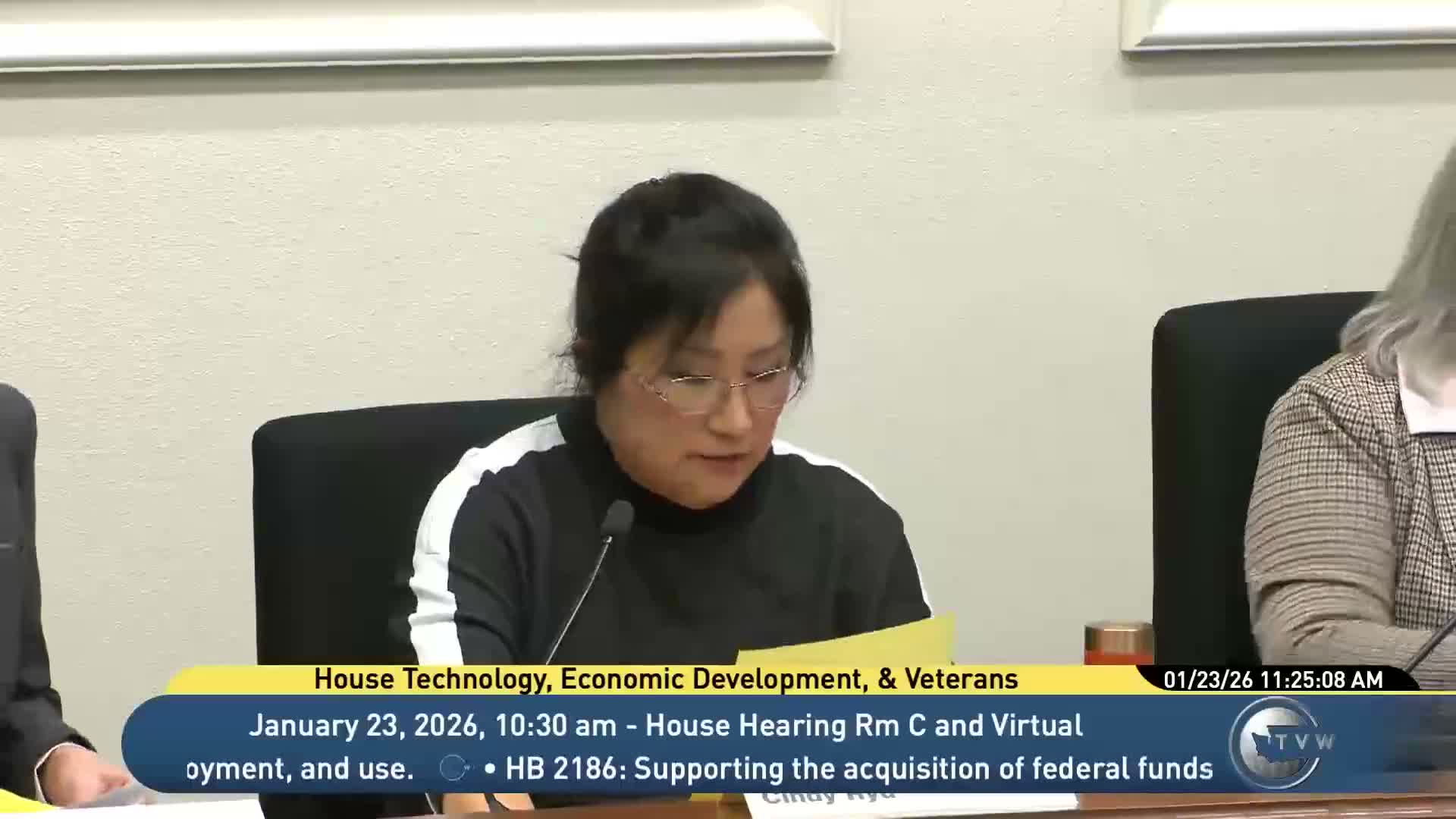
At a public hearing Friday, fire chiefs and finance officers urged the Technology, Economic Development & Veterans Committee to enact a 60-day reimbursement requirement for state reimbursements when local agencies are mobilized under the Washington State Fire Services Mobilization Plan.
Emily Poole, committee staff, summarized House Bill 2,397: the State Patrol must ensure plan reimbursement procedures provide payment to host districts and mobilized state agencies within 60 days after the conclusion of mobilization. She said the bill is intended to ensure timely payment to jurisdictions that send personnel and apparatus to large wildland and all-hazard events.
"What we are finding is that Washington State Patrol is taking anywhere from six to eight and even upwards of ten months from the time that paperwork is complete and submitted to reimburse these fire departments," said Nick Gullickson, representing the Washington State Council of Fire Fighters. He said delayed payments force local departments to draw on reserves and sometimes reduce services.
Leonard Johnson, fire chief of McLean Black Lake Fire Department and chair of the Washington Fire Defense Committee, supported the 60-day expectation but urged careful attention to implementation mechanics. He recommended the 60-day clock start only after the mobilized agency has submitted complete reimbursement paperwork to avoid disputes caused by incomplete forms.
Kelsey Barrett, finance manager at South King Fire, described the practical budget effects: because district revenues are concentrated in certain months, long delays in reimbursement can create cash-flow shortfalls and delay planned staffing changes.
Committee members and witnesses discussed that the State Patrol and the Department of Natural Resources (DNR) use separate reimbursement processes; witnesses suggested DNR reimbursement issues might need separate statutory attention. Witnesses also noted the State Patrol would need additional administrative capacity to meet a 60-day timeline during peak fire season.
The hearing closed with the committee scheduling HB 2,397 for exec session next week and asking sponsors and stakeholders to submit technical amendment ideas.
Next steps: bill set for committee exec session; staff and witnesses expect to work on technical clarifications (for example, specifying that the 60-day clock begins once the agency submits complete paperwork).
Emily Poole, committee staff, summarized House Bill 2,397: the State Patrol must ensure plan reimbursement procedures provide payment to host districts and mobilized state agencies within 60 days after the conclusion of mobilization. She said the bill is intended to ensure timely payment to jurisdictions that send personnel and apparatus to large wildland and all-hazard events.
"What we are finding is that Washington State Patrol is taking anywhere from six to eight and even upwards of ten months from the time that paperwork is complete and submitted to reimburse these fire departments," said Nick Gullickson, representing the Washington State Council of Fire Fighters. He said delayed payments force local departments to draw on reserves and sometimes reduce services.
Leonard Johnson, fire chief of McLean Black Lake Fire Department and chair of the Washington Fire Defense Committee, supported the 60-day expectation but urged careful attention to implementation mechanics. He recommended the 60-day clock start only after the mobilized agency has submitted complete reimbursement paperwork to avoid disputes caused by incomplete forms.
Kelsey Barrett, finance manager at South King Fire, described the practical budget effects: because district revenues are concentrated in certain months, long delays in reimbursement can create cash-flow shortfalls and delay planned staffing changes.
Committee members and witnesses discussed that the State Patrol and the Department of Natural Resources (DNR) use separate reimbursement processes; witnesses suggested DNR reimbursement issues might need separate statutory attention. Witnesses also noted the State Patrol would need additional administrative capacity to meet a 60-day timeline during peak fire season.
The hearing closed with the committee scheduling HB 2,397 for exec session next week and asking sponsors and stakeholders to submit technical amendment ideas.
Next steps: bill set for committee exec session; staff and witnesses expect to work on technical clarifications (for example, specifying that the 60-day clock begins once the agency submits complete paperwork).
View the Full Meeting & All Its Details
This article offers just a summary. Unlock complete video, transcripts, and insights as a Founder Member.
✓
Watch full, unedited meeting videos
✓
Search every word spoken in unlimited transcripts
✓
AI summaries & real-time alerts (all government levels)
✓
Permanent access to expanding government content
30-day money-back guarantee
