Committee debates tough penalties, 95% tax and licensing in proposed kratom bill
January 26, 2026 | Legislative Sessions, Washington
This article was created by AI summarizing key points discussed. AI makes mistakes, so for full details and context, please refer to the video of the full meeting. Please report any errors so we can fix them. Report an error »
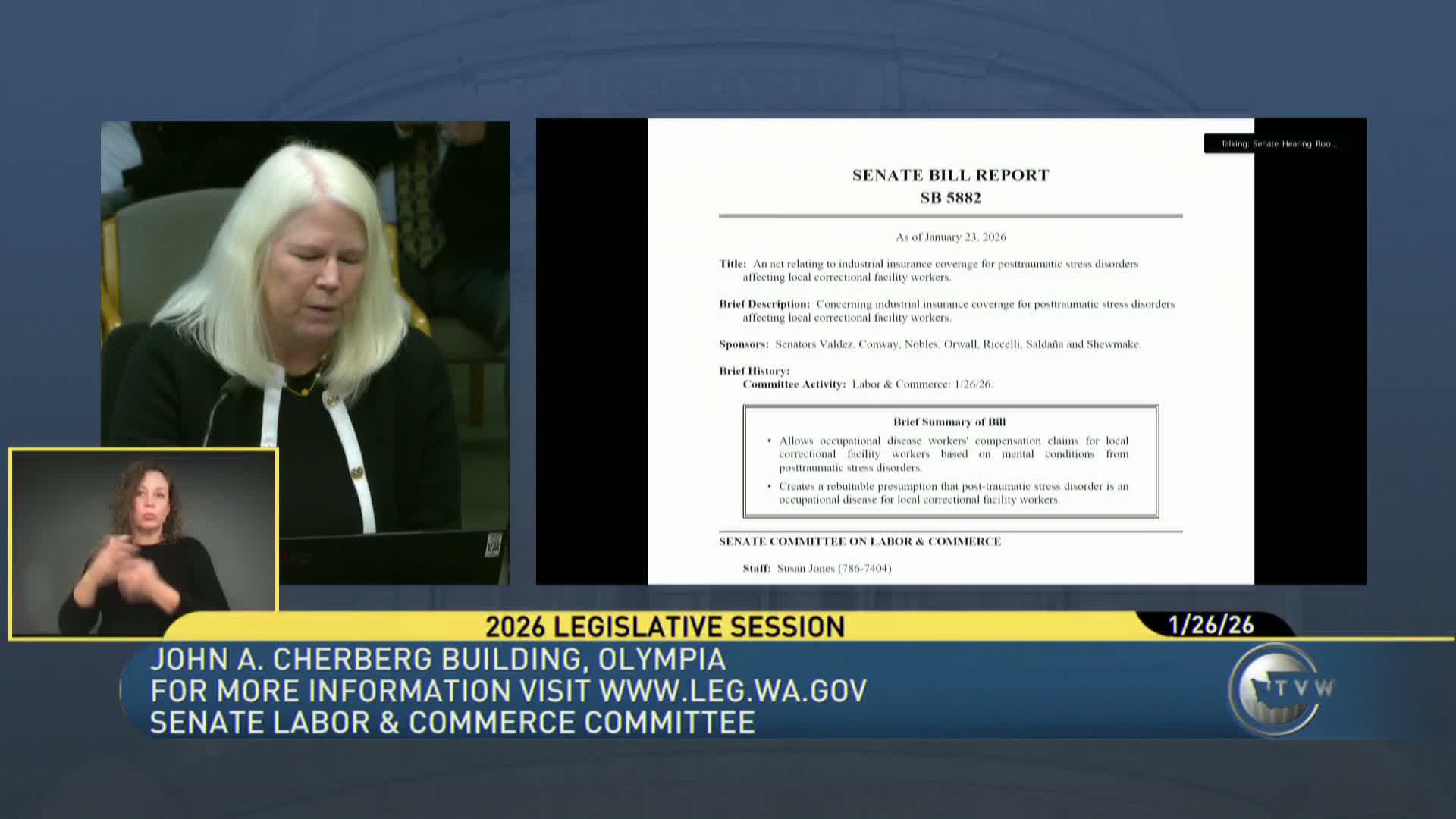
Senate Bill 6,196, proposing a distributor‑level excise tax of 95% on kratom products and a new licensing and labeling regime, drew mixed testimony at the Senate Labor & Commerce hearing.
Committee staff Marlon Yanes summarized the bill: it would impose a tax at the time a distributor brings kratom into Washington for sale beginning Jan. 1, 2027, require kratom distributor and retailer licenses (including criminal background checks), mandate labeling of ingredients and certain chemicals, and create penalties for unlicensed operation—operating as a distributor or retailer without a required license is punishable as a class C felony. Tax revenue would be deposited in a youth harmful substance protection account that funds prevention programs. A fiscal note had been requested and was not yet available at the time of the hearing.
Supporters from local governments, public health and prevention organizations urged strong regulation to reduce youth access. Eric Onisco, a Shelton city council member, recommended age gating to 21 and restrictions on outdoor advertising. Amy Brackenberry of the Washington State Health Association said she backed regulation and taxation and asked for enforcement resources for the Liquor and Cannabis Board. Scott Waller of a substance‑misuse prevention group recommended matching the nicotine tax rate (95%) to curb youth use.
Industry witnesses cautioned the committee not to treat natural kratom leaf products the same as synthetic opioids. Tony Cermonti of the American Kratom Association opposed felony penalties and said the bill conflates natural kratom with dangerous synthetics; Molly Poffenrove representing convenience stores said a 95% tax would double prices and could damage small retailers who rely on the product.
The committee closed the hearing after testimony; at close the clerk recorded 49 pro, 79 con, and 2 other signatures on the bill’s public comment record. No committee action or vote was recorded in the transcript.
Committee staff Marlon Yanes summarized the bill: it would impose a tax at the time a distributor brings kratom into Washington for sale beginning Jan. 1, 2027, require kratom distributor and retailer licenses (including criminal background checks), mandate labeling of ingredients and certain chemicals, and create penalties for unlicensed operation—operating as a distributor or retailer without a required license is punishable as a class C felony. Tax revenue would be deposited in a youth harmful substance protection account that funds prevention programs. A fiscal note had been requested and was not yet available at the time of the hearing.
Supporters from local governments, public health and prevention organizations urged strong regulation to reduce youth access. Eric Onisco, a Shelton city council member, recommended age gating to 21 and restrictions on outdoor advertising. Amy Brackenberry of the Washington State Health Association said she backed regulation and taxation and asked for enforcement resources for the Liquor and Cannabis Board. Scott Waller of a substance‑misuse prevention group recommended matching the nicotine tax rate (95%) to curb youth use.
Industry witnesses cautioned the committee not to treat natural kratom leaf products the same as synthetic opioids. Tony Cermonti of the American Kratom Association opposed felony penalties and said the bill conflates natural kratom with dangerous synthetics; Molly Poffenrove representing convenience stores said a 95% tax would double prices and could damage small retailers who rely on the product.
The committee closed the hearing after testimony; at close the clerk recorded 49 pro, 79 con, and 2 other signatures on the bill’s public comment record. No committee action or vote was recorded in the transcript.
Don't Miss a Word: See the Full Meeting!
Go beyond summaries. Unlock every video, transcript, and key insight with a Founder Membership.
✓
Get instant access to full meeting videos
✓
Search and clip any phrase from complete transcripts
✓
Receive AI-powered summaries & custom alerts
✓
Enjoy lifetime, unrestricted access to government data
30-day money-back guarantee
