Home‑grow bill divides committee as supporters cite equity and opponents warn of enforcement and youth access
January 26, 2026 | Legislative Sessions, Washington
This article was created by AI summarizing key points discussed. AI makes mistakes, so for full details and context, please refer to the video of the full meeting. Please report any errors so we can fix them. Report an error »
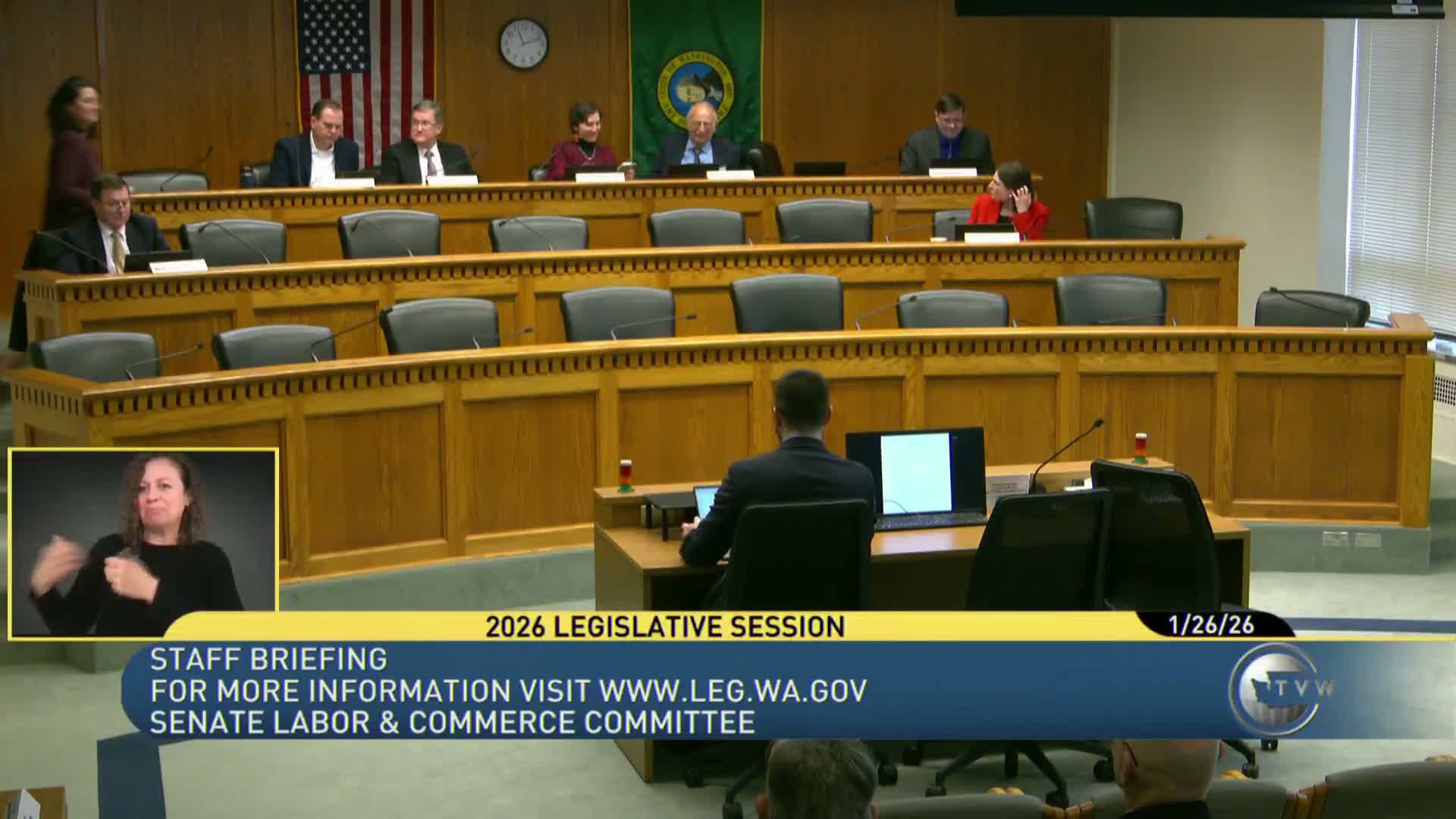
Senate Bill 6,204, which would allow noncommercial home cultivation of cannabis for adults 21 and older, prompted extended testimony and technical questions at the Senate Labor & Commerce hearing.
Marlon Yanes read the bill report noting the core provisions: a person 21 or older may produce and possess up to six cannabis plants in their housing unit, with a maximum of 15 plants per dwelling regardless of the number of residents; producing or knowingly possessing 16 or more plants would be a class C felony, and a civil infraction applies where plants are readily smelled from a public place or another private property. The bill clarifies that the Liquor and Cannabis Board (LCB) would not enforce home‑cultivation rules—local law enforcement would be the enforcing authority—and exempts family daycares and foster family homes from the home‑cultivation authorization. Preliminary fiscal figures mention a non‑zero but indeterminate cost for the Department of Corrections and $718,000 in local government expenditures projected for 2025–27; other fiscal notes were pending.
Supporters—ranging from activists who worked on Initiative 502 to licensed growers and social‑equity advocates—argued home cultivation corrects a longstanding inconsistency: Washington allows retail sales but not small hobby grows. Bailey Hirschberg urged the committee to “assume the best intentions” and said regulated home grow protects privacy and reduces criminalization. Proponents urged clear guardrails (age limits, exclusion for foster/family‑daycare homes) and emphasized equity benefits.
Opponents, including law enforcement and public health witnesses, warned of enforcement challenges (search warrants require probable cause; civil infraction thresholds complicate seizure), youth access, and public‑safety risks from home processing or hazardous production activities. James McMahon said seizure authorities and probable cause requirements complicate the practical enforcement of plant caps; Mark Webster of LCB clarified the board would not knock on doors and that local law enforcement would be responsible for investigations. Public health representatives cited youth‑access studies and cautioned about social norms and potential increases in youth use.
Committee members asked multiple questions about enforcement roles, application in apartments and local 'dry' cities, and interactions with existing medical‑cannabis home‑grow allowances. The hearing drew large public panels on both sides and the record showed substantial public participation; the committee did not take a vote during the session.
Marlon Yanes read the bill report noting the core provisions: a person 21 or older may produce and possess up to six cannabis plants in their housing unit, with a maximum of 15 plants per dwelling regardless of the number of residents; producing or knowingly possessing 16 or more plants would be a class C felony, and a civil infraction applies where plants are readily smelled from a public place or another private property. The bill clarifies that the Liquor and Cannabis Board (LCB) would not enforce home‑cultivation rules—local law enforcement would be the enforcing authority—and exempts family daycares and foster family homes from the home‑cultivation authorization. Preliminary fiscal figures mention a non‑zero but indeterminate cost for the Department of Corrections and $718,000 in local government expenditures projected for 2025–27; other fiscal notes were pending.
Supporters—ranging from activists who worked on Initiative 502 to licensed growers and social‑equity advocates—argued home cultivation corrects a longstanding inconsistency: Washington allows retail sales but not small hobby grows. Bailey Hirschberg urged the committee to “assume the best intentions” and said regulated home grow protects privacy and reduces criminalization. Proponents urged clear guardrails (age limits, exclusion for foster/family‑daycare homes) and emphasized equity benefits.
Opponents, including law enforcement and public health witnesses, warned of enforcement challenges (search warrants require probable cause; civil infraction thresholds complicate seizure), youth access, and public‑safety risks from home processing or hazardous production activities. James McMahon said seizure authorities and probable cause requirements complicate the practical enforcement of plant caps; Mark Webster of LCB clarified the board would not knock on doors and that local law enforcement would be responsible for investigations. Public health representatives cited youth‑access studies and cautioned about social norms and potential increases in youth use.
Committee members asked multiple questions about enforcement roles, application in apartments and local 'dry' cities, and interactions with existing medical‑cannabis home‑grow allowances. The hearing drew large public panels on both sides and the record showed substantial public participation; the committee did not take a vote during the session.
View the Full Meeting & All Its Details
This article offers just a summary. Unlock complete video, transcripts, and insights as a Founder Member.
✓
Watch full, unedited meeting videos
✓
Search every word spoken in unlimited transcripts
✓
AI summaries & real-time alerts (all government levels)
✓
Permanent access to expanding government content
30-day money-back guarantee
