Committee considers bill to expand notice when sexually violent predators are released
January 26, 2026 | Legislative Sessions, Washington
This article was created by AI summarizing key points discussed. AI makes mistakes, so for full details and context, please refer to the video of the full meeting. Please report any errors so we can fix them. Report an error »
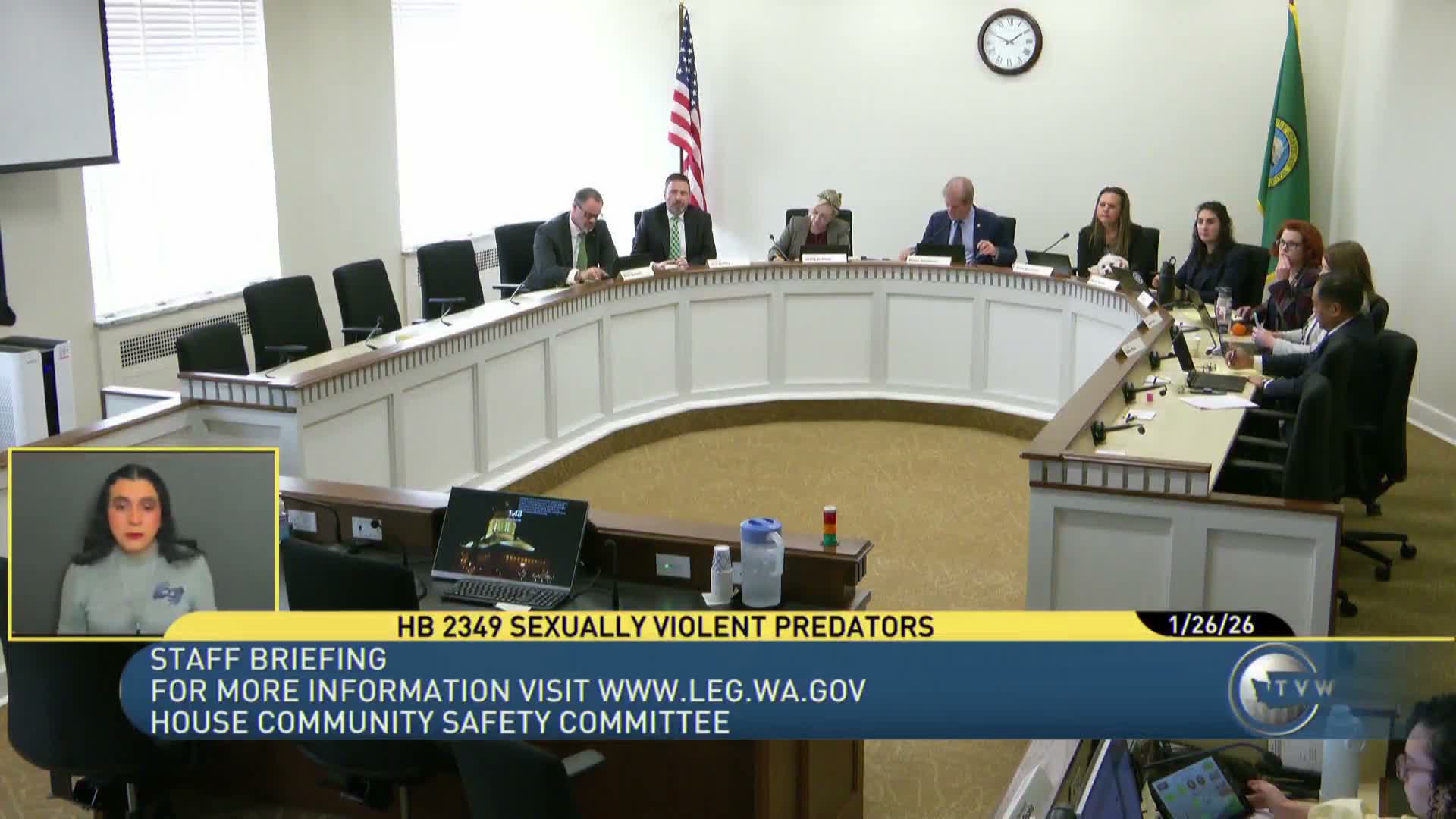
Corey Patton summarized House Bill 23-49 as a proposal to strengthen notice requirements when a person who may meet the criteria of a sexually violent predator (SVP) is being released from confinement. The staff report said existing practice requires the agency of jurisdiction (DSHS, DOC or ISRB) to refer potential SVP cases to the county prosecutor and attorney general three months before release and to notify certain persons upon conditional release or discharge.
Representative Marie Lovett (28th Legislative District) asked that the practice of notifying local legislators, city leaders and county executives be codified so local officials and communities can respond with factual information and, when needed, convene safety teams. "We want to provide the facts and be the most responsible stewards of that information," Lovett said, adding DSHS has begun notifying legislators at her request but the bill would make that practice statutory.
DSHS representatives, including Tony Buoy (Deputy Assistant Secretary) and Candace Yee (Special Commitment Center deputy CEO), said the department supports increased notification and communication but raised technical concerns about tying notice responsibilities to timelines outside DSHS control and requested streamlined notice language. DSHS told the committee it had shared proposed amendments with leadership and the sponsor.
City officials — including Lisa Beaton (Deputy City Manager, Kennewick), Nancy Backus (mayor of Auburn) and Stan Fleming (mayor of University Place and former state representative) — testified in favor, saying communities need timely information when release or placement decisions affect municipal jurisdictions. Auburn Mayor Nancy Backus said her city learned of a relocation through media reports and not through public-safety partners and called that "not how a public safety system should function."
Opponents — including public defenders and policy experts — warned the bill risks undermining law enforcement's role in deciding the scope and timing of community notification and could prompt public outcry that endangers housing providers and residents if legislative actors publicly disseminate information prematurely. Sonia Hardenbrook of the Washington Defender Association said expanding DSHS notification to legislators can "undermine law enforcement's vital role in determining what, when, and how community notification is appropriate." Jessica Fleming and others cited incidents where public disclosure led to threats and closures of LRA homes.
DSHS and the sponsor signaled willingness to work together on amendatory language; the committee held the hearing open for further amendment work.
Representative Marie Lovett (28th Legislative District) asked that the practice of notifying local legislators, city leaders and county executives be codified so local officials and communities can respond with factual information and, when needed, convene safety teams. "We want to provide the facts and be the most responsible stewards of that information," Lovett said, adding DSHS has begun notifying legislators at her request but the bill would make that practice statutory.
DSHS representatives, including Tony Buoy (Deputy Assistant Secretary) and Candace Yee (Special Commitment Center deputy CEO), said the department supports increased notification and communication but raised technical concerns about tying notice responsibilities to timelines outside DSHS control and requested streamlined notice language. DSHS told the committee it had shared proposed amendments with leadership and the sponsor.
City officials — including Lisa Beaton (Deputy City Manager, Kennewick), Nancy Backus (mayor of Auburn) and Stan Fleming (mayor of University Place and former state representative) — testified in favor, saying communities need timely information when release or placement decisions affect municipal jurisdictions. Auburn Mayor Nancy Backus said her city learned of a relocation through media reports and not through public-safety partners and called that "not how a public safety system should function."
Opponents — including public defenders and policy experts — warned the bill risks undermining law enforcement's role in deciding the scope and timing of community notification and could prompt public outcry that endangers housing providers and residents if legislative actors publicly disseminate information prematurely. Sonia Hardenbrook of the Washington Defender Association said expanding DSHS notification to legislators can "undermine law enforcement's vital role in determining what, when, and how community notification is appropriate." Jessica Fleming and others cited incidents where public disclosure led to threats and closures of LRA homes.
DSHS and the sponsor signaled willingness to work together on amendatory language; the committee held the hearing open for further amendment work.
View the Full Meeting & All Its Details
This article offers just a summary. Unlock complete video, transcripts, and insights as a Founder Member.
✓
Watch full, unedited meeting videos
✓
Search every word spoken in unlimited transcripts
✓
AI summaries & real-time alerts (all government levels)
✓
Permanent access to expanding government content
30-day money-back guarantee
