Lawmakers weigh ban on retail sales of nitrous oxide amid public-health testimony
January 26, 2026 | Legislative Sessions, Washington
This article was created by AI summarizing key points discussed. AI makes mistakes, so for full details and context, please refer to the video of the full meeting. Please report any errors so we can fix them. Report an error »
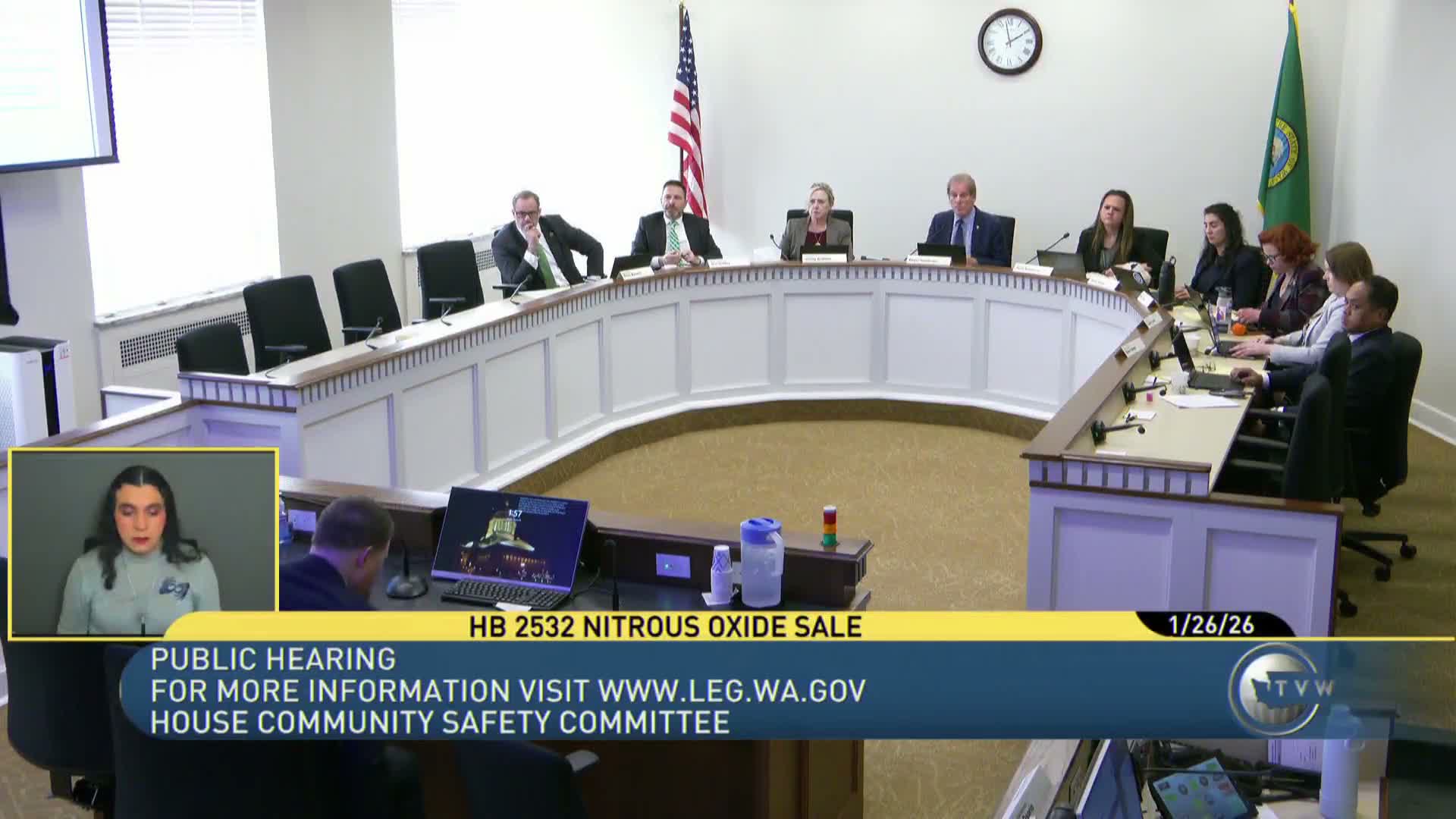
Lena Langer, counsel to the committee, briefed members on House Bill 25-32, which would prohibit selling, furnishing, administering, distributing or offering devices or canisters that contain nitrous oxide for nonmedical/culinary/industrial uses and make such sales a gross misdemeanor, with enumerated exemptions for licensed medical/dental uses, food products using nitrous oxide as a propellant and manufacturing/industrial use.
Representative Joe Timmons (42nd Legislative District), prime sponsor, described neighborhood cases and retail marketing he said targets young people and noted health harms including oxygen deprivation and potential long-term spinal, nerve and vascular damage. Timmons said certain products were brightly packaged and marketed in ways that attract minors.
Tribal and local leaders, public-health specialists and family members gave emotional and technical testimony: Lonnie Greninger (Jamestown S'Klallam vice chairwoman) said her tribe found nitrous cans on sacred sites and wants to "nip this in the bud" (SEG 2019–2020). Azure Bora (Suquamish tribal council) said the tribe had banned the product on its reservation and offered intervention alternatives. A family member, Hejuan Teshoma, said his 27-year-old cousin died from nitrous-oxide overdose and urged passage.
Public-health witnesses cited data: Jimmy Leonard, chief clinical officer for the Washington Poison Center, said calls for nitrous oxide exposures increased from roughly 13 per year (2016–2023) to 32 in 2024 and 69 in 2025, and noted cases of serious injuries and two deaths in 2024–25. Carrie Holley (Whatcom County Health) explained prevention science showing reduced access and limiting youth-targeted marketing helps reduce use.
The Attorney General's Office supported the bill as a public-safety measure. Veterinary and veterinary-medical stakeholders sought clarifying language to protect legitimate veterinary and clinical uses; the committee acknowledged they would work with stakeholders on exemptions.
The public hearing on HB 25-32 concluded after broad testimony; the committee did not take an immediate vote.
Representative Joe Timmons (42nd Legislative District), prime sponsor, described neighborhood cases and retail marketing he said targets young people and noted health harms including oxygen deprivation and potential long-term spinal, nerve and vascular damage. Timmons said certain products were brightly packaged and marketed in ways that attract minors.
Tribal and local leaders, public-health specialists and family members gave emotional and technical testimony: Lonnie Greninger (Jamestown S'Klallam vice chairwoman) said her tribe found nitrous cans on sacred sites and wants to "nip this in the bud" (SEG 2019–2020). Azure Bora (Suquamish tribal council) said the tribe had banned the product on its reservation and offered intervention alternatives. A family member, Hejuan Teshoma, said his 27-year-old cousin died from nitrous-oxide overdose and urged passage.
Public-health witnesses cited data: Jimmy Leonard, chief clinical officer for the Washington Poison Center, said calls for nitrous oxide exposures increased from roughly 13 per year (2016–2023) to 32 in 2024 and 69 in 2025, and noted cases of serious injuries and two deaths in 2024–25. Carrie Holley (Whatcom County Health) explained prevention science showing reduced access and limiting youth-targeted marketing helps reduce use.
The Attorney General's Office supported the bill as a public-safety measure. Veterinary and veterinary-medical stakeholders sought clarifying language to protect legitimate veterinary and clinical uses; the committee acknowledged they would work with stakeholders on exemptions.
The public hearing on HB 25-32 concluded after broad testimony; the committee did not take an immediate vote.
Don't Miss a Word: See the Full Meeting!
Go beyond summaries. Unlock every video, transcript, and key insight with a Founder Membership.
✓
Get instant access to full meeting videos
✓
Search and clip any phrase from complete transcripts
✓
Receive AI-powered summaries & custom alerts
✓
Enjoy lifetime, unrestricted access to government data
30-day money-back guarantee
