Committee hears victims urging mandatory supervision for stalking convictions
January 26, 2026 | Legislative Sessions, Washington
This article was created by AI summarizing key points discussed. AI makes mistakes, so for full details and context, please refer to the video of the full meeting. Please report any errors so we can fix them. Report an error »
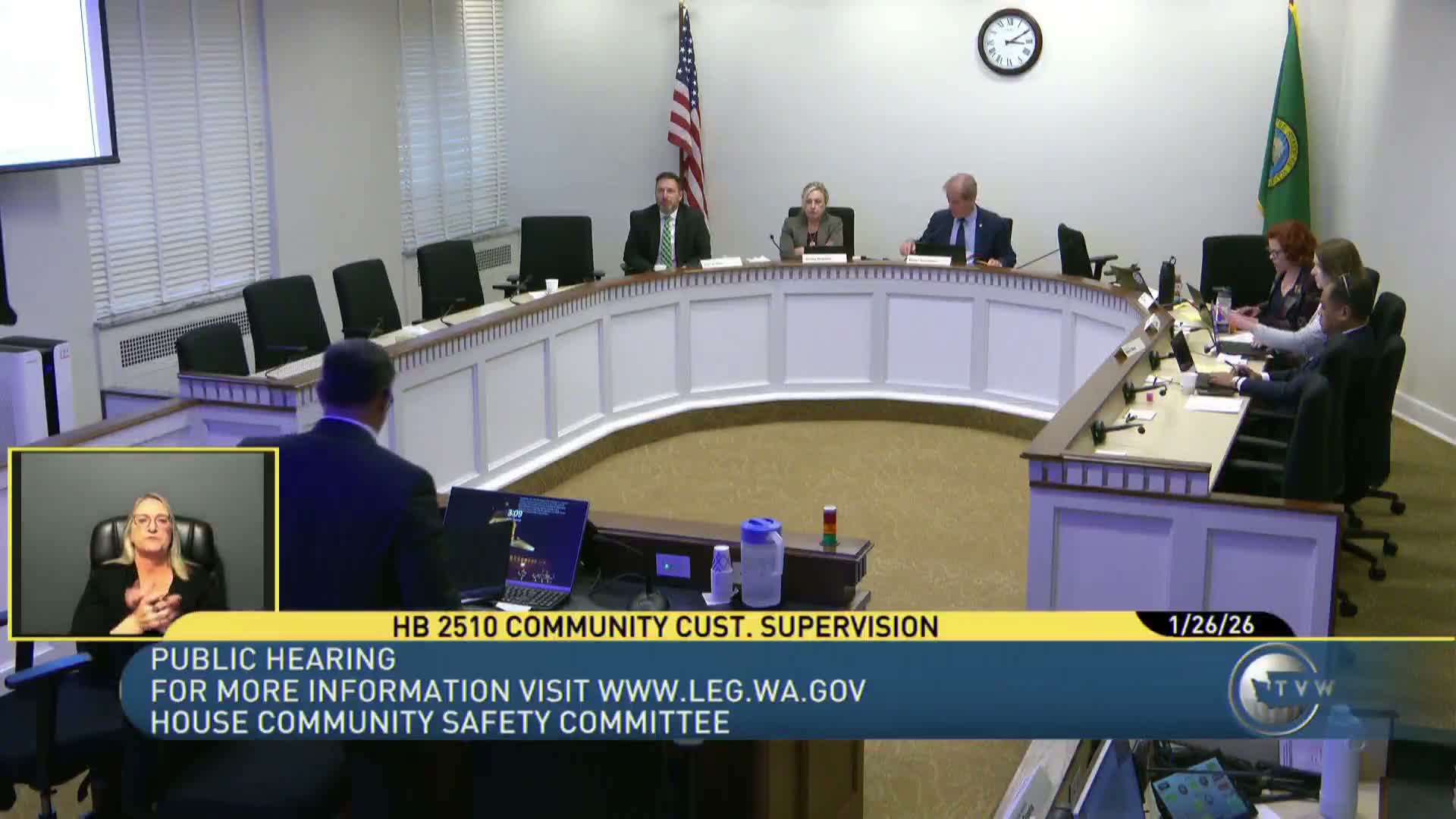
Lena Langer briefed the committee on House Bill 25-10, which would require DOC supervision for persons convicted of stalking and sentenced to community custody. Current rules require DOC supervision in specified circumstances but not universally for stalking convictions; the bill would close that gap.
Representative Brian Burnett (12th District), sponsor, framed stalking as an often repeated pattern of harassment that causes substantial emotional distress and long-term harms to victims and said mandatory supervision provides accountability.
Multiple victims and advocates described long-running stalking that persisted after conviction and, in some cases, led to homicide or severe trauma. Victims said procedural loopholes and diversion to mental-health tracks sometimes left offenders unsupervised once they returned to the community. Sheila LaRose, Cheyenne Ross, Linden Rhodes and others testified about sustained threats, broken windows, doxxing and the psychological toll of prolonged stalking. "Stalking is stalking," said Linden Rhodes, arguing that supervision should not hinge on procedural pathways.
Mac Peavey of the Department of Corrections said the department does not have a formal position but emphasized that supervision is evidence-based, reduces risk by matching contacts to risk level, and provides victim-liaison support; he warned of fiscal impacts if supervision obligations expand.
Members asked the department about contact standards and risk-driven supervision levels; DOC described a risk-based approach that increases contact for higher-risk individuals and cautioned that over-supervising low-risk people can be counterproductive. The public hearing concluded with the committee acknowledging the testimony and planning further consideration.
Representative Brian Burnett (12th District), sponsor, framed stalking as an often repeated pattern of harassment that causes substantial emotional distress and long-term harms to victims and said mandatory supervision provides accountability.
Multiple victims and advocates described long-running stalking that persisted after conviction and, in some cases, led to homicide or severe trauma. Victims said procedural loopholes and diversion to mental-health tracks sometimes left offenders unsupervised once they returned to the community. Sheila LaRose, Cheyenne Ross, Linden Rhodes and others testified about sustained threats, broken windows, doxxing and the psychological toll of prolonged stalking. "Stalking is stalking," said Linden Rhodes, arguing that supervision should not hinge on procedural pathways.
Mac Peavey of the Department of Corrections said the department does not have a formal position but emphasized that supervision is evidence-based, reduces risk by matching contacts to risk level, and provides victim-liaison support; he warned of fiscal impacts if supervision obligations expand.
Members asked the department about contact standards and risk-driven supervision levels; DOC described a risk-based approach that increases contact for higher-risk individuals and cautioned that over-supervising low-risk people can be counterproductive. The public hearing concluded with the committee acknowledging the testimony and planning further consideration.
View the Full Meeting & All Its Details
This article offers just a summary. Unlock complete video, transcripts, and insights as a Founder Member.
✓
Watch full, unedited meeting videos
✓
Search every word spoken in unlimited transcripts
✓
AI summaries & real-time alerts (all government levels)
✓
Permanent access to expanding government content
30-day money-back guarantee
