Heated testimony as committee considers bill to limit addictive feeds and push notifications to minors
January 26, 2026 | Legislative Sessions, Washington
This article was created by AI summarizing key points discussed. AI makes mistakes, so for full details and context, please refer to the video of the full meeting. Please report any errors so we can fix them. Report an error »
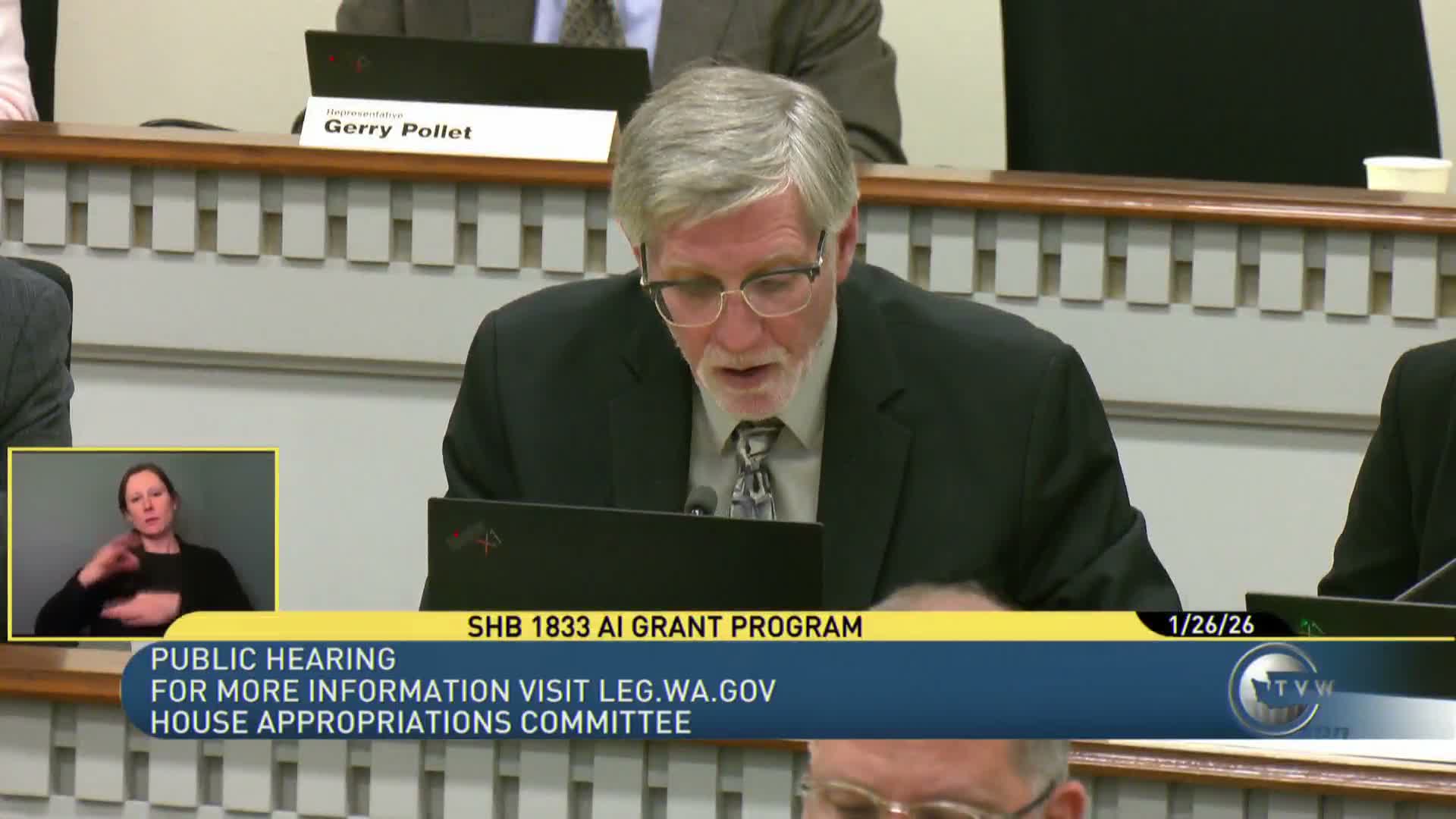
Committee staff briefed members on the third proposed substitute to House Bill 18 34, which would prohibit operators of an "addictive internet-based service or application" from providing an addictive feed to minor users and would limit push notifications during evening and school hours unless parent consent is obtained. Megan Mulvihill explained phased age-knowledge requirements (actual knowledge before July 1, 2027; reasonably determined age thereafter) and said operators may not retain personal information beyond what is necessary to determine age.
Staff noted enforcement would be via the Consumer Protection Act. Jessica Van Horn summarized fiscal notes and said the Office of the Attorney General expects ongoing investigative work; the fiscal note referenced approximately $1,150,000 for enforcement-related workload in the biennium while noting court workload would be indeterminate depending on case volume (the transcript includes a garbled line at SEG 573 that staff clarified was not substantive).
Sponsor Representative Callum stressed industry documentation showing design choices that encourage repeated use and said parental controls alone are insufficient to address harms to children. "Parental controls aren't working," Callum said, urging lawmakers to consider the science and internal industry materials.
Public testimony split along predictable lines. Nick Fielden for the Attorney General's Office said the narrowed substitute targets addictive feeds and push-notification limits rather than censoring content and that the AG's office is funded to defend state laws in court. Opponents — including Amy Boss of NetChoice, Rose Feliciano of TechNet, the Information Technology Industry Council and the Washington Technology Industry Association — warned of constitutional and vagueness risks (citing Moody v. NetChoice), privacy concerns tied to age-estimation, and the potential for costly litigation. Civil liberties and privacy groups (ACLU of Washington, Taxpayers Protection Alliance) argued age-verification approaches can increase data collection and risk, while child-advocacy and public-health witnesses urged enforceable protections to address rising rates of teen depression and anxiety.
Because the committee did not take executive action at the hearing, the bill remains under consideration. Staff materials, fiscal notes and bill text in the electronic bill book contain detailed language, definitions, and fiscal projections for members and outside reviewers.
Staff noted enforcement would be via the Consumer Protection Act. Jessica Van Horn summarized fiscal notes and said the Office of the Attorney General expects ongoing investigative work; the fiscal note referenced approximately $1,150,000 for enforcement-related workload in the biennium while noting court workload would be indeterminate depending on case volume (the transcript includes a garbled line at SEG 573 that staff clarified was not substantive).
Sponsor Representative Callum stressed industry documentation showing design choices that encourage repeated use and said parental controls alone are insufficient to address harms to children. "Parental controls aren't working," Callum said, urging lawmakers to consider the science and internal industry materials.
Public testimony split along predictable lines. Nick Fielden for the Attorney General's Office said the narrowed substitute targets addictive feeds and push-notification limits rather than censoring content and that the AG's office is funded to defend state laws in court. Opponents — including Amy Boss of NetChoice, Rose Feliciano of TechNet, the Information Technology Industry Council and the Washington Technology Industry Association — warned of constitutional and vagueness risks (citing Moody v. NetChoice), privacy concerns tied to age-estimation, and the potential for costly litigation. Civil liberties and privacy groups (ACLU of Washington, Taxpayers Protection Alliance) argued age-verification approaches can increase data collection and risk, while child-advocacy and public-health witnesses urged enforceable protections to address rising rates of teen depression and anxiety.
Because the committee did not take executive action at the hearing, the bill remains under consideration. Staff materials, fiscal notes and bill text in the electronic bill book contain detailed language, definitions, and fiscal projections for members and outside reviewers.
Don't Miss a Word: See the Full Meeting!
Go beyond summaries. Unlock every video, transcript, and key insight with a Founder Membership.
✓
Get instant access to full meeting videos
✓
Search and clip any phrase from complete transcripts
✓
Receive AI-powered summaries & custom alerts
✓
Enjoy lifetime, unrestricted access to government data
30-day money-back guarantee
