Panel debates bill to let WSDOT and Sound Transit use multiple award task order contracts
January 26, 2026 | Legislative Sessions, Washington
This article was created by AI summarizing key points discussed. AI makes mistakes, so for full details and context, please refer to the video of the full meeting. Please report any errors so we can fix them. Report an error »
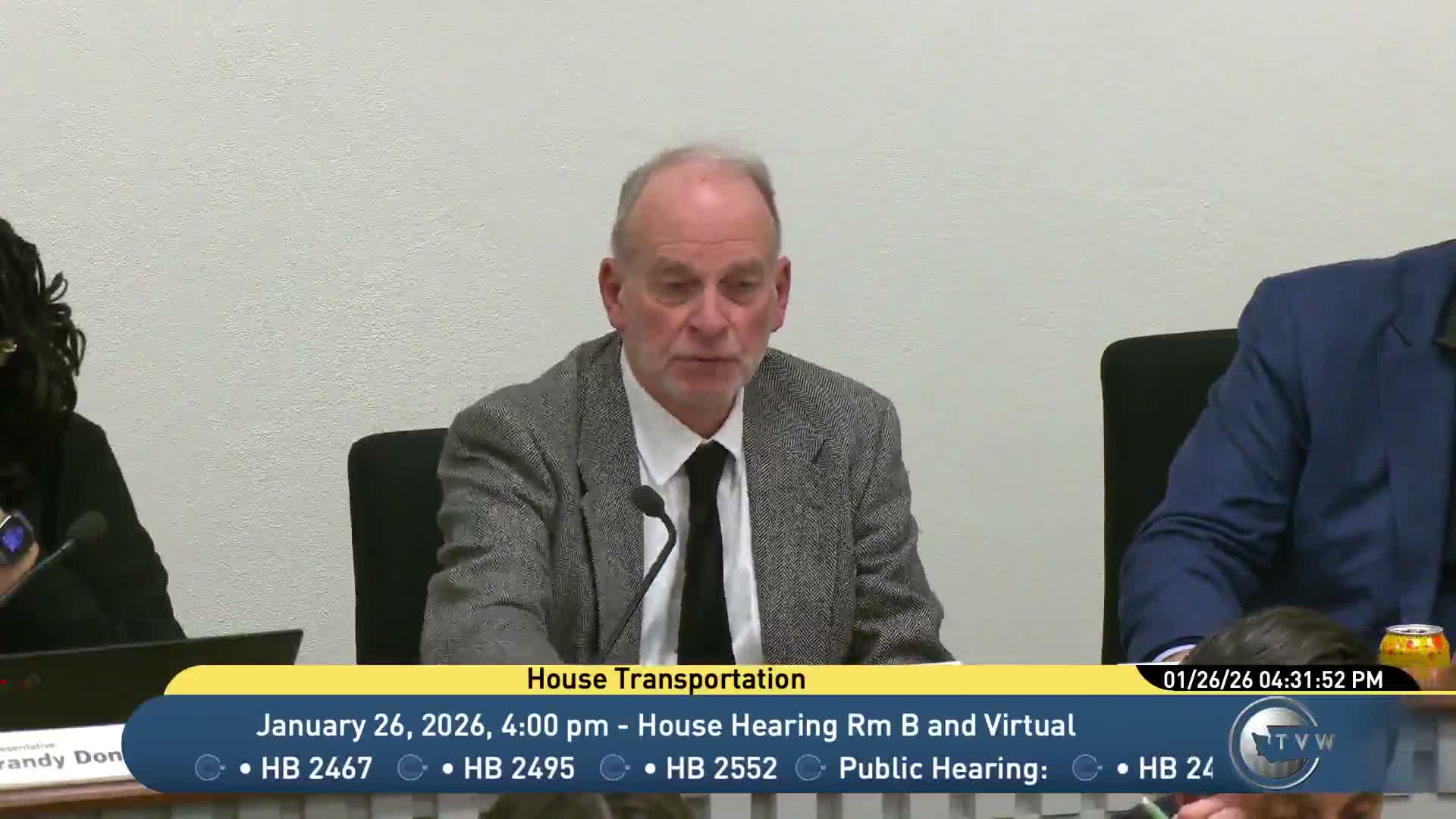
The House Transportation Committee considered HB 2,552, a bill to authorize multiple award task order contracting (METOC) for the Washington State Department of Transportation and Sound Transit. Committee staff and witnesses described METOC as a procurement tool that establishes rosters of prequalified contractors and awards project‑specific task orders through additional competition among that roster.
Chris Thomas, staff to the committee, explained that METOC allows public owners to make faster, more flexible procurements without negotiating a new contract for each project and requires agencies to create award and protest processes, prequalification criteria, and reporting requirements. The brief noted the bill takes effect 90 days after adjournment and that a fiscal note had been requested but not yet received.
Representative Janice Zahn, sponsor of the bill, said the tool is already used by the military and at the federal level and that the bill preserves competition while streamlining delivery. She said the Office of Minority and Women Owned Business had reviewed the draft and recommended changes to promote inclusion.
Alex Soldano, representing Sound Transit, testified in support and said METOC is a “modern proven tool” that reduces procurement time, increases competition among prequalified contractors for task orders, and can create opportunities for small and medium firms to participate alongside larger firms.
Michael Transtu, representing the Washington Aggregate and Concrete Association, testified in opposition, calling METOC a "largely untested" method in Washington that could reduce competition, consolidate work among a few general contractors, and limit opportunities for subs and suppliers. Transtu suggested the Capital Projects Advisory Review Board examine the approach before broader adoption.
Representative Zahn asked for clarification on safeguards; Soldano responded that the bill and federal practice include requirements for maintaining competition, periodic inclusion of additional prequalified entities and competitive task‑order processes.
The committee closed the public hearing on HB 2,552 without taking a final vote in that session.
Chris Thomas, staff to the committee, explained that METOC allows public owners to make faster, more flexible procurements without negotiating a new contract for each project and requires agencies to create award and protest processes, prequalification criteria, and reporting requirements. The brief noted the bill takes effect 90 days after adjournment and that a fiscal note had been requested but not yet received.
Representative Janice Zahn, sponsor of the bill, said the tool is already used by the military and at the federal level and that the bill preserves competition while streamlining delivery. She said the Office of Minority and Women Owned Business had reviewed the draft and recommended changes to promote inclusion.
Alex Soldano, representing Sound Transit, testified in support and said METOC is a “modern proven tool” that reduces procurement time, increases competition among prequalified contractors for task orders, and can create opportunities for small and medium firms to participate alongside larger firms.
Michael Transtu, representing the Washington Aggregate and Concrete Association, testified in opposition, calling METOC a "largely untested" method in Washington that could reduce competition, consolidate work among a few general contractors, and limit opportunities for subs and suppliers. Transtu suggested the Capital Projects Advisory Review Board examine the approach before broader adoption.
Representative Zahn asked for clarification on safeguards; Soldano responded that the bill and federal practice include requirements for maintaining competition, periodic inclusion of additional prequalified entities and competitive task‑order processes.
The committee closed the public hearing on HB 2,552 without taking a final vote in that session.
View the Full Meeting & All Its Details
This article offers just a summary. Unlock complete video, transcripts, and insights as a Founder Member.
✓
Watch full, unedited meeting videos
✓
Search every word spoken in unlimited transcripts
✓
AI summaries & real-time alerts (all government levels)
✓
Permanent access to expanding government content
30-day money-back guarantee
