Oceanside council refuses to certify EIR for 83‑unit Guajome Lake Homes project after hours of testimony
January 30, 2026 | Oceanside, San Diego County, California
This article was created by AI summarizing key points discussed. AI makes mistakes, so for full details and context, please refer to the video of the full meeting. Please report any errors so we can fix them. Report an error »
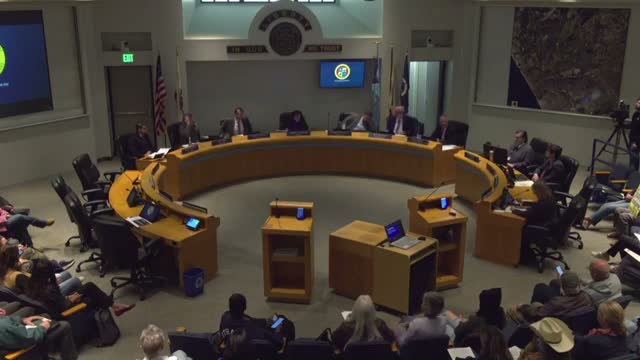
Mayor Sanchez and the full council voted Jan. 28 to decline certification of the environmental impact report (EIR) for the Guajome (a/k/a Wohome/Guahome in public comments) Lake Homes project, a proposed subdivision that would create 83 detached single‑family lots on a 16.78‑acre site and reserve four units for very‑low‑income households.
The action came after roughly three hours of testimony from the appellant, dozens of residents and representatives of conservation groups who said the EIR failed to analyze foreseeable safety and environmental harms. Jennifer Jacobs, one of the appellants and a wildlife biologist, told the council: “This EIR failed to meet that standard” for informing the public and decision‑makers of significant impacts (Jennifer Jacobs, appellant).
Rincon Homes’ vice president of forward planning, Jonathan Frankel, defended the project as designed to avoid the most sensitive habitat and to deliver housing that the company says is attainable for local families. “The project entirely avoids the most sensitive resources on the site,” Frankel said, adding that the plan would preserve about seven acres as permanent open space and that the company proposed road and safety improvements (Jonathan Frankel, Rincon Homes).
Opponents focused on three recurring themes. First, they said the EIR did not adequately analyze evacuation and fire safety for Guajome Lake Road, a narrow route with multiple blind curves and an 800‑foot unpaved stretch that speakers and some council members said is not up to emergency‑access standards. Appellants and multiple residents noted that the draft traffic analysis does not model large‑animal evacuations or the additional circulation created by 83 homes.
Second, equestrian‑community members and horse‑facility operators said the project would erode the intent of the city’s equestrian overlay by increasing traffic and by waiving overlay standards; several speakers said trails and informal horse passage are used daily and were not reflected in the EIR’s baseline. Doreen Statlander, a retired wildlife biologist, said the EIR’s land‑use comparison was “biased” and did not reflect the rural character of the area (Doreen Statlander, appellant).
Third, conservation groups argued the EIR relied excessively on deferred mitigation for listed species and did not present adequate baseline corridor analyses. The Buena Vista Audubon Society told the council that Coastal California gnatcatcher habitat and regional habitat linkages could be impaired by the project.
Councilmembers said they were persuaded by the quantity and specificity of the testimony. Mayor Sanchez moved to deny certification of the EIR and directed staff and the city attorney to draft written findings that incorporate the hearing record; Deputy Mayor Joyce seconded. Staff later returned with a revised resolution reflecting the council’s concerns; the council voted to adopt the staff recommendation to deny certification and to strike the tentative‑map denial language so no final approval or denial of the project itself was made at tonight’s meeting. The vote on the EIR finding was recorded as unanimous.
City staff and the council emphasized the procedural result: denial of certification sends the matter back for additional environmental analysis or project revisions rather than an outright approval or final denial of the entitlements. City Attorney Burke advised that because the EIR is not certified the council could not lawfully approve the project at this meeting and that returning studies or project changes may follow.
Next steps: staff will bring back written findings for formal adoption consistent with the council’s direction and may request further study or mitigation proposals from the applicant. The council did not set a moratorium on resubmittal; staff said the collection of required analyses will guide any revised proposal.
The action came after roughly three hours of testimony from the appellant, dozens of residents and representatives of conservation groups who said the EIR failed to analyze foreseeable safety and environmental harms. Jennifer Jacobs, one of the appellants and a wildlife biologist, told the council: “This EIR failed to meet that standard” for informing the public and decision‑makers of significant impacts (Jennifer Jacobs, appellant).
Rincon Homes’ vice president of forward planning, Jonathan Frankel, defended the project as designed to avoid the most sensitive habitat and to deliver housing that the company says is attainable for local families. “The project entirely avoids the most sensitive resources on the site,” Frankel said, adding that the plan would preserve about seven acres as permanent open space and that the company proposed road and safety improvements (Jonathan Frankel, Rincon Homes).
Opponents focused on three recurring themes. First, they said the EIR did not adequately analyze evacuation and fire safety for Guajome Lake Road, a narrow route with multiple blind curves and an 800‑foot unpaved stretch that speakers and some council members said is not up to emergency‑access standards. Appellants and multiple residents noted that the draft traffic analysis does not model large‑animal evacuations or the additional circulation created by 83 homes.
Second, equestrian‑community members and horse‑facility operators said the project would erode the intent of the city’s equestrian overlay by increasing traffic and by waiving overlay standards; several speakers said trails and informal horse passage are used daily and were not reflected in the EIR’s baseline. Doreen Statlander, a retired wildlife biologist, said the EIR’s land‑use comparison was “biased” and did not reflect the rural character of the area (Doreen Statlander, appellant).
Third, conservation groups argued the EIR relied excessively on deferred mitigation for listed species and did not present adequate baseline corridor analyses. The Buena Vista Audubon Society told the council that Coastal California gnatcatcher habitat and regional habitat linkages could be impaired by the project.
Councilmembers said they were persuaded by the quantity and specificity of the testimony. Mayor Sanchez moved to deny certification of the EIR and directed staff and the city attorney to draft written findings that incorporate the hearing record; Deputy Mayor Joyce seconded. Staff later returned with a revised resolution reflecting the council’s concerns; the council voted to adopt the staff recommendation to deny certification and to strike the tentative‑map denial language so no final approval or denial of the project itself was made at tonight’s meeting. The vote on the EIR finding was recorded as unanimous.
City staff and the council emphasized the procedural result: denial of certification sends the matter back for additional environmental analysis or project revisions rather than an outright approval or final denial of the entitlements. City Attorney Burke advised that because the EIR is not certified the council could not lawfully approve the project at this meeting and that returning studies or project changes may follow.
Next steps: staff will bring back written findings for formal adoption consistent with the council’s direction and may request further study or mitigation proposals from the applicant. The council did not set a moratorium on resubmittal; staff said the collection of required analyses will guide any revised proposal.
Don't Miss a Word: See the Full Meeting!
Go beyond summaries. Unlock every video, transcript, and key insight with a Founder Membership.
✓
Get instant access to full meeting videos
✓
Search and clip any phrase from complete transcripts
✓
Receive AI-powered summaries & custom alerts
✓
Enjoy lifetime, unrestricted access to government data
30-day money-back guarantee
