La Verne aldermen debate limits, enforcement and event carve-outs in first reading of mobile food-vendor ordinance
January 30, 2026 | Board of Mayor and Aldermen Meetings, La Vergne City, Rutherford County, Tennessee
This article was created by AI summarizing key points discussed. AI makes mistakes, so for full details and context, please refer to the video of the full meeting. Please report any errors so we can fix them. Report an error »
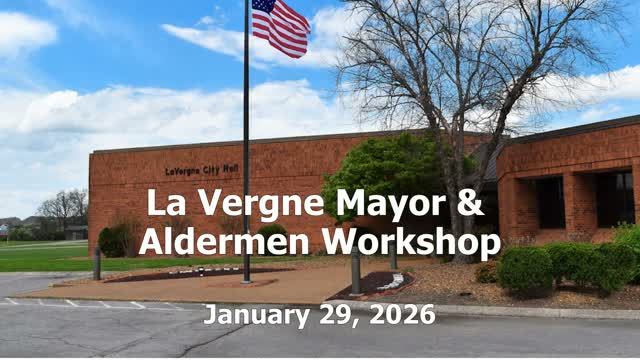
La Verne — The Board of Mayor and Aldermen discussed a proposed ordinance on mobile food vendors in a lengthy first-reading exchange on Jan. 29, focusing on enforcement, safety inspections and exceptions for city-sponsored events.
The ordinance (first reading, Ordinance 2026‑O‑4) would add rules to Title 9, Chapter 9 of the municipal code to regulate mobile food trucks, including a provision that vehicles be removed daily and a prohibition on operating in commercial zoning districts. Presiding staff said existing permits would run until expiration; if the ordinance is adopted, permits located in commercial zones would not be renewable at the same location.
Why it matters: Board members and staff said the proposed language aims to ensure food trucks remain truly mobile and to address complaints about vendors setting up long-term operations with tables, awnings and signs. Board members raised concerns that a strict daily-move requirement could be hard to enforce and could affect vendors that function as a kitchen for an associated brick-and-mortar business.
Key points in debate
- Enforcement and inspections: Curtis, who explained the fire-inspection process for the city, said the current local process requires a fire inspection for an active city food-truck permit and that vendors must complete a separate codes inspection before receiving a permit. Curtis also noted state rules: “The state of Tennessee has now passed a regulation to where if the state fire marshal’s office conducts a mobile food vendor fire inspection, then that’s a blanket cover for any fire department,” meaning a vendor inspected by the state marshal can be eligible for a city permit without a separate local fire-inspection record. Curtis framed that as a state-level constraint on local authority.
- Zoning and permanence: Codes staff described frequent complaints in spring and summer about vendors remaining in one spot with additional furniture and signage. One board member observed that the ordinance’s current language would bar food trucks from operating in commercial districts, which would prevent some venues that use a food trailer as the kitchen for a nearby sit-down operation from renewing their permit at that location.
- Special events and carve-outs: Multiple board members asked whether the ordinance would interfere with city-sanctioned events (carnivals, park events). Staff said event vendors are generally handled through special-event permits and suggested the ordinance include explicit carve-outs for city-sanctioned events. Staff agreed to draft language to exempt city-contracted events from the daily-move requirement.
- Compliance timeline: Staff explained that existing permits would remain valid until expiration; if the ordinance is adopted, permits in commercial zones would be nonrenewable at the same site and city codes would follow normal compliance procedures (notifications, city court if necessary).
What’s next: The item is at first reading and is scheduled for a subsequent vote at the board’s regular meeting. No final vote or ordinance adoption occurred at the workshop.
Reporting note: Quotations and attributions are taken from the Jan. 29 workshop transcript. The person who identified themself as Curtis provided the fire-inspection explanation in the record; the transcript uses that first name without a full formal title.
The ordinance (first reading, Ordinance 2026‑O‑4) would add rules to Title 9, Chapter 9 of the municipal code to regulate mobile food trucks, including a provision that vehicles be removed daily and a prohibition on operating in commercial zoning districts. Presiding staff said existing permits would run until expiration; if the ordinance is adopted, permits located in commercial zones would not be renewable at the same location.
Why it matters: Board members and staff said the proposed language aims to ensure food trucks remain truly mobile and to address complaints about vendors setting up long-term operations with tables, awnings and signs. Board members raised concerns that a strict daily-move requirement could be hard to enforce and could affect vendors that function as a kitchen for an associated brick-and-mortar business.
Key points in debate
- Enforcement and inspections: Curtis, who explained the fire-inspection process for the city, said the current local process requires a fire inspection for an active city food-truck permit and that vendors must complete a separate codes inspection before receiving a permit. Curtis also noted state rules: “The state of Tennessee has now passed a regulation to where if the state fire marshal’s office conducts a mobile food vendor fire inspection, then that’s a blanket cover for any fire department,” meaning a vendor inspected by the state marshal can be eligible for a city permit without a separate local fire-inspection record. Curtis framed that as a state-level constraint on local authority.
- Zoning and permanence: Codes staff described frequent complaints in spring and summer about vendors remaining in one spot with additional furniture and signage. One board member observed that the ordinance’s current language would bar food trucks from operating in commercial districts, which would prevent some venues that use a food trailer as the kitchen for a nearby sit-down operation from renewing their permit at that location.
- Special events and carve-outs: Multiple board members asked whether the ordinance would interfere with city-sanctioned events (carnivals, park events). Staff said event vendors are generally handled through special-event permits and suggested the ordinance include explicit carve-outs for city-sanctioned events. Staff agreed to draft language to exempt city-contracted events from the daily-move requirement.
- Compliance timeline: Staff explained that existing permits would remain valid until expiration; if the ordinance is adopted, permits in commercial zones would be nonrenewable at the same site and city codes would follow normal compliance procedures (notifications, city court if necessary).
What’s next: The item is at first reading and is scheduled for a subsequent vote at the board’s regular meeting. No final vote or ordinance adoption occurred at the workshop.
Reporting note: Quotations and attributions are taken from the Jan. 29 workshop transcript. The person who identified themself as Curtis provided the fire-inspection explanation in the record; the transcript uses that first name without a full formal title.
View the Full Meeting & All Its Details
This article offers just a summary. Unlock complete video, transcripts, and insights as a Founder Member.
✓
Watch full, unedited meeting videos
✓
Search every word spoken in unlimited transcripts
✓
AI summaries & real-time alerts (all government levels)
✓
Permanent access to expanding government content
30-day money-back guarantee
