Senate Judiciary reviews amended S.208 on officer mask ban, exceptions and tiered penalties
January 30, 2026 | Judiciary, SENATE, Committees, Legislative , Vermont
This article was created by AI summarizing key points discussed. AI makes mistakes, so for full details and context, please refer to the video of the full meeting. Please report any errors so we can fix them. Report an error »
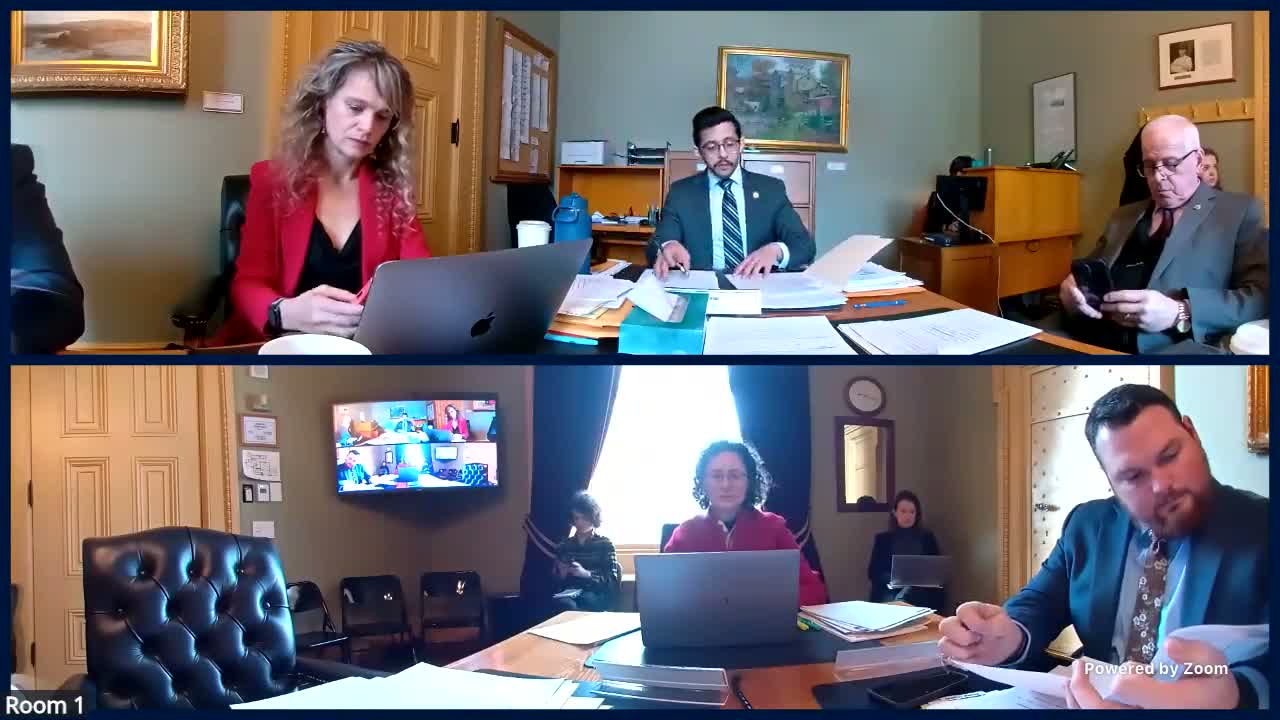
Legislative counsel Sophie Stanny told the Senate Judiciary committee on Jan. 30 that an amended version of S.208 would tighten identification rules for law-enforcement officers and set a framework of exceptions and penalties for a proposed ban on officers wearing masks while interacting with the public.
Stanny, presenting a scribe-call (strike-all) amendment, said identification would include an officers name or a unique radio or badge number and their agency. She described a consolidated subsection that explicitly covers surgical masks and N95 respirators and noted the draft mirrors existing cold-weather exception language used for emergency-shelter programs.
"The law enforcement officer shall not wear any mask or personal disguise while interacting with the public in the performance of the officer's duties," Stanny said while explaining the prohibition and how the bill treats exceptions.
Committee members pressed for clarity on the cold-weather exception and whether the bill should use a fixed temperature or a "reasonable person" standard. One member said a single temperature threshold could create edge casesfor example, during a multi-hour search-and-rescue on a mountainand suggested a standard tied to "substantial risk of physical safety." Stanny replied that the draft mirrors the language already used for shelter exceptions and that the prohibition applies when officers are interacting with the public, so masks worn while not interacting would not be covered by the ban.
Law-enforcement undercover operations were another point of contention. Stanny described an exception for officers "working within or in conjunction with" the Vermont Drug Task Force and said the amendment adds a new subsection directing the Criminal Justice Council to develop a statewide policy establishing applicable standards; the draft sets a completion date for that policy (noted in the working draft as 01/01/2037).
Committee members and counsel also debated enforcement and penalties. Stanny said she had asked a constitutional-law professor whether the offense should be civil or criminal; she recalled the professor suggesting a criminal penalty could be more defensible but was still awaiting written confirmation. The committee discussed a hybrid approach: initial civil fines followed by criminal penalties for repeat violations.
Members discussed enforcement discretion, asking whether a misdemeanor would require arrest. Speakers cited existing rules that allow officers discretion to issue citations or summonses rather than take custody in many misdemeanors.
On penalty amounts, members discussed a graduated structure during the meeting: a first civil violation in the vicinity of $1,000, a higher second civil penalty (committee discussion included $2,500 as an example), and escalation to a misdemeanor for subsequent offenses. The committee characterized this as a preliminary agreement and asked staff to codify exact amounts and language for a later draft.
Stanny said captains from the Vermont Drug Task Force have been invited to testify next week, the Office of Racial Equity requested to review the bill, and the Attorney General's office had raised technical questions; members asked that updated language be circulated before those hearings.
No formal vote or final adoption occurred in the Jan. 30 meeting. Committee members instructed staff and counsel to make the discussed changes, gather the scheduled testimony and legal input, and return with revised language at a future meeting.
Stanny, presenting a scribe-call (strike-all) amendment, said identification would include an officers name or a unique radio or badge number and their agency. She described a consolidated subsection that explicitly covers surgical masks and N95 respirators and noted the draft mirrors existing cold-weather exception language used for emergency-shelter programs.
"The law enforcement officer shall not wear any mask or personal disguise while interacting with the public in the performance of the officer's duties," Stanny said while explaining the prohibition and how the bill treats exceptions.
Committee members pressed for clarity on the cold-weather exception and whether the bill should use a fixed temperature or a "reasonable person" standard. One member said a single temperature threshold could create edge casesfor example, during a multi-hour search-and-rescue on a mountainand suggested a standard tied to "substantial risk of physical safety." Stanny replied that the draft mirrors the language already used for shelter exceptions and that the prohibition applies when officers are interacting with the public, so masks worn while not interacting would not be covered by the ban.
Law-enforcement undercover operations were another point of contention. Stanny described an exception for officers "working within or in conjunction with" the Vermont Drug Task Force and said the amendment adds a new subsection directing the Criminal Justice Council to develop a statewide policy establishing applicable standards; the draft sets a completion date for that policy (noted in the working draft as 01/01/2037).
Committee members and counsel also debated enforcement and penalties. Stanny said she had asked a constitutional-law professor whether the offense should be civil or criminal; she recalled the professor suggesting a criminal penalty could be more defensible but was still awaiting written confirmation. The committee discussed a hybrid approach: initial civil fines followed by criminal penalties for repeat violations.
Members discussed enforcement discretion, asking whether a misdemeanor would require arrest. Speakers cited existing rules that allow officers discretion to issue citations or summonses rather than take custody in many misdemeanors.
On penalty amounts, members discussed a graduated structure during the meeting: a first civil violation in the vicinity of $1,000, a higher second civil penalty (committee discussion included $2,500 as an example), and escalation to a misdemeanor for subsequent offenses. The committee characterized this as a preliminary agreement and asked staff to codify exact amounts and language for a later draft.
Stanny said captains from the Vermont Drug Task Force have been invited to testify next week, the Office of Racial Equity requested to review the bill, and the Attorney General's office had raised technical questions; members asked that updated language be circulated before those hearings.
No formal vote or final adoption occurred in the Jan. 30 meeting. Committee members instructed staff and counsel to make the discussed changes, gather the scheduled testimony and legal input, and return with revised language at a future meeting.
Don't Miss a Word: See the Full Meeting!
Go beyond summaries. Unlock every video, transcript, and key insight with a Founder Membership.
✓
Get instant access to full meeting videos
✓
Search and clip any phrase from complete transcripts
✓
Receive AI-powered summaries & custom alerts
✓
Enjoy lifetime, unrestricted access to government data
30-day money-back guarantee
