Legal Aid director warns proposed competency-restoration bill raises constitutional risks
January 30, 2026 | Judiciary, SENATE, Committees, Legislative , Vermont
This article was created by AI summarizing key points discussed. AI makes mistakes, so for full details and context, please refer to the video of the full meeting. Please report any errors so we can fix them. Report an error »
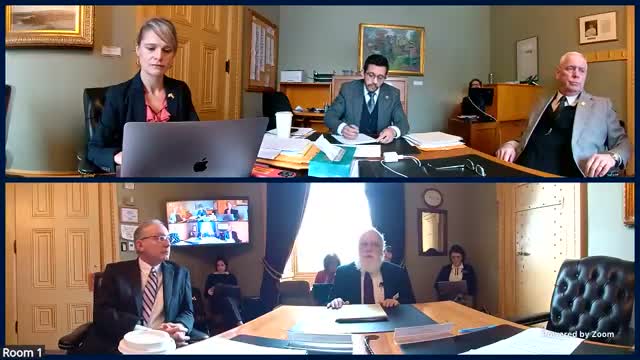
Jack McCullough, director of the Mental Health Law Project at Legal Aid, testified to the Senate Judiciary Committee that a proposed bill addressing involuntary hospitalization and competency restoration contains serious constitutional problems and is not the right solution to the state’s mental-health needs.
"The best thing that the legislature could do to address all the problems of the mental health system is to substantially and sustainably increase the resources," McCullough said, arguing that chronic underfunding makes the system unable to respond to crises and leads to avoidable homelessness and criminal justice involvement.
McCullough said the bill would create a new, expensive, high-security facility and would change longstanding legal standards. He warned the measure appears to shift the burden from government to prove deprivation is justified to a different, unclear standard and said federal constitutional precedent requires clear protections and periodic review of involuntary commitments.
He described typical restoration to competency as resulting from treatment received in hospitals and expressed doubt that the bill establishes how restoration would occur in practice. McCullough said many defendants found incompetent have conditions similar to other psychiatric patients and that separation into a distinct forensic facility may not be necessary.
Committee members asked McCullough for more detail about competency restoration mechanisms and whether the bill supplies a workable process. McCullough said restoration typically follows clinical treatment and that the bill lacks clear procedural safeguards and definitions of how restoration will be achieved.
McCullough concluded that because of constitutional and practical concerns he opposes the bill in its current form and urged lawmakers to invest in community treatment capacity instead of creating a costly new institutional program. The committee asked follow-up questions and signaled further consideration at later meetings.
"The best thing that the legislature could do to address all the problems of the mental health system is to substantially and sustainably increase the resources," McCullough said, arguing that chronic underfunding makes the system unable to respond to crises and leads to avoidable homelessness and criminal justice involvement.
McCullough said the bill would create a new, expensive, high-security facility and would change longstanding legal standards. He warned the measure appears to shift the burden from government to prove deprivation is justified to a different, unclear standard and said federal constitutional precedent requires clear protections and periodic review of involuntary commitments.
He described typical restoration to competency as resulting from treatment received in hospitals and expressed doubt that the bill establishes how restoration would occur in practice. McCullough said many defendants found incompetent have conditions similar to other psychiatric patients and that separation into a distinct forensic facility may not be necessary.
Committee members asked McCullough for more detail about competency restoration mechanisms and whether the bill supplies a workable process. McCullough said restoration typically follows clinical treatment and that the bill lacks clear procedural safeguards and definitions of how restoration will be achieved.
McCullough concluded that because of constitutional and practical concerns he opposes the bill in its current form and urged lawmakers to invest in community treatment capacity instead of creating a costly new institutional program. The committee asked follow-up questions and signaled further consideration at later meetings.
Don't Miss a Word: See the Full Meeting!
Go beyond summaries. Unlock every video, transcript, and key insight with a Founder Membership.
✓
Get instant access to full meeting videos
✓
Search and clip any phrase from complete transcripts
✓
Receive AI-powered summaries & custom alerts
✓
Enjoy lifetime, unrestricted access to government data
30-day money-back guarantee
