Local Energy Navigators ask legislature to fund statewide design study and $150,000 bridge for pilots
January 30, 2026 | Natural Resources & Energy, SENATE, Committees, Legislative , Vermont
This article was created by AI summarizing key points discussed. AI makes mistakes, so for full details and context, please refer to the video of the full meeting. Please report any errors so we can fix them. Report an error »
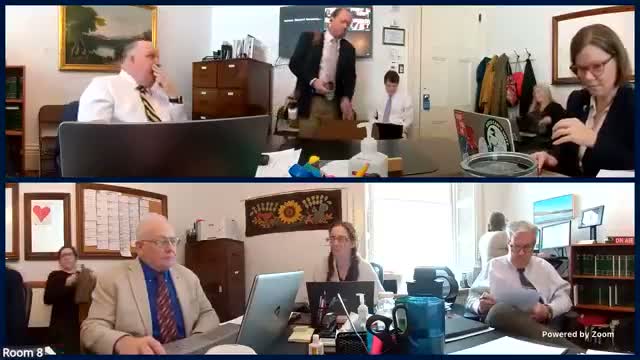
Representatives of the Climate Economy Action Center (CEAC) and local Energy Navigators testified before the Senate Natural Resources & Energy Committee on Jan. 29 in support of S219, a bill to study and design a statewide network of community‑based energy navigators.
Steve Meyer and colleagues described Energy Navigators as a locally‑rooted, volunteer‑led coaching program that performs in‑home assessments, helps residents understand available incentives and rebates, and supports household decisions about heat pumps and efficiency improvements. Meyer said the program makes referrals to established providers—Efficiency Vermont, Green Mountain Power and community action agencies—and stays engaged with clients as a long‑term advisor. “There’s no sales pitch, just ongoing, knowledgeable support,” he said.
CEAC representatives said the pilot has documented contact with roughly 200 households and relies on a mix of local donors, foundations, state and federal grants. With federal grant funding expected to lapse, the presenters requested $150,000 in bridge funding to sustain operations while the bill’s proposed design study develops a plan for statewide scaling. They said they use a CRM (monday.com) to track client engagement but face challenges obtaining post‑intervention outcome data unless clients report back or rebates are filed through partners.
Committee members asked about metrics, oversight and whether the program duplicates existing services; presenters said the program complements existing providers, focuses on relationship building and volunteer training, and is willing to provide grant reporting and partner with state agencies for appropriate oversight.
Why it matters: The program advocates that last‑mile coaching can convert existing incentives into realized household upgrades—particularly for low‑ and moderate‑income households—and that a modest state investment could help scale a model already operating in multiple counties.
What’s next: The committee heard the pilot results and cost request and may consider the appropriation and study language as S219 proceeds through committee deliberations.
Steve Meyer and colleagues described Energy Navigators as a locally‑rooted, volunteer‑led coaching program that performs in‑home assessments, helps residents understand available incentives and rebates, and supports household decisions about heat pumps and efficiency improvements. Meyer said the program makes referrals to established providers—Efficiency Vermont, Green Mountain Power and community action agencies—and stays engaged with clients as a long‑term advisor. “There’s no sales pitch, just ongoing, knowledgeable support,” he said.
CEAC representatives said the pilot has documented contact with roughly 200 households and relies on a mix of local donors, foundations, state and federal grants. With federal grant funding expected to lapse, the presenters requested $150,000 in bridge funding to sustain operations while the bill’s proposed design study develops a plan for statewide scaling. They said they use a CRM (monday.com) to track client engagement but face challenges obtaining post‑intervention outcome data unless clients report back or rebates are filed through partners.
Committee members asked about metrics, oversight and whether the program duplicates existing services; presenters said the program complements existing providers, focuses on relationship building and volunteer training, and is willing to provide grant reporting and partner with state agencies for appropriate oversight.
Why it matters: The program advocates that last‑mile coaching can convert existing incentives into realized household upgrades—particularly for low‑ and moderate‑income households—and that a modest state investment could help scale a model already operating in multiple counties.
What’s next: The committee heard the pilot results and cost request and may consider the appropriation and study language as S219 proceeds through committee deliberations.
Don't Miss a Word: See the Full Meeting!
Go beyond summaries. Unlock every video, transcript, and key insight with a Founder Membership.
✓
Get instant access to full meeting videos
✓
Search and clip any phrase from complete transcripts
✓
Receive AI-powered summaries & custom alerts
✓
Enjoy lifetime, unrestricted access to government data
30-day money-back guarantee
