VHFA seeks to extend and modestly increase sale of state tax credits to preserve down-payment assistance
January 30, 2026 | Finance, SENATE, Committees, Legislative , Vermont
This article was created by AI summarizing key points discussed. AI makes mistakes, so for full details and context, please refer to the video of the full meeting. Please report any errors so we can fix them. Report an error »
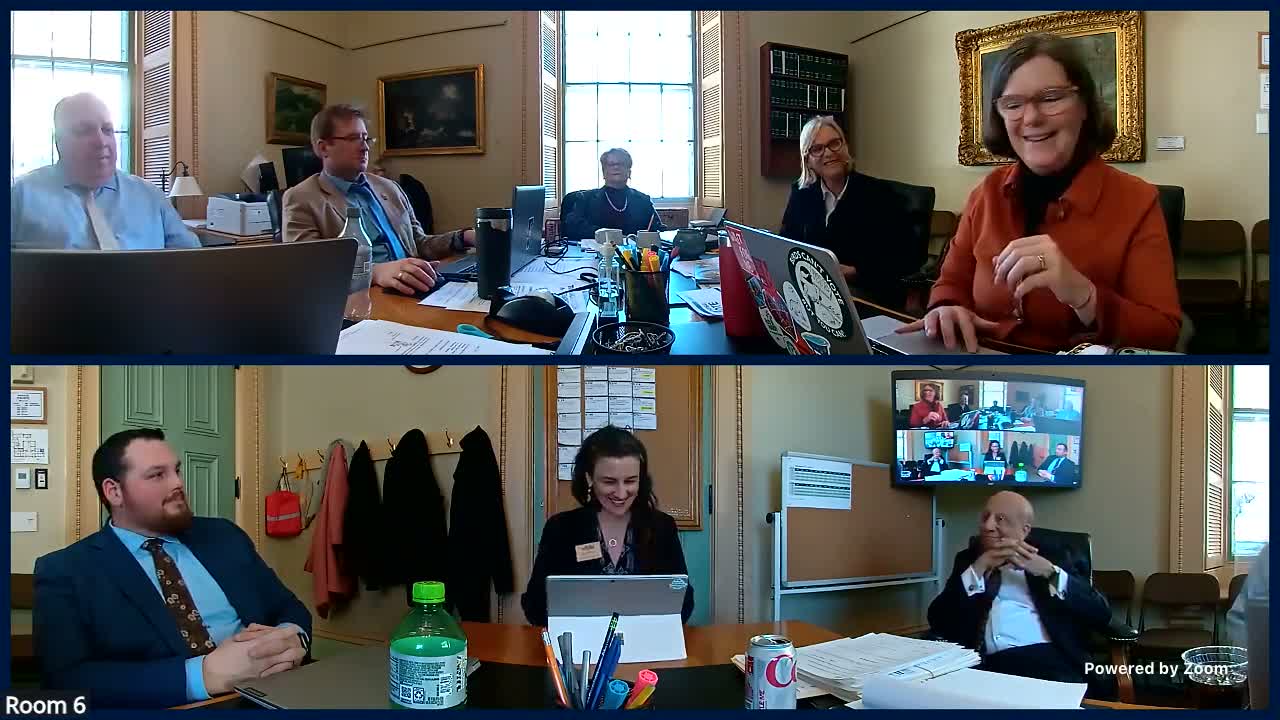
Laura Collins, executive director of the Vermont Housing Finance Agency, told the Senate Finance Committee on Jan. 30 that VHFA’s down-payment assistance (DPA) program has helped more than 2,100 Vermont households and is funded largely through the sale of state tax credits to banks.
Collins explained the DPA is a 0% silent second loan, historically $5,000 and later increased to $10,000 to account for rising prices, that is repaid when borrowers refinance, move or otherwise clear the lien. She said the program has made roughly $14,000,000 available in the revolving pool and that borrowers’ subsequent home appreciation has generated an estimated $137,000,000 of wealth for recipients overall.
The program’s funding model depends on banks purchasing five-year state tax credits; VHFA said those bulk sales typically returned 90–95¢ on the dollar but that higher interest rates have pushed prices closer to 90¢. Collins asked the committee to consider legislation extending VHFA’s authority to sell the credits for five more years and to increase annual sales from $250,000 to $350,000 so the revolving fund can continue to serve about 150 households per year instead of shrinking to an estimated 40 per year if sales end.
Collins told senators VHFA tightened eligibility last year (reducing the liquid-asset allowance from $30,000 to $20,000) because repayments and new sales were slowing, and noted the program’s administrative model uses participating lenders to originate loans under VHFA rules, keeping administrative costs low.
Collins framed the request as an investment: with the proposed increase, VHFA projects the sales would total $8,750,000 hitting the state budget across a nine-year tail and estimated an overall fiscal impact of about $7,972,000 over that same period. She said the increase would preserve a revolving pool that has supported home purchases across nearly every Vermont town and returns program dollars when loans are repaid.
Committee members asked about housing stock limits and whether banks would reallocate purchases to other credits if this program ended. Collins acknowledged uncertainty but noted VHFA’s experience that the DPA credit typically sells well and that the program produces a high return on the state’s investment.
The committee did not take final action on the request at the Jan. 30 meeting; Collins said VHFA staff would be available for follow-up questions.
Collins explained the DPA is a 0% silent second loan, historically $5,000 and later increased to $10,000 to account for rising prices, that is repaid when borrowers refinance, move or otherwise clear the lien. She said the program has made roughly $14,000,000 available in the revolving pool and that borrowers’ subsequent home appreciation has generated an estimated $137,000,000 of wealth for recipients overall.
The program’s funding model depends on banks purchasing five-year state tax credits; VHFA said those bulk sales typically returned 90–95¢ on the dollar but that higher interest rates have pushed prices closer to 90¢. Collins asked the committee to consider legislation extending VHFA’s authority to sell the credits for five more years and to increase annual sales from $250,000 to $350,000 so the revolving fund can continue to serve about 150 households per year instead of shrinking to an estimated 40 per year if sales end.
Collins told senators VHFA tightened eligibility last year (reducing the liquid-asset allowance from $30,000 to $20,000) because repayments and new sales were slowing, and noted the program’s administrative model uses participating lenders to originate loans under VHFA rules, keeping administrative costs low.
Collins framed the request as an investment: with the proposed increase, VHFA projects the sales would total $8,750,000 hitting the state budget across a nine-year tail and estimated an overall fiscal impact of about $7,972,000 over that same period. She said the increase would preserve a revolving pool that has supported home purchases across nearly every Vermont town and returns program dollars when loans are repaid.
Committee members asked about housing stock limits and whether banks would reallocate purchases to other credits if this program ended. Collins acknowledged uncertainty but noted VHFA’s experience that the DPA credit typically sells well and that the program produces a high return on the state’s investment.
The committee did not take final action on the request at the Jan. 30 meeting; Collins said VHFA staff would be available for follow-up questions.
Don't Miss a Word: See the Full Meeting!
Go beyond summaries. Unlock every video, transcript, and key insight with a Founder Membership.
✓
Get instant access to full meeting videos
✓
Search and clip any phrase from complete transcripts
✓
Receive AI-powered summaries & custom alerts
✓
Enjoy lifetime, unrestricted access to government data
30-day money-back guarantee
