Senate Finance hears S.218 to reduce chloride pollution with voluntary certification and an affirmative defense
January 30, 2026 | Finance, SENATE, Committees, Legislative , Vermont
This article was created by AI summarizing key points discussed. AI makes mistakes, so for full details and context, please refer to the video of the full meeting. Please report any errors so we can fix them. Report an error »
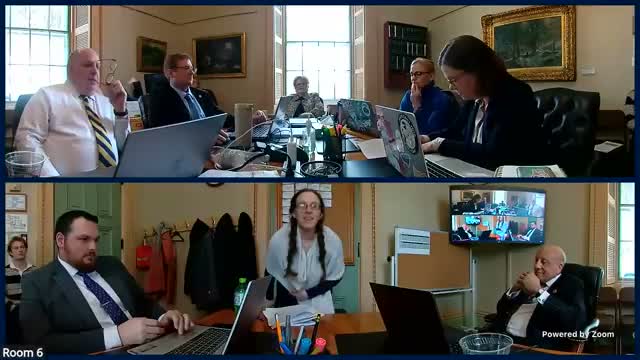
An unnamed presenter and the committee’s counsel walked senators through S.218 on Jan. 29, describing a voluntary Chloride Contamination Reduction Program to reduce chloride runoff from road salt and other deicing materials.
The presenter said the bill is modeled on New Hampshire’s Green Snow Pro program and would authorize the Agency of Natural Resources (ANR) to adopt best management practices (BMPs), offer training and establish certification for commercial salt applicators. The program is voluntary; participating applicators would be required to keep application records and submit an annual summary of winter salt usage.
Michael Grady, desk counsel, described a legal benefit the bill would provide: a certified applicator (and a property owner or lessee who maintains the property) could assert an affirmative defense in civil claims for injuries caused solely by snow or ice if they complied with the BMPs and recordkeeping requirements. "When they complete certification, they shall have an affirmative defense," Grady said, adding the protection would not apply in cases of gross negligence or reckless disregard.
The proposal would exclude state agency staff (AOT would retain its own practices) and exempt transportation construction projects that need different application methods. The bill also calls for ANR to report to the General Assembly on municipal salt-storage facilities (how many are covered or within 100 yards of water, estimated costs to move or cover facilities) but does not mandate immediate facility coverage.
Grady said prior fiscal iterations included small appropriations and staffing that were later stripped; the bill as presented contemplates that implementation would be contingent on receiving sufficient funding, and any fee recommended by a vendor to support certification must be approved by the General Assembly.
Committee members asked about the balance between public-safety needs and water-quality protection, the extent of existing municipal practices, and whether the fiscal note quantifies potential savings from reducing TMDL liabilities. The committee took additional testimony and indicated the bill would be reviewed further.
The presenter said the bill is modeled on New Hampshire’s Green Snow Pro program and would authorize the Agency of Natural Resources (ANR) to adopt best management practices (BMPs), offer training and establish certification for commercial salt applicators. The program is voluntary; participating applicators would be required to keep application records and submit an annual summary of winter salt usage.
Michael Grady, desk counsel, described a legal benefit the bill would provide: a certified applicator (and a property owner or lessee who maintains the property) could assert an affirmative defense in civil claims for injuries caused solely by snow or ice if they complied with the BMPs and recordkeeping requirements. "When they complete certification, they shall have an affirmative defense," Grady said, adding the protection would not apply in cases of gross negligence or reckless disregard.
The proposal would exclude state agency staff (AOT would retain its own practices) and exempt transportation construction projects that need different application methods. The bill also calls for ANR to report to the General Assembly on municipal salt-storage facilities (how many are covered or within 100 yards of water, estimated costs to move or cover facilities) but does not mandate immediate facility coverage.
Grady said prior fiscal iterations included small appropriations and staffing that were later stripped; the bill as presented contemplates that implementation would be contingent on receiving sufficient funding, and any fee recommended by a vendor to support certification must be approved by the General Assembly.
Committee members asked about the balance between public-safety needs and water-quality protection, the extent of existing municipal practices, and whether the fiscal note quantifies potential savings from reducing TMDL liabilities. The committee took additional testimony and indicated the bill would be reviewed further.
Don't Miss a Word: See the Full Meeting!
Go beyond summaries. Unlock every video, transcript, and key insight with a Founder Membership.
✓
Get instant access to full meeting videos
✓
Search and clip any phrase from complete transcripts
✓
Receive AI-powered summaries & custom alerts
✓
Enjoy lifetime, unrestricted access to government data
30-day money-back guarantee
