Georgia Partnership presents 'Top 10' education issues; committee zeroes in on literacy, QBE and attendance
January 30, 2026 | Education, HOUSE OF REPRESENTATIVES, Committees, Legislative, Georgia
This article was created by AI summarizing key points discussed. AI makes mistakes, so for full details and context, please refer to the video of the full meeting. Please report any errors so we can fix them. Report an error »
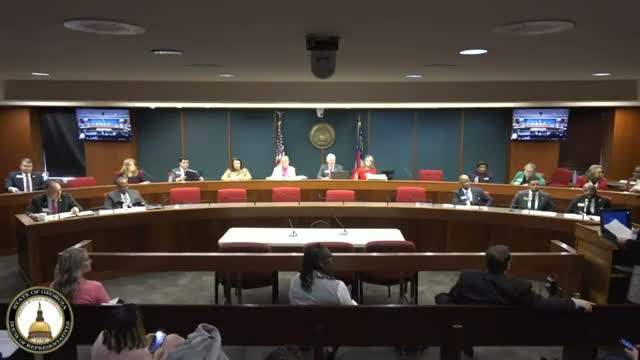
Dr. Dana Rickman, president and CEO of the Georgia Partnership for Excellence in Education, told the House education committee that the state’s education policy landscape is "shifting a lot and with a lot of uncertainty" and urged lawmakers to prioritize safety, literacy and learning as they review bills this session.
Rickman described the Partnership’s annual "Top 10 issues to watch," a research-based, nonpartisan agenda that recommends a two-year policy plan aimed at a 10-year goal of 65% of adults holding a credential of value. She said key themes include investing in talent through career pathways and teacher quality, optimizing local attendance strategies, and aligning state investments to yield measurable outcomes.
On literacy, Rickman said districts that made the most progress had "a literacy coach in every elementary school," but warned of a supply problem: "You have to be very careful there of requiring a literacy coach in every school. You have to look at the supply issue." She cautioned against "robbing Peter to pay Paul" by pulling strong classroom teachers into coaching roles without increasing overall capacity.
Committee members pressed for specifics. Representative Wilkerson said modern educational goals will cost more than the current QBE (Quality Basic Education) formula contemplates; Rickman recommended a cost study and prioritization if funding cannot meet all goals. Secretary Jerry Hilton told the committee, "Any candidate out there that's bragging about Georgia's ed, graduation rate needs to take a look at our reading levels because the two can't coexist," framing a central tension between graduation metrics and literacy proficiency.
Rickman and other presenters urged better statewide data systems to evaluate local innovations, recommended regional employer engagement for career-pathway development, and suggested the state consider how to train educators to use AI responsibly rather than ban it. She also recommended a coordinated, community-specific approach to chronic absenteeism that addresses health, housing and mental‑health barriers.
The session concluded with committee members agreeing to continue the discussion in subcommittee and to engage the Partnership staff after the meeting. Chairman Erwin thanked the presenters and said literacy would be a continuing focus for the committee.
The next procedural steps are additional subcommittee hearings on bills tied to the committee’s work and follow‑up briefings with Partnership staff.
Rickman described the Partnership’s annual "Top 10 issues to watch," a research-based, nonpartisan agenda that recommends a two-year policy plan aimed at a 10-year goal of 65% of adults holding a credential of value. She said key themes include investing in talent through career pathways and teacher quality, optimizing local attendance strategies, and aligning state investments to yield measurable outcomes.
On literacy, Rickman said districts that made the most progress had "a literacy coach in every elementary school," but warned of a supply problem: "You have to be very careful there of requiring a literacy coach in every school. You have to look at the supply issue." She cautioned against "robbing Peter to pay Paul" by pulling strong classroom teachers into coaching roles without increasing overall capacity.
Committee members pressed for specifics. Representative Wilkerson said modern educational goals will cost more than the current QBE (Quality Basic Education) formula contemplates; Rickman recommended a cost study and prioritization if funding cannot meet all goals. Secretary Jerry Hilton told the committee, "Any candidate out there that's bragging about Georgia's ed, graduation rate needs to take a look at our reading levels because the two can't coexist," framing a central tension between graduation metrics and literacy proficiency.
Rickman and other presenters urged better statewide data systems to evaluate local innovations, recommended regional employer engagement for career-pathway development, and suggested the state consider how to train educators to use AI responsibly rather than ban it. She also recommended a coordinated, community-specific approach to chronic absenteeism that addresses health, housing and mental‑health barriers.
The session concluded with committee members agreeing to continue the discussion in subcommittee and to engage the Partnership staff after the meeting. Chairman Erwin thanked the presenters and said literacy would be a continuing focus for the committee.
The next procedural steps are additional subcommittee hearings on bills tied to the committee’s work and follow‑up briefings with Partnership staff.
Don't Miss a Word: See the Full Meeting!
Go beyond summaries. Unlock every video, transcript, and key insight with a Founder Membership.
✓
Get instant access to full meeting videos
✓
Search and clip any phrase from complete transcripts
✓
Receive AI-powered summaries & custom alerts
✓
Enjoy lifetime, unrestricted access to government data
30-day money-back guarantee
