Committee hears bill to require human‑trafficking training for hotels and short‑term rentals
January 30, 2026 | Economic Development & Tourism, HOUSE OF REPRESENTATIVES, Committees, Legislative, Georgia
This article was created by AI summarizing key points discussed. AI makes mistakes, so for full details and context, please refer to the video of the full meeting. Please report any errors so we can fix them. Report an error »
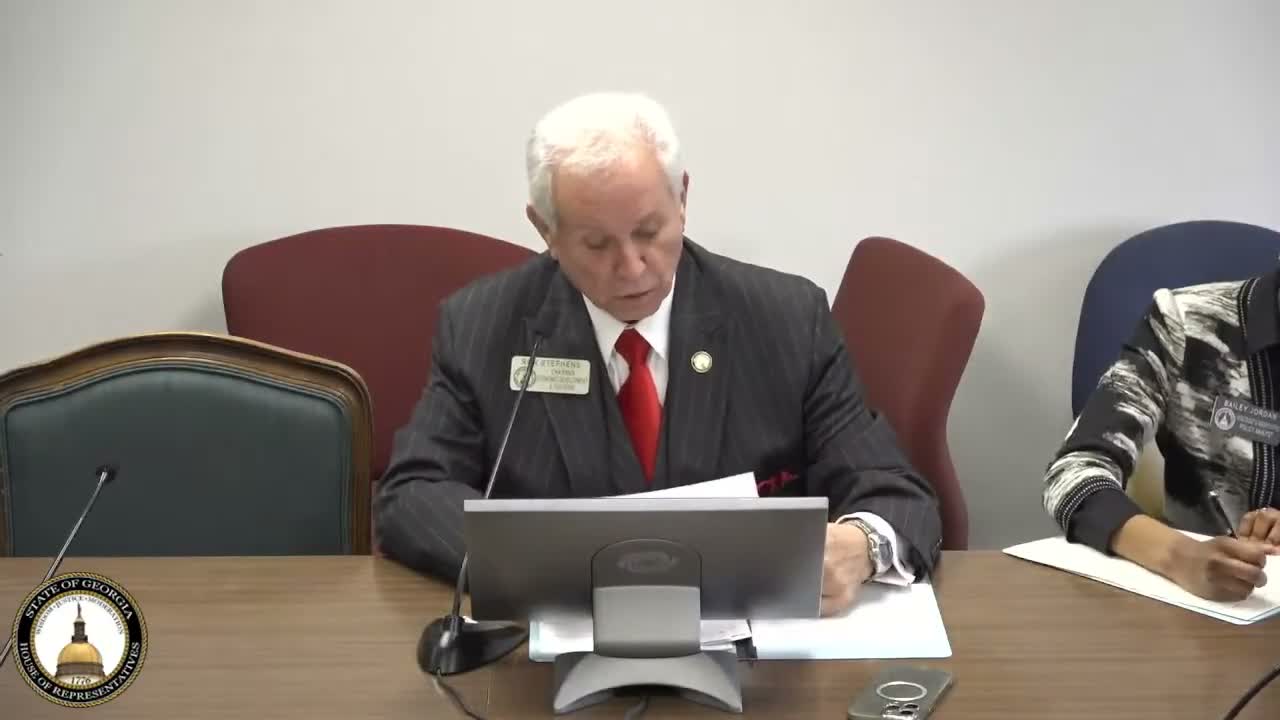
Representative Bazemore presented House Bill 490 as an amendment to Article 3 of Chapter 5 of Title 16 of the Official Code of Georgia Annotated to require a human‑trafficking training program for hotels and other lodging businesses, provide definitions and retraining, set penalties, and repeal conflicting provisions.
Bazemore said the measure grew out of local conversations near the state's busiest airport and meetings with the first lady and local mayors who reported instances where lodging operators were "turning a blind eye" to trafficking. "We want to put as much force and teeth in this legislation to make sure that we help to eradicate human trafficking," Bazemore said.
Industry witness Chris Hardeman, head of the Hotel Lodging Association, told the committee the hospitality sector has already invested in training and "we'd have probably 95% of hotel employees trained in human trafficking prevention. We wanna make that a 100%." He said national brands — IHG, Hyatt and Hilton — were making training available and that updated bill language would shift some oversight to the attorney general and add fiscal penalties for noncompliance.
Committee members probed the bill's scope and enforcement mechanisms. Members asked whether every hotel, motel, short‑term rental (including platforms such as Airbnb and VRBO), state park lodging, and campgrounds would be covered and whether small, single‑unit hosts would face undue burdens. Bazemore and industry witnesses said the bill uses the Title 48 definition of "innkeeper" to capture various lodging types, that cleaning crews or third‑party managers could serve as the compliance touchpoint, and that the state would provide free training through the criminal justice coordinating council.
The draft language discussed in committee includes recordkeeping and deadlines: owners would retain training records for one year after employee separation; employees must complete training on or before July 1, 2026, and within five days of being hired. Hardeman said updated language under consideration would add tiered fines (cited in committee discussion as roughly $500, $1,000 and $2,000) for failure to conduct training or retain records. Committee members asked the sponsor to refine language on unit caps, third‑party training acceptance and signage for short‑term rentals.
The hearing ended with the committee in "hearing mode only." The chair said members would reconvene next week to consider clarified language, including signage requirements and explicit coverage for short‑term rentals and state parks. No vote was taken on HB490 during this session.
Bazemore said the measure grew out of local conversations near the state's busiest airport and meetings with the first lady and local mayors who reported instances where lodging operators were "turning a blind eye" to trafficking. "We want to put as much force and teeth in this legislation to make sure that we help to eradicate human trafficking," Bazemore said.
Industry witness Chris Hardeman, head of the Hotel Lodging Association, told the committee the hospitality sector has already invested in training and "we'd have probably 95% of hotel employees trained in human trafficking prevention. We wanna make that a 100%." He said national brands — IHG, Hyatt and Hilton — were making training available and that updated bill language would shift some oversight to the attorney general and add fiscal penalties for noncompliance.
Committee members probed the bill's scope and enforcement mechanisms. Members asked whether every hotel, motel, short‑term rental (including platforms such as Airbnb and VRBO), state park lodging, and campgrounds would be covered and whether small, single‑unit hosts would face undue burdens. Bazemore and industry witnesses said the bill uses the Title 48 definition of "innkeeper" to capture various lodging types, that cleaning crews or third‑party managers could serve as the compliance touchpoint, and that the state would provide free training through the criminal justice coordinating council.
The draft language discussed in committee includes recordkeeping and deadlines: owners would retain training records for one year after employee separation; employees must complete training on or before July 1, 2026, and within five days of being hired. Hardeman said updated language under consideration would add tiered fines (cited in committee discussion as roughly $500, $1,000 and $2,000) for failure to conduct training or retain records. Committee members asked the sponsor to refine language on unit caps, third‑party training acceptance and signage for short‑term rentals.
The hearing ended with the committee in "hearing mode only." The chair said members would reconvene next week to consider clarified language, including signage requirements and explicit coverage for short‑term rentals and state parks. No vote was taken on HB490 during this session.
Don't Miss a Word: See the Full Meeting!
Go beyond summaries. Unlock every video, transcript, and key insight with a Founder Membership.
✓
Get instant access to full meeting videos
✓
Search and clip any phrase from complete transcripts
✓
Receive AI-powered summaries & custom alerts
✓
Enjoy lifetime, unrestricted access to government data
30-day money-back guarantee
