Sponsors pitch H.772 as compromise to curb evictions and fund rental‑arrears aid
January 30, 2026 | General & Housing, HOUSE OF REPRESENTATIVES, Committees, Legislative , Vermont
This article was created by AI summarizing key points discussed. AI makes mistakes, so for full details and context, please refer to the video of the full meeting. Please report any errors so we can fix them. Report an error »
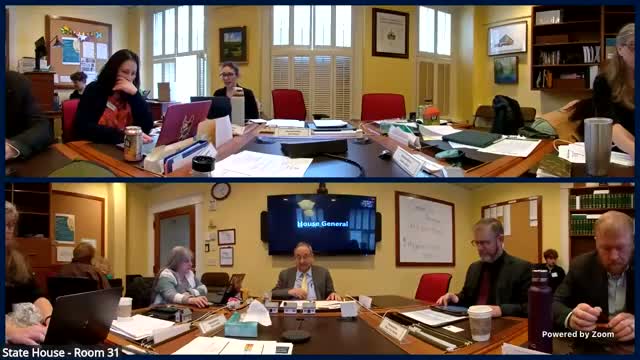
Mark Mahali (Speaker 2), a director representing Plainfield Council in Marshfield, told the General & Housing Committee that H.772 is a negotiated compromise between landlord and tenant advocates intended to address rising rents, evictions and the risk of homelessness.
"The status quo with respect to landlord‑tenant law isn't great," Mahali said, summarizing months of talks with senators, tenant groups and landlord representatives. He said the bill was drafted explicitly as a compromise that gives each side elements they want while leaving out others.
A central change in H.772 is an end to no‑cause evictions, Mahali said, combined with a faster, cause‑based process to address seriously disruptive or dangerous tenants. "The bill contains a provision that says that a landlord can file an affidavit under penalty of perjury alleging the facts that say that this person, let's say, is a drug dealer," he said, describing a show‑cause hearing scheduled quickly (he cited a week as a target) in which the tenant must appear and answer the allegations under penalty of perjury.
Mahali acknowledged the mechanism is imperfect but argued it balances tenant protection with landlords' desire for a quicker remedy when a tenant poses safety or criminal‑activity risks. The bill also narrows some procedural timelines—Mahali said certain steps that now take about 30 days are limited to 14 days in the draft—though other sponsors have proposed even shorter timeframes.
H.772 does not include broad rent control, Mahali said, but it does include a limit on rent increases following a building sale: for 12 months after a sale the increase would be capped at CPI plus 3 percent. "That's not rent control," he said, "but it addresses a common pain point when ownership changes hands."
The bill also includes a $1,000,000 appropriation to establish or expand a rental‑arrears program intended to help tenants who can repay over time after a hardship; Mahali said the program is administratively created and that landlords and tenants must agree to invoke it. Committee members also discussed $100,000 identified for CVOEO to run education for tenants and landlords and noted the department will work with legal aid on outreach.
Mahali said the committee will receive comparative data (a table) showing eviction‑process timing in other states to inform debate. He closed by describing H.772 as a vehicle for the committee to compare several landlord‑tenant bills and seek common ground in a forthcoming walkthrough of all related measures.
The committee did not take any formal votes during the presentation; sponsors said they expect a detailed walkthrough of H.772 and related bills in the coming weeks.
"The status quo with respect to landlord‑tenant law isn't great," Mahali said, summarizing months of talks with senators, tenant groups and landlord representatives. He said the bill was drafted explicitly as a compromise that gives each side elements they want while leaving out others.
A central change in H.772 is an end to no‑cause evictions, Mahali said, combined with a faster, cause‑based process to address seriously disruptive or dangerous tenants. "The bill contains a provision that says that a landlord can file an affidavit under penalty of perjury alleging the facts that say that this person, let's say, is a drug dealer," he said, describing a show‑cause hearing scheduled quickly (he cited a week as a target) in which the tenant must appear and answer the allegations under penalty of perjury.
Mahali acknowledged the mechanism is imperfect but argued it balances tenant protection with landlords' desire for a quicker remedy when a tenant poses safety or criminal‑activity risks. The bill also narrows some procedural timelines—Mahali said certain steps that now take about 30 days are limited to 14 days in the draft—though other sponsors have proposed even shorter timeframes.
H.772 does not include broad rent control, Mahali said, but it does include a limit on rent increases following a building sale: for 12 months after a sale the increase would be capped at CPI plus 3 percent. "That's not rent control," he said, "but it addresses a common pain point when ownership changes hands."
The bill also includes a $1,000,000 appropriation to establish or expand a rental‑arrears program intended to help tenants who can repay over time after a hardship; Mahali said the program is administratively created and that landlords and tenants must agree to invoke it. Committee members also discussed $100,000 identified for CVOEO to run education for tenants and landlords and noted the department will work with legal aid on outreach.
Mahali said the committee will receive comparative data (a table) showing eviction‑process timing in other states to inform debate. He closed by describing H.772 as a vehicle for the committee to compare several landlord‑tenant bills and seek common ground in a forthcoming walkthrough of all related measures.
The committee did not take any formal votes during the presentation; sponsors said they expect a detailed walkthrough of H.772 and related bills in the coming weeks.
Don't Miss a Word: See the Full Meeting!
Go beyond summaries. Unlock every video, transcript, and key insight with a Founder Membership.
✓
Get instant access to full meeting videos
✓
Search and clip any phrase from complete transcripts
✓
Receive AI-powered summaries & custom alerts
✓
Enjoy lifetime, unrestricted access to government data
30-day money-back guarantee
