H.775 proposes tax stabilization, treasurer investment increase and modular housing ‘accelerator’ to spur small projects
January 30, 2026 | General & Housing, HOUSE OF REPRESENTATIVES, Committees, Legislative , Vermont
This article was created by AI summarizing key points discussed. AI makes mistakes, so for full details and context, please refer to the video of the full meeting. Please report any errors so we can fix them. Report an error »
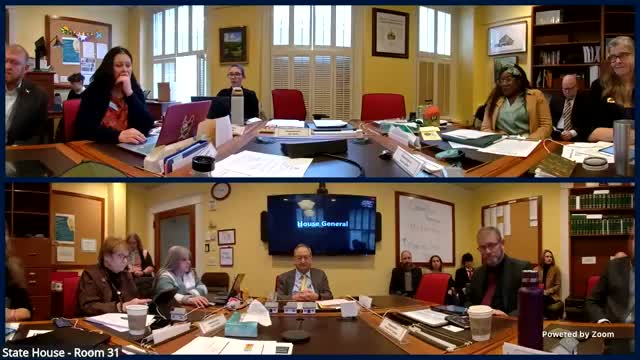
Committee sponsors presented H.775 as a multi‑pronged effort to make small housing projects financially feasible in rural communities.
Speaker 2 (Mark Mahali) described a pilot tax‑stabilization provision under which any project of fewer than 16 units in a town of 5,000 people or fewer could avoid additional property tax for seven years (with phased increases thereafter and full taxation by year 10). Mahali said the pilot would let the Joint Fiscal Office estimate the Education Fund cost and test whether projects take advantage of the credit.
H.775 would also make it easier for select boards to establish special assessment districts for development infrastructure and issue bonds backed by assessments on the development rather than requiring a townwide vote or the town’s full‑faith credit, Mahali said. "The bondholder can't look to a town; they look to the development and those assessments," he said.
The bill makes two changes to the treasurer's housing investment program (informally called "10% for Vermont"): raising the allocation from 10% to 12.5% and directing interest income on treasurer loans back to housing programs rather than the general fund.
A prominent element of H.775 is an off‑site modular housing accelerator. Sponsors described it as a state‑facilitated effort to coordinate bulk purchases for small developers, standardize specifications in RFPs, and use the treasurer's credit to guarantee orders so manufacturers will scale up production. "We're asking them to coordinate this on behalf of small projects and pass the cost savings on to the small development," one sponsor said.
Committee members raised several technical questions: whether VHIP/BHIP programs would be available to developers or only owner‑occupant landlords; whether universal design/accessibility would be required for accelerator units (not currently required in the draft); and what per‑unit cost savings could be achieved. Sponsors said cost savings depend on model, volume and standardization and that some pilot programs have shown material savings, but no guaranteed percentage was asserted during the hearing.
Members also asked about resale and long‑term affordability; sponsors said permanence depends on financing choices—partnering with DHFA, land trusts or specific deed restrictions can preserve affordability, but the bill primarily enables tools rather than mandates permanent affordability.
Sponsors said departments will supply proposed language and specifications, and a joint hearing with Commerce and other committees to further discuss the tax stabilization and assessment provisions is scheduled soon. No committee vote occurred during the presentation.
Speaker 2 (Mark Mahali) described a pilot tax‑stabilization provision under which any project of fewer than 16 units in a town of 5,000 people or fewer could avoid additional property tax for seven years (with phased increases thereafter and full taxation by year 10). Mahali said the pilot would let the Joint Fiscal Office estimate the Education Fund cost and test whether projects take advantage of the credit.
H.775 would also make it easier for select boards to establish special assessment districts for development infrastructure and issue bonds backed by assessments on the development rather than requiring a townwide vote or the town’s full‑faith credit, Mahali said. "The bondholder can't look to a town; they look to the development and those assessments," he said.
The bill makes two changes to the treasurer's housing investment program (informally called "10% for Vermont"): raising the allocation from 10% to 12.5% and directing interest income on treasurer loans back to housing programs rather than the general fund.
A prominent element of H.775 is an off‑site modular housing accelerator. Sponsors described it as a state‑facilitated effort to coordinate bulk purchases for small developers, standardize specifications in RFPs, and use the treasurer's credit to guarantee orders so manufacturers will scale up production. "We're asking them to coordinate this on behalf of small projects and pass the cost savings on to the small development," one sponsor said.
Committee members raised several technical questions: whether VHIP/BHIP programs would be available to developers or only owner‑occupant landlords; whether universal design/accessibility would be required for accelerator units (not currently required in the draft); and what per‑unit cost savings could be achieved. Sponsors said cost savings depend on model, volume and standardization and that some pilot programs have shown material savings, but no guaranteed percentage was asserted during the hearing.
Members also asked about resale and long‑term affordability; sponsors said permanence depends on financing choices—partnering with DHFA, land trusts or specific deed restrictions can preserve affordability, but the bill primarily enables tools rather than mandates permanent affordability.
Sponsors said departments will supply proposed language and specifications, and a joint hearing with Commerce and other committees to further discuss the tax stabilization and assessment provisions is scheduled soon. No committee vote occurred during the presentation.
Don't Miss a Word: See the Full Meeting!
Go beyond summaries. Unlock every video, transcript, and key insight with a Founder Membership.
✓
Get instant access to full meeting videos
✓
Search and clip any phrase from complete transcripts
✓
Receive AI-powered summaries & custom alerts
✓
Enjoy lifetime, unrestricted access to government data
30-day money-back guarantee
