Witnesses urge more staffing, space and confidential safeguards for H.548 state mediator proposal
January 30, 2026 | General & Housing, HOUSE OF REPRESENTATIVES, Committees, Legislative , Vermont
This article was created by AI summarizing key points discussed. AI makes mistakes, so for full details and context, please refer to the video of the full meeting. Please report any errors so we can fix them. Report an error »
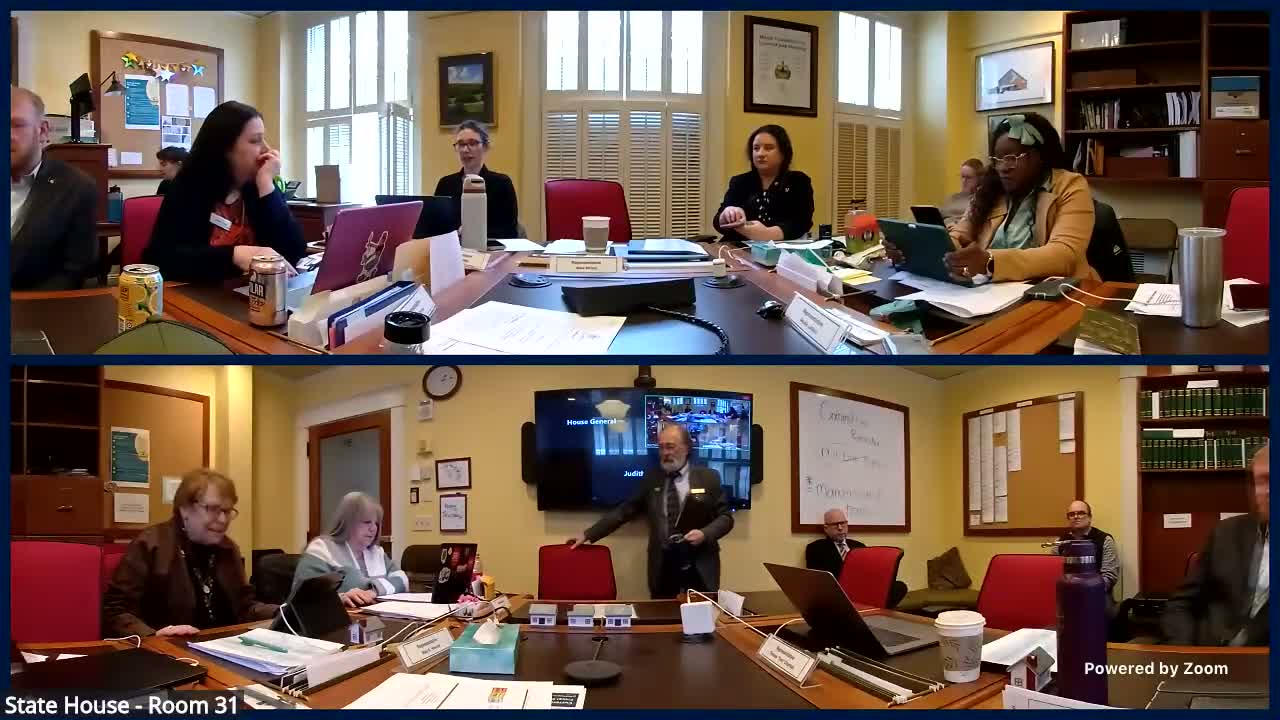
The committee reviewed H.548, a bill to add a mediator position to the Vermont Labor Relations Board (VLBR). Judith Dillon, executive director of the VLBR, told the committee she is the board's only full‑time staffer: "The board has 1 full time staff member, myself." Dillon said the board previously relied on mediators provided by the Federal Mediation and Conciliation Service (FMCS) and that reductions at FMCS have left a coverage gap for Vermont.
Dillon outlined practical needs if the board houses a mediator: funding must account for space because the Department of Buildings and General Services (BGS) charges agencies for space; the VLBR currently shares "a conference room" at 6 Baldwin Street and lacks the three rooms Dillon described as ideal for mediation (a joint room plus two caucus rooms). She also recommended creating a conflict panel or contracting mediators for overflow and conflicts rather than relying on a single state mediator.
Dillon emphasized the confidentiality of mediation: "That's confidential by statute and the the legislature may clear that parties that what takes place in mediation shouldn't be brought up in the context of hearings." She recommended preserving legal boundaries so confidential mediation communications are not used in contested hearings before the board.
Patty Turley, general counsel for Vermont State Colleges, said the colleges regularly used FMCS in contract negotiations and stressed the value of mediators familiar with Vermont law and local bargaining history. Turley said the colleges had 15 contracts since 2020 and that they "used the federal mediation services 10 times," adding most of those mediations helped the parties reach settlement.
David Mickenberg of Working Vermont described FMCS staff reductions as severe (he characterized the cut as "92, 93%") and called H.548 "a potentially positive step forward." He and other witnesses recommended expanding the bill's scope beyond collective bargaining to include grievance mediation and urged adding an attorney position to the VLBR to address understaffing and case backlog.
The bill includes a $115,000 appropriation in current draft language. Committee members raised questions about whether one FTE would be sufficient if the law's reach expands (for example, under a ballot measure anticipated in 2026 that would broaden public coverage), and noted the practical tradeoffs between a single state mediator, a contracted panel, or continued use of private mediators that parties must pay for.
The committee did not vote; members said they will discuss drafting, staffing and budget questions at a later markup session.
Dillon outlined practical needs if the board houses a mediator: funding must account for space because the Department of Buildings and General Services (BGS) charges agencies for space; the VLBR currently shares "a conference room" at 6 Baldwin Street and lacks the three rooms Dillon described as ideal for mediation (a joint room plus two caucus rooms). She also recommended creating a conflict panel or contracting mediators for overflow and conflicts rather than relying on a single state mediator.
Dillon emphasized the confidentiality of mediation: "That's confidential by statute and the the legislature may clear that parties that what takes place in mediation shouldn't be brought up in the context of hearings." She recommended preserving legal boundaries so confidential mediation communications are not used in contested hearings before the board.
Patty Turley, general counsel for Vermont State Colleges, said the colleges regularly used FMCS in contract negotiations and stressed the value of mediators familiar with Vermont law and local bargaining history. Turley said the colleges had 15 contracts since 2020 and that they "used the federal mediation services 10 times," adding most of those mediations helped the parties reach settlement.
David Mickenberg of Working Vermont described FMCS staff reductions as severe (he characterized the cut as "92, 93%") and called H.548 "a potentially positive step forward." He and other witnesses recommended expanding the bill's scope beyond collective bargaining to include grievance mediation and urged adding an attorney position to the VLBR to address understaffing and case backlog.
The bill includes a $115,000 appropriation in current draft language. Committee members raised questions about whether one FTE would be sufficient if the law's reach expands (for example, under a ballot measure anticipated in 2026 that would broaden public coverage), and noted the practical tradeoffs between a single state mediator, a contracted panel, or continued use of private mediators that parties must pay for.
The committee did not vote; members said they will discuss drafting, staffing and budget questions at a later markup session.
Don't Miss a Word: See the Full Meeting!
Go beyond summaries. Unlock every video, transcript, and key insight with a Founder Membership.
✓
Get instant access to full meeting videos
✓
Search and clip any phrase from complete transcripts
✓
Receive AI-powered summaries & custom alerts
✓
Enjoy lifetime, unrestricted access to government data
30-day money-back guarantee
