Witnesses tell General & Housing committee housing instability is driving Vermonters with disabilities into homelessness
January 30, 2026 | General & Housing, HOUSE OF REPRESENTATIVES, Committees, Legislative , Vermont
This article was created by AI summarizing key points discussed. AI makes mistakes, so for full details and context, please refer to the video of the full meeting. Please report any errors so we can fix them. Report an error »
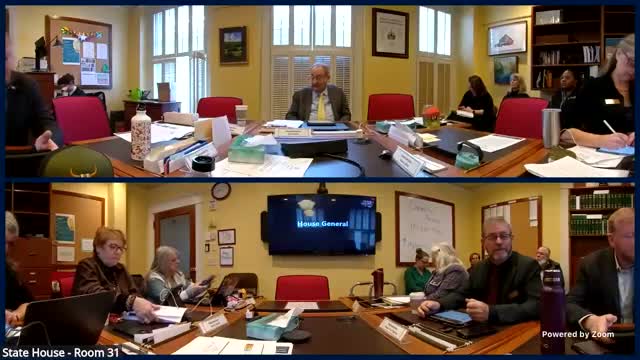
MONTPELIER — Testimony at the Committee on General and Housing on Jan. 29 emphasized that housing instability is a public‑health and civil‑rights crisis for Vermonters with disabilities.
Lindsay Sainsmore, executive director of Disability Rights Vermont, told the committee that housing is “at the very foundation of Maslow’s hierarchy of needs” and that state systems are producing disproportionate harm for people with disabilities. Sainsmore said her office is the state’s Protection and Advocacy agency and the mental‑health ombudsman and described a small staff of about 10. She cited data saying homelessness in Vermont has increased more than 300% since the pandemic, leaving roughly 4,500 people, including more than 1,000 children, without stable housing as of June 2025, and said about half of those individuals report a serious mental‑health condition.
The witnesses urged the committee to prioritize permanency and supports over short‑term shelter. “Until we house us all, we are set up as a state for failure,” Sainsmore said.
Talia Livingston, Fair Housing Project education and outreach coordinator at the Champlain Valley Office of Economic Opportunity (CVOEO), described how rapid rent increases and shortened eviction‑notice periods would particularly harm renters with disabilities. CVOEO, which the witness said serves more than 20,000 Vermonters annually through housing helplines and direct assistance, offered client examples to illustrate the effect of rising housing costs: one renter who moved to Burlington in August 2024 paid $1,200 in rent; by late 2025 the same unit’s rent had risen to $1,900. Livingston also said manufactured‑home residents report lot‑rent increases averaging about 6.3% annually since 2021, which she contrasted with a 4.1% annual Social Security cost‑of‑living adjustment.
Jennifer Levine, who testified about her adult son’s experience, said caseworkers sometimes respond only after a person is in crisis and described long delays in obtaining help. Levine said her son receives $1,900 in Social Security and pays $1,700 for a one‑bedroom apartment, forcing the family to provide ongoing support.
Gloria Quinn, executive director of Upper Valley Services, detailed housing pressures for people with intellectual and developmental disabilities (IDD). Quinn said about 3,500 Vermonters receive IDD services; roughly 39% live with aging family members and a similar share live in shared‑living models. She said that in October alone 144 people with IDD were at immediate risk of homelessness and urged earmarked housing investments for people with IDD. Quinn also cited The Road Home and the Act 69 report as frameworks that call for significant unit production, noting a stated target of roughly 600 units over five years.
Witnesses repeatedly called for policy and program changes to link affordable, accessible housing with the staffing and services people with disabilities need. Sainsmore and others urged creation of durable oversight rather than short‑lived commissions: Sainsmore said a prior Olmstead commission produced a report but was sun‑setted without follow‑up and supported reinstituting sustained oversight to monitor progress toward community‑based services.
Committee members asked detailed questions about funding streams and service capacity. Sainsmore said Disability Rights Vermont receives most of its support from federal grants (HHS, ACL and Social Security Administration programs) and described current uncertainty about congressional funding that could affect hiring and services. Witnesses also described limited crisis beds and long waits for group‑home or long‑term placements.
The committee paused for a brief break and is scheduled to continue with a witness on the manufactured‑home bill and a fiscal briefing from the Joint Fiscal Office later in the morning.
Lindsay Sainsmore, executive director of Disability Rights Vermont, told the committee that housing is “at the very foundation of Maslow’s hierarchy of needs” and that state systems are producing disproportionate harm for people with disabilities. Sainsmore said her office is the state’s Protection and Advocacy agency and the mental‑health ombudsman and described a small staff of about 10. She cited data saying homelessness in Vermont has increased more than 300% since the pandemic, leaving roughly 4,500 people, including more than 1,000 children, without stable housing as of June 2025, and said about half of those individuals report a serious mental‑health condition.
The witnesses urged the committee to prioritize permanency and supports over short‑term shelter. “Until we house us all, we are set up as a state for failure,” Sainsmore said.
Talia Livingston, Fair Housing Project education and outreach coordinator at the Champlain Valley Office of Economic Opportunity (CVOEO), described how rapid rent increases and shortened eviction‑notice periods would particularly harm renters with disabilities. CVOEO, which the witness said serves more than 20,000 Vermonters annually through housing helplines and direct assistance, offered client examples to illustrate the effect of rising housing costs: one renter who moved to Burlington in August 2024 paid $1,200 in rent; by late 2025 the same unit’s rent had risen to $1,900. Livingston also said manufactured‑home residents report lot‑rent increases averaging about 6.3% annually since 2021, which she contrasted with a 4.1% annual Social Security cost‑of‑living adjustment.
Jennifer Levine, who testified about her adult son’s experience, said caseworkers sometimes respond only after a person is in crisis and described long delays in obtaining help. Levine said her son receives $1,900 in Social Security and pays $1,700 for a one‑bedroom apartment, forcing the family to provide ongoing support.
Gloria Quinn, executive director of Upper Valley Services, detailed housing pressures for people with intellectual and developmental disabilities (IDD). Quinn said about 3,500 Vermonters receive IDD services; roughly 39% live with aging family members and a similar share live in shared‑living models. She said that in October alone 144 people with IDD were at immediate risk of homelessness and urged earmarked housing investments for people with IDD. Quinn also cited The Road Home and the Act 69 report as frameworks that call for significant unit production, noting a stated target of roughly 600 units over five years.
Witnesses repeatedly called for policy and program changes to link affordable, accessible housing with the staffing and services people with disabilities need. Sainsmore and others urged creation of durable oversight rather than short‑lived commissions: Sainsmore said a prior Olmstead commission produced a report but was sun‑setted without follow‑up and supported reinstituting sustained oversight to monitor progress toward community‑based services.
Committee members asked detailed questions about funding streams and service capacity. Sainsmore said Disability Rights Vermont receives most of its support from federal grants (HHS, ACL and Social Security Administration programs) and described current uncertainty about congressional funding that could affect hiring and services. Witnesses also described limited crisis beds and long waits for group‑home or long‑term placements.
The committee paused for a brief break and is scheduled to continue with a witness on the manufactured‑home bill and a fiscal briefing from the Joint Fiscal Office later in the morning.
View the Full Meeting & All Its Details
This article offers just a summary. Unlock complete video, transcripts, and insights as a Founder Member.
✓
Watch full, unedited meeting videos
✓
Search every word spoken in unlimited transcripts
✓
AI summaries & real-time alerts (all government levels)
✓
Permanent access to expanding government content
30-day money-back guarantee
