Neighboring owners ask Bangor to redesignate two Main Street spaces as loading or short‑term to curb delivery parking
January 30, 2026 | Bangor City, Penobscot County, Maine
This article was created by AI summarizing key points discussed. AI makes mistakes, so for full details and context, please refer to the video of the full meeting. Please report any errors so we can fix them. Report an error »
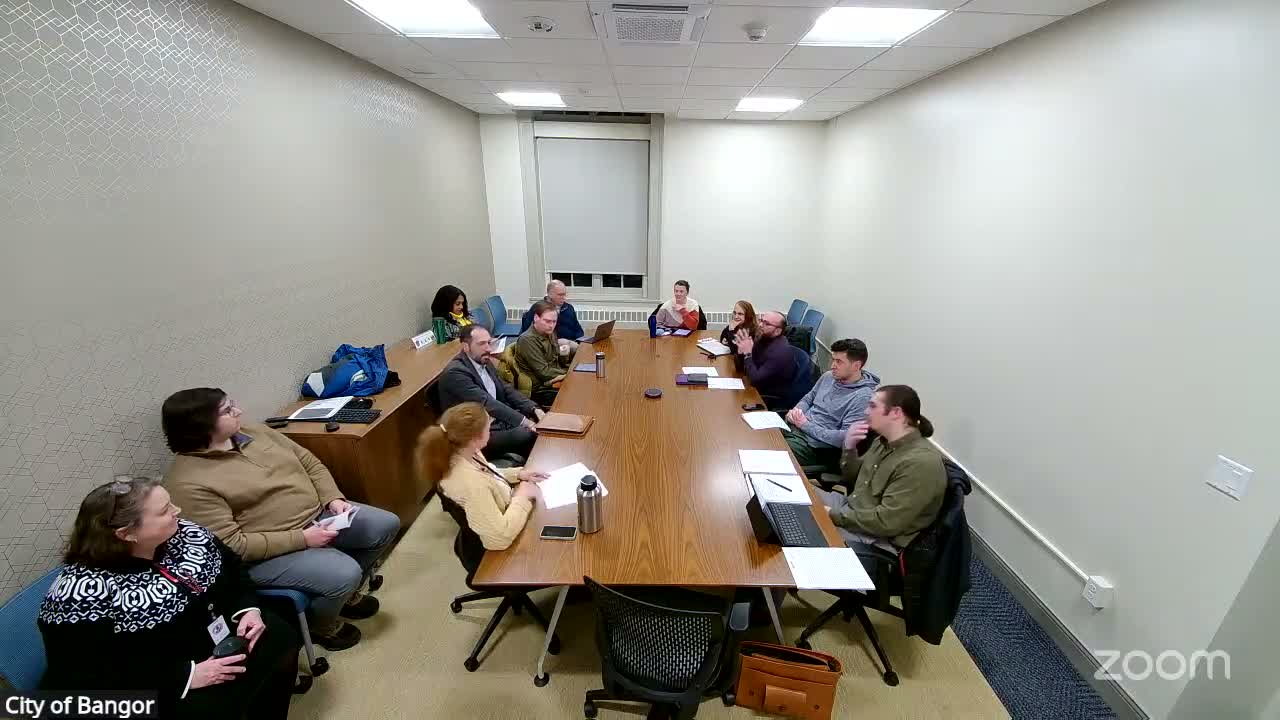
Property owners represented by attorney Eric Crocker told the downtown parking committee that repeated brief stops by delivery drivers and app‑based couriers are creating an ongoing problem at a Main Street driveway and asked the city to consider redesignating two curb spaces (for example, as a commercial loading zone or short‑term parking) to reduce conflicts.
Crocker described litigation between property owners and said drivers frequently "come in, their thought process is, I'm just making a quick pickup," leaving owners watching drivers in private driveways. "For my client's part, it's like the death by 1000 cuts kind of problem," Crocker said.
Committee members and staff discussed options including 10–15 minute short‑term signs, formal loading zones, improved signage, and the practical limits of enforcement. Parking professional Art Clemens noted that "commercial parking requires a commercial plate," meaning a simple commercial label would not by itself make app‑based couriers eligible; staff and members also observed that short‑term limits may be enforced less strictly after 5 p.m., when much delivery activity occurs.
The committee did not adopt any immediate changes. Members asked staff to provide data on the frequency of delivery stops and ticketing to determine whether removing one or two on‑street spaces would improve the situation without unduly reducing prime Main Street parking. Staff and Crocker agreed to follow up; the committee emphasized the need to balance business access, liability concerns, and downtown parking supply.
Crocker described litigation between property owners and said drivers frequently "come in, their thought process is, I'm just making a quick pickup," leaving owners watching drivers in private driveways. "For my client's part, it's like the death by 1000 cuts kind of problem," Crocker said.
Committee members and staff discussed options including 10–15 minute short‑term signs, formal loading zones, improved signage, and the practical limits of enforcement. Parking professional Art Clemens noted that "commercial parking requires a commercial plate," meaning a simple commercial label would not by itself make app‑based couriers eligible; staff and members also observed that short‑term limits may be enforced less strictly after 5 p.m., when much delivery activity occurs.
The committee did not adopt any immediate changes. Members asked staff to provide data on the frequency of delivery stops and ticketing to determine whether removing one or two on‑street spaces would improve the situation without unduly reducing prime Main Street parking. Staff and Crocker agreed to follow up; the committee emphasized the need to balance business access, liability concerns, and downtown parking supply.
View the Full Meeting & All Its Details
This article offers just a summary. Unlock complete video, transcripts, and insights as a Founder Member.
✓
Watch full, unedited meeting videos
✓
Search every word spoken in unlimited transcripts
✓
AI summaries & real-time alerts (all government levels)
✓
Permanent access to expanding government content
30-day money-back guarantee
