Restaurant association backs parts of Puerto Rico tax reform bill 1014 but urges fixes for small eateries
January 30, 2026 | House of Representatives, House, Committees, Legislative, Puerto Rico, International
This article was created by AI summarizing key points discussed. AI makes mistakes, so for full details and context, please refer to the video of the full meeting. Please report any errors so we can fix them. Report an error »
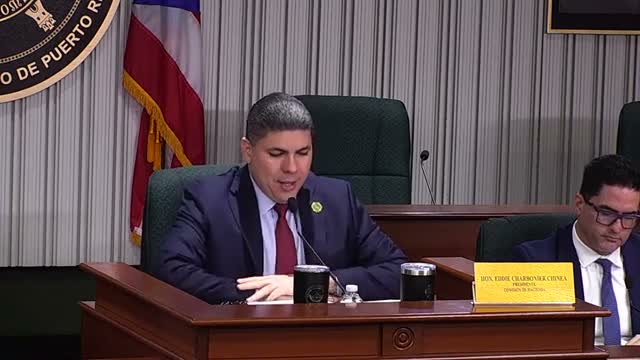
SAN JUAN — Testimony before the House Committee on Finance on Jan. 29 centered on House Bill 1014, a proposed tax-reform measure that the Asociación de Restaurantes de Puerto Rico said could help consumers but does not fully address merchants’ burdens.
Irma Castro Diepa, legal adviser to the Asociación de Restaurantes, presented industry data and policy recommendations. “La industria del restaurante continúa siendo una de las más relevantes para Puerto Rico,” she said, noting the sector “genera más de 6,000,000,000 de dólares anuales,” supports “más de 90,000 empleos” and recorded over $4,000,000,000 in sales in 2025. Castro Diepa told lawmakers that these figures frame why changes to HB 1014 should consider merchants as well as individual taxpayers.
The association signaled conditional support for the bill’s individual tax relief provisions but warned the measure “no constituye una reforma contributiva integral” for businesses. Its written and oral testimony pressed several specific reforms for the committee’s consideration: reduce the IVU (sales and use tax) on prepared foods; eliminate the inventory tax, which the association said penalizes businesses holding perishable stock; and remove IVU on B‑to‑B transactions that create cascade costs across the supply chain. Castro Diepa said these steps would ease compliance costs and help keep restaurants in the formal economy.
On administrative matters, the association urged consolidation of state and municipal filing obligations into integrated platforms and standardized processes to reduce the burden on small operators that lack in-house accounting staff. It also recommended allowing accelerated depreciation on machinery and equipment to encourage investment in energy efficiency and digital systems.
The group emphasized implementation timing as a critical concern. Castro Diepa cautioned that adopting significant tax changes close to filing season, without clear transition rules, would “generar incertidumbre operativa” and increase the risk of unintentional noncompliance for small restaurants that use preprogrammed payroll and point‑of‑sale systems.
House President Johnny Méndez (identified in the hearing record) questioned presenters about the association’s request to change B‑to‑B IVU treatment. Castro Diepa and other witnesses gave examples in which replacement equipment or services arriving subject to tax can create immediate cash burdens that interrupt operations. “Si el dueño del restaurante no tiene la capacidad de poder pagar ese impuesto, entonces se detiene más el servicio,” Castro Diepa said, describing operational impacts.
Nelson Pérez, identified in the record as executive director of the finance commission supporting the department’s oversight role, explained the government’s reasoning for charging IVU at the point of import (the “muelle” or pier) as a mechanism to ensure collection and avoid lost revenue; he acknowledged the cascade effect but framed the collection point as a fiscal control tool. Pérez described how merchants later claim credits when they report transactions, while presenters said timing and cash‑flow mismatches remain problematic for some operators.
The Asociación de Restaurantes concluded it is “a favor de la aprobación del proyecto de la cámara 1014,” but reiterated a strong request that the committee address the association’s listed concerns in committee markup and transition rules before final approval. No formal votes or committee actions on the bill were recorded during the hearing.
What happens next: Committee members asked department officials and stakeholders to continue technical discussions on B‑to‑B treatment, inventory tax elimination and implementation timelines; the hearing record shows a follow-up conversation will be needed to reconcile collection mechanisms with cash‑flow impacts cited by restaurants.
Irma Castro Diepa, legal adviser to the Asociación de Restaurantes, presented industry data and policy recommendations. “La industria del restaurante continúa siendo una de las más relevantes para Puerto Rico,” she said, noting the sector “genera más de 6,000,000,000 de dólares anuales,” supports “más de 90,000 empleos” and recorded over $4,000,000,000 in sales in 2025. Castro Diepa told lawmakers that these figures frame why changes to HB 1014 should consider merchants as well as individual taxpayers.
The association signaled conditional support for the bill’s individual tax relief provisions but warned the measure “no constituye una reforma contributiva integral” for businesses. Its written and oral testimony pressed several specific reforms for the committee’s consideration: reduce the IVU (sales and use tax) on prepared foods; eliminate the inventory tax, which the association said penalizes businesses holding perishable stock; and remove IVU on B‑to‑B transactions that create cascade costs across the supply chain. Castro Diepa said these steps would ease compliance costs and help keep restaurants in the formal economy.
On administrative matters, the association urged consolidation of state and municipal filing obligations into integrated platforms and standardized processes to reduce the burden on small operators that lack in-house accounting staff. It also recommended allowing accelerated depreciation on machinery and equipment to encourage investment in energy efficiency and digital systems.
The group emphasized implementation timing as a critical concern. Castro Diepa cautioned that adopting significant tax changes close to filing season, without clear transition rules, would “generar incertidumbre operativa” and increase the risk of unintentional noncompliance for small restaurants that use preprogrammed payroll and point‑of‑sale systems.
House President Johnny Méndez (identified in the hearing record) questioned presenters about the association’s request to change B‑to‑B IVU treatment. Castro Diepa and other witnesses gave examples in which replacement equipment or services arriving subject to tax can create immediate cash burdens that interrupt operations. “Si el dueño del restaurante no tiene la capacidad de poder pagar ese impuesto, entonces se detiene más el servicio,” Castro Diepa said, describing operational impacts.
Nelson Pérez, identified in the record as executive director of the finance commission supporting the department’s oversight role, explained the government’s reasoning for charging IVU at the point of import (the “muelle” or pier) as a mechanism to ensure collection and avoid lost revenue; he acknowledged the cascade effect but framed the collection point as a fiscal control tool. Pérez described how merchants later claim credits when they report transactions, while presenters said timing and cash‑flow mismatches remain problematic for some operators.
The Asociación de Restaurantes concluded it is “a favor de la aprobación del proyecto de la cámara 1014,” but reiterated a strong request that the committee address the association’s listed concerns in committee markup and transition rules before final approval. No formal votes or committee actions on the bill were recorded during the hearing.
What happens next: Committee members asked department officials and stakeholders to continue technical discussions on B‑to‑B treatment, inventory tax elimination and implementation timelines; the hearing record shows a follow-up conversation will be needed to reconcile collection mechanisms with cash‑flow impacts cited by restaurants.
Don't Miss a Word: See the Full Meeting!
Go beyond summaries. Unlock every video, transcript, and key insight with a Founder Membership.
✓
Get instant access to full meeting videos
✓
Search and clip any phrase from complete transcripts
✓
Receive AI-powered summaries & custom alerts
✓
Enjoy lifetime, unrestricted access to government data
30-day money-back guarantee
