Bill would let enrolled students enroll full time in AOE-approved virtual program, require district to pay tuition
January 30, 2026 | Education, HOUSE OF REPRESENTATIVES, Committees, Legislative , Vermont
This article was created by AI summarizing key points discussed. AI makes mistakes, so for full details and context, please refer to the video of the full meeting. Please report any errors so we can fix them. Report an error »
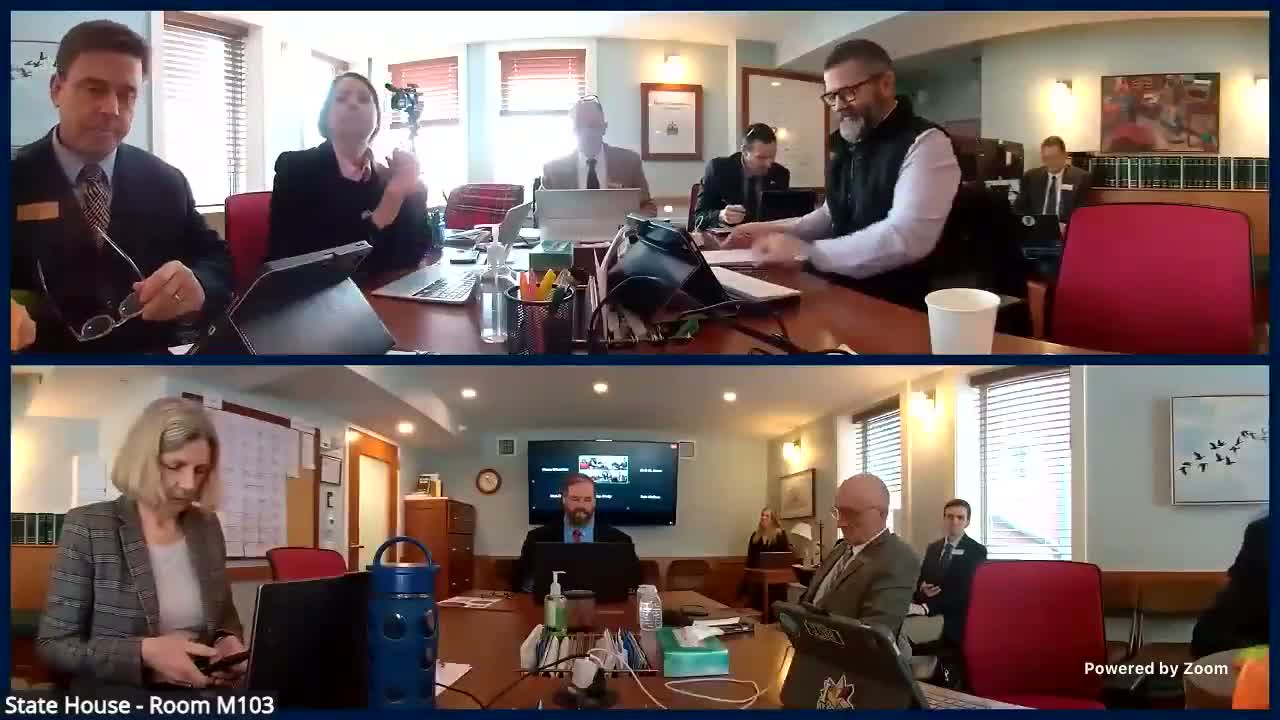
Representative Michael Bouton (Barre City) introduced House bill H.616 on Jan. 30, saying it would let students who are enrolled in a public school enroll full time in an AOE-approved virtual learning provider while remaining enrolled in their home district.
Bouton told the committee the bill aims to give parents “freedom” to choose full-time virtual learning while keeping children "in the system" so their progress can be tracked and the district retains related funding. "The bill gives freedom to parents while assuring quality education," he said. He framed the measure as a way to keep homeschooled or at-risk students connected to public oversight and funding if families choose a fully virtual pathway.
Legislative counsel and staff walked members through the draft language, which would amend Section 8 21 (the town tuition statute) and reference the virtual-learning oversight language in Section 9 48. Counsel summarized the operative change this way: notwithstanding the usual tuition rules, a school district that operates an elementary school would be required to pay the full tuition charge to the AOE-maintained virtual learning provider for a resident elementary student who requests full-time enrollment in that provider. Counsel emphasized the text keeps the option within the public education oversight structure rather than opening it to any private vendor.
Committee members asked practical questions about eligibility and scope. Counsel clarified that Vermont compulsory-attendance law distinguishes between students enrolled in the public system and those enrolled in homeschool programs: a homeschool student is not part of the district’s average daily membership (ADM) and therefore would not automatically be covered by a district tuition payment. The bill would apply to students already enrolled in the public system who request full-time enrollment in the AOE-approved virtual provider; in that circumstance the student’s enrollment status would change to being enrolled in the virtual provider but remain tied to the district’s funding stream.
Members also raised concerns drawn from the COVID-era experience with emergency remote instruction, asking how the proposal would protect students who struggle with virtual learning. Bouton and others said the AOE-maintained provider (the Vermont Virtual Learning Cooperative, VTVLC) uses trained virtual teachers and can provide tracking and supports; Bouton suggested adding a fallback or review process in the miscellaneous bill language to allow the committee or staff to revisit the policy if outcomes were poor.
The committee did not vote on H.616. Staff said they would do a walkthrough with legislative council and follow up on technical questions, including whether the district-based payment model would operate as a tuition line or through flexible-pathways categorical aid. The bill will be refined and returned to the committee for further consideration.
Next steps: legislative staff will walk through the draft language with members and check budget coding/line items related to flexible pathways and tuition. If sponsors choose, Bouton indicated he would seek a clear review or callback provision in the miscellaneous bill language.
Bouton told the committee the bill aims to give parents “freedom” to choose full-time virtual learning while keeping children "in the system" so their progress can be tracked and the district retains related funding. "The bill gives freedom to parents while assuring quality education," he said. He framed the measure as a way to keep homeschooled or at-risk students connected to public oversight and funding if families choose a fully virtual pathway.
Legislative counsel and staff walked members through the draft language, which would amend Section 8 21 (the town tuition statute) and reference the virtual-learning oversight language in Section 9 48. Counsel summarized the operative change this way: notwithstanding the usual tuition rules, a school district that operates an elementary school would be required to pay the full tuition charge to the AOE-maintained virtual learning provider for a resident elementary student who requests full-time enrollment in that provider. Counsel emphasized the text keeps the option within the public education oversight structure rather than opening it to any private vendor.
Committee members asked practical questions about eligibility and scope. Counsel clarified that Vermont compulsory-attendance law distinguishes between students enrolled in the public system and those enrolled in homeschool programs: a homeschool student is not part of the district’s average daily membership (ADM) and therefore would not automatically be covered by a district tuition payment. The bill would apply to students already enrolled in the public system who request full-time enrollment in the AOE-approved virtual provider; in that circumstance the student’s enrollment status would change to being enrolled in the virtual provider but remain tied to the district’s funding stream.
Members also raised concerns drawn from the COVID-era experience with emergency remote instruction, asking how the proposal would protect students who struggle with virtual learning. Bouton and others said the AOE-maintained provider (the Vermont Virtual Learning Cooperative, VTVLC) uses trained virtual teachers and can provide tracking and supports; Bouton suggested adding a fallback or review process in the miscellaneous bill language to allow the committee or staff to revisit the policy if outcomes were poor.
The committee did not vote on H.616. Staff said they would do a walkthrough with legislative council and follow up on technical questions, including whether the district-based payment model would operate as a tuition line or through flexible-pathways categorical aid. The bill will be refined and returned to the committee for further consideration.
Next steps: legislative staff will walk through the draft language with members and check budget coding/line items related to flexible pathways and tuition. If sponsors choose, Bouton indicated he would seek a clear review or callback provision in the miscellaneous bill language.
View the Full Meeting & All Its Details
This article offers just a summary. Unlock complete video, transcripts, and insights as a Founder Member.
✓
Watch full, unedited meeting videos
✓
Search every word spoken in unlimited transcripts
✓
AI summaries & real-time alerts (all government levels)
✓
Permanent access to expanding government content
30-day money-back guarantee
