Human Rights Commission warns of rising school harassment cases, asks legislature for resources and statutory fixes
January 30, 2026 | Education, HOUSE OF REPRESENTATIVES, Committees, Legislative , Vermont
This article was created by AI summarizing key points discussed. AI makes mistakes, so for full details and context, please refer to the video of the full meeting. Please report any errors so we can fix them. Report an error »
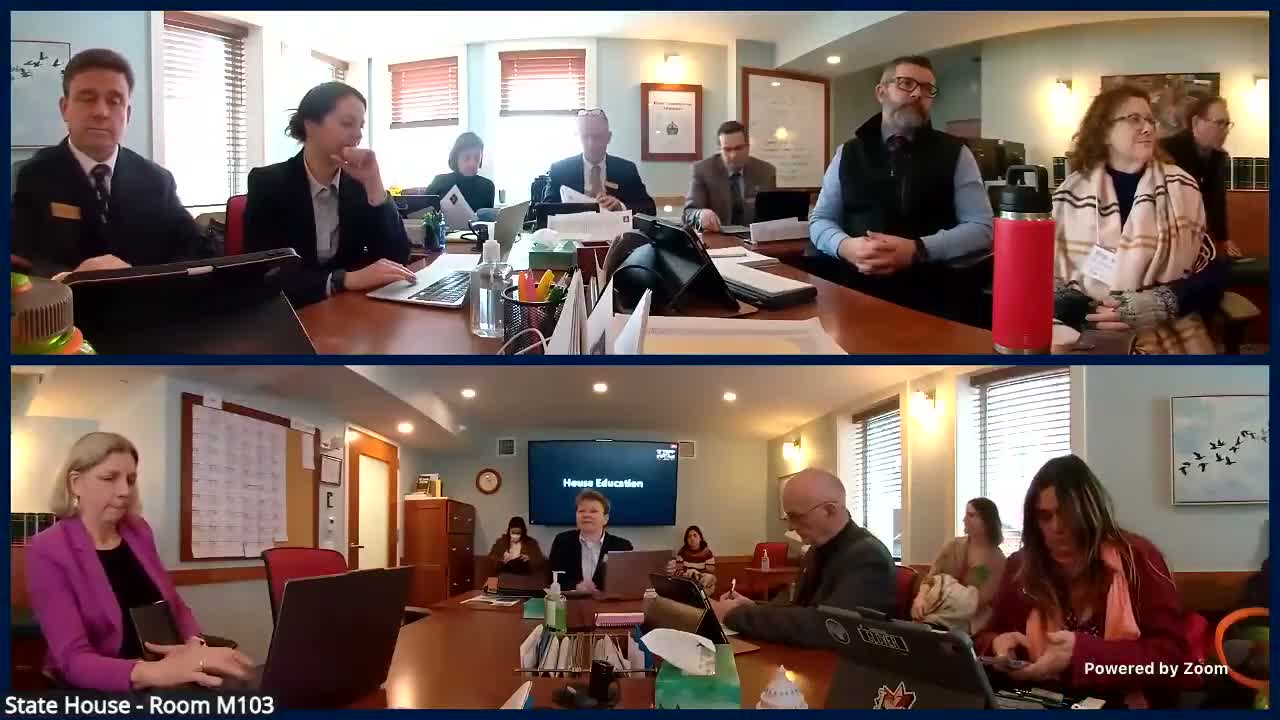
Begg Hartman, executive director and general counsel of the Vermont Human Rights Commission, told the House Education Committee on Jan. 29 that the commission has seen an increase in serious school-based discrimination and harassment complaints and is asking the Legislature for resources and statutory changes to address the problem.
"It is state policy that all students are to be free of discrimination and harassment in Vermont schools," Hartman told the committee, outlining HRC's role enforcing state civil-rights law where federal enforcement has pulled back. Hartman said the commission prioritizes school enforcement but has limited staff: four full-time investigator-attorneys handle an expanding docket of school cases.
Hartman said the HRC completed 13 school investigations in the last four years, nine of which included harassment allegations, and that investigators found reasonable grounds to believe discrimination occurred in nine of those 13 matters. At the time of testimony the commission had 16 open school-based complaints under investigation, 13 of which included harassment allegations. Hartman also reported about 15 active court filings handled by the commission since it added an in-house litigator in fiscal year 2024 and said two recent court settlements totaled $250,000 and required districtwide training and centralized reporting.
Hartman described common procedural problems the HRC finds in school responses: staff failing to recognize or document harassment, administrators declining to conduct required HHB (harassment, harassment and bullying) investigations, inadequate or unused safety plans, and a pattern of "we'll substantiate if there's a third-party witness" that leaves complainants unprotected. Hartman urged schools to keep the focus on protecting harmed students, for example by creating safety plans and checking in with the student even when discipline of the alleged perpetrator is not feasible.
Committee members pressed Hartman on privacy limits under the federal Family Educational Rights and Privacy Act (FERPA). Hartman described FERPA as a constraint on schools' ability to disclose what action they took to third parties, and said Vermont law does not yet clearly identify the HRC as an authority that schools can share student records with for investigation. "We do struggle with limited disclosures from schools when we're getting all this redacted information," Hartman said, and advised that a state statutory designation or narrowly tailored disclosure rule could help investigators while preserving student confidentiality.
Hartman also emphasized prevention: the HRC has expanded live trainings for school staff and partnered with community groups such as OutRight Vermont to produce a "know your rights" guide for caregivers of LGBTQ+ youth. The HRC convened a three-day civil-rights summit in Randolph with more than 300 participants and crafted five recommendations, including stronger statewide harassment-prevention programs, more training, better public data on HHB incidents, and sustained leadership from the Agency of Education.
The HRC requested additional staff capacity (Hartman said the office is seeking a policy director position) so it can move beyond reactive investigations to proactive prevention and training. Hartman closed by noting the difficulty families face pursuing long investigations and by inviting the committee to review the HRC's annual and midyear reports; the commission planned a press conference the following day.
What happens next: Hartman asked the committee to consider statutory changes (including support for H.130 to expand the HHB advisory council) and to fund positions that would enable the HRC to deliver prevention training and centralized reporting; the committee did not take a vote at the hearing.
"It is state policy that all students are to be free of discrimination and harassment in Vermont schools," Hartman told the committee, outlining HRC's role enforcing state civil-rights law where federal enforcement has pulled back. Hartman said the commission prioritizes school enforcement but has limited staff: four full-time investigator-attorneys handle an expanding docket of school cases.
Hartman said the HRC completed 13 school investigations in the last four years, nine of which included harassment allegations, and that investigators found reasonable grounds to believe discrimination occurred in nine of those 13 matters. At the time of testimony the commission had 16 open school-based complaints under investigation, 13 of which included harassment allegations. Hartman also reported about 15 active court filings handled by the commission since it added an in-house litigator in fiscal year 2024 and said two recent court settlements totaled $250,000 and required districtwide training and centralized reporting.
Hartman described common procedural problems the HRC finds in school responses: staff failing to recognize or document harassment, administrators declining to conduct required HHB (harassment, harassment and bullying) investigations, inadequate or unused safety plans, and a pattern of "we'll substantiate if there's a third-party witness" that leaves complainants unprotected. Hartman urged schools to keep the focus on protecting harmed students, for example by creating safety plans and checking in with the student even when discipline of the alleged perpetrator is not feasible.
Committee members pressed Hartman on privacy limits under the federal Family Educational Rights and Privacy Act (FERPA). Hartman described FERPA as a constraint on schools' ability to disclose what action they took to third parties, and said Vermont law does not yet clearly identify the HRC as an authority that schools can share student records with for investigation. "We do struggle with limited disclosures from schools when we're getting all this redacted information," Hartman said, and advised that a state statutory designation or narrowly tailored disclosure rule could help investigators while preserving student confidentiality.
Hartman also emphasized prevention: the HRC has expanded live trainings for school staff and partnered with community groups such as OutRight Vermont to produce a "know your rights" guide for caregivers of LGBTQ+ youth. The HRC convened a three-day civil-rights summit in Randolph with more than 300 participants and crafted five recommendations, including stronger statewide harassment-prevention programs, more training, better public data on HHB incidents, and sustained leadership from the Agency of Education.
The HRC requested additional staff capacity (Hartman said the office is seeking a policy director position) so it can move beyond reactive investigations to proactive prevention and training. Hartman closed by noting the difficulty families face pursuing long investigations and by inviting the committee to review the HRC's annual and midyear reports; the commission planned a press conference the following day.
What happens next: Hartman asked the committee to consider statutory changes (including support for H.130 to expand the HHB advisory council) and to fund positions that would enable the HRC to deliver prevention training and centralized reporting; the committee did not take a vote at the hearing.
Don't Miss a Word: See the Full Meeting!
Go beyond summaries. Unlock every video, transcript, and key insight with a Founder Membership.
✓
Get instant access to full meeting videos
✓
Search and clip any phrase from complete transcripts
✓
Receive AI-powered summaries & custom alerts
✓
Enjoy lifetime, unrestricted access to government data
30-day money-back guarantee
