Senate hearing on SB 310 weighs allowing cryptocurrency campaign contributions with KYC and conversion rules
January 22, 2026 | Federal and State Affairs, Standing, Senate, Committees, Legislative, Kansas
This article was created by AI summarizing key points discussed. AI makes mistakes, so for full details and context, please refer to the video of the full meeting. Please report any errors so we can fix them. Report an error »
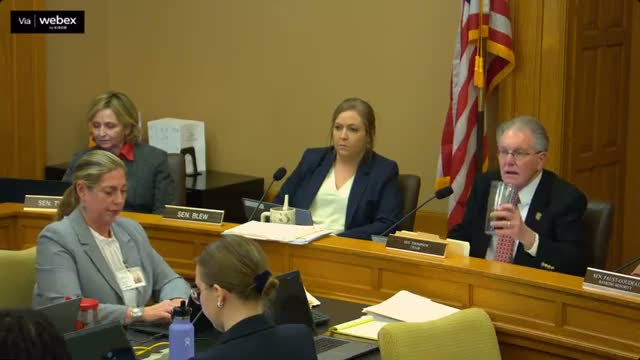
The Senate Federal and State Affairs committee heard testimony and extensive questions on Senate Bill 310, which would allow political campaigns to accept cryptocurrency contributions under specified safeguards.
Committee staff summarized the bill's key provisions: contributions must be made and received through U.S.-based payment processors registered with the U.S. Department of the Treasury’s Financial Crimes Enforcement Network and using know-your-customer (KYC) procedures to identify and report contributors; contributions would be reported at the fair-market value when the payment processor obtains possession; campaigns would have three business days to convert the cryptocurrency into U.S. currency; and campaigns could not use cryptocurrency to make expenditures or hold crypto assets.
Senator Bowser, appearing as a conferee in support, said Kansas currently lacks crypto campaign-contribution law and argued the bill provides needed guardrails: "Wherever the law ends, tyranny and chaos begin," Bowser quoted, and urged the committee to lead on the issue. Bowser highlighted model legislation and noted several other states and the Federal Election Commission have addressed crypto donations.
Members raised technical questions and practical concerns: how valuation timing interacts with contribution limits when crypto appreciates or depreciates after receipt, how to return amounts that push a donor or campaign over statutory limits, the capacity of volunteer treasurers to monitor rapid price fluctuations and perform conversions, and whether existing electronic-payment options reduce the need to accept crypto. Jason explained that the reported value is the fair-market value on the day the payment processor takes possession and that enforcement would follow existing complaint-and-investigation mechanisms.
No committee vote on SB 310 was recorded; the hearing was closed and the committee indicated staff and legal counsel would further analyze questions raised before deciding on next steps.
Committee staff summarized the bill's key provisions: contributions must be made and received through U.S.-based payment processors registered with the U.S. Department of the Treasury’s Financial Crimes Enforcement Network and using know-your-customer (KYC) procedures to identify and report contributors; contributions would be reported at the fair-market value when the payment processor obtains possession; campaigns would have three business days to convert the cryptocurrency into U.S. currency; and campaigns could not use cryptocurrency to make expenditures or hold crypto assets.
Senator Bowser, appearing as a conferee in support, said Kansas currently lacks crypto campaign-contribution law and argued the bill provides needed guardrails: "Wherever the law ends, tyranny and chaos begin," Bowser quoted, and urged the committee to lead on the issue. Bowser highlighted model legislation and noted several other states and the Federal Election Commission have addressed crypto donations.
Members raised technical questions and practical concerns: how valuation timing interacts with contribution limits when crypto appreciates or depreciates after receipt, how to return amounts that push a donor or campaign over statutory limits, the capacity of volunteer treasurers to monitor rapid price fluctuations and perform conversions, and whether existing electronic-payment options reduce the need to accept crypto. Jason explained that the reported value is the fair-market value on the day the payment processor takes possession and that enforcement would follow existing complaint-and-investigation mechanisms.
No committee vote on SB 310 was recorded; the hearing was closed and the committee indicated staff and legal counsel would further analyze questions raised before deciding on next steps.
View the Full Meeting & All Its Details
This article offers just a summary. Unlock complete video, transcripts, and insights as a Founder Member.
✓
Watch full, unedited meeting videos
✓
Search every word spoken in unlimited transcripts
✓
AI summaries & real-time alerts (all government levels)
✓
Permanent access to expanding government content
30-day money-back guarantee
