Massachusetts governor signs order and files bill to keep ICE out of schools, hospitals, houses of worship and courthouses
January 30, 2026 | Office of the Governor, Executive , Massachusetts
This article was created by AI summarizing key points discussed. AI makes mistakes, so for full details and context, please refer to the video of the full meeting. Please report any errors so we can fix them. Report an error »
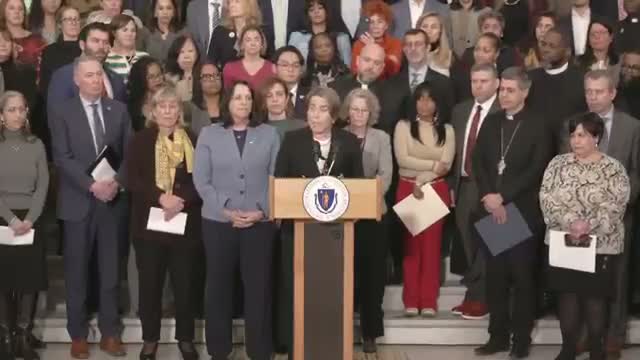
Governor Healy announced on Jan. 22 that she had filed legislation and signed an executive order intended to limit Immigration and Customs Enforcement operations in "sensitive" locations across Massachusetts, including schools, day cares, houses of worship, health clinics and courthouses.
"Today, I'm filing legislation to keep ICE out of our schools, day cares, other childcare centers, churches, hospitals, health clinics, and our courthouses," Healy said. She called recent federal enforcement tactics "wrong" and said they "don't make us safer." Healy said the order and bill seek to restore trust in government so residents will not avoid reporting crimes or seeking services.
The executive order Healy described includes three immediate measures: prohibiting ICE from making civil arrests in non-public spaces of state buildings; prohibiting use of state property to stage immigration enforcement activities; and prohibiting state agencies from entering into new 287(g) agreements except where the secretary of public safety certifies a "clear and imminent public safety need." Healy said the state will retain the ability to notify ICE when people are held by the Department of Correction following criminal convictions.
Essex County District Attorney Paul Tucker, speaking at the event, said ICE operations in courthouses "diminish access to justice" and cited federal judge Jed S. Rakoff's observation that "access to justice cannot coexist with a threat of civil arrest looming" over courtgoers. Tucker said the governor's actions "will help enhance public safety."
Healy told reporters the measures do not prevent law enforcement cooperation on criminal investigations that rely on judicial warrants. Asked about the legality of state limits on federal enforcement, she said the executive order clarifies how state property and state personnel resources will be used and reiterated: "When you're incarcerated under the care... of the Department of Correction... it is appropriate for our Department of Correction to notify ICE."
The governor urged federal action as well: "Donald Trump needs to fix ICE," she said, adding that Congress should step in if the administration does not change course. Senate President Karen Spilka pledged that the Massachusetts Senate "stands firmly" with the governor and said the chamber will engage with the governor's proposals when they arrive.
The next steps are procedural: the executive order takes immediate effect according to the governor's announcement, and the filed legislation must move through the Massachusetts Legislature; Spilka said the Senate will consider the proposals and work with the House and administration on details.
Ending: The administration framed the measure as both a public-safety and public-trust intervention aimed at protecting access to essential services; the bill's text and the executive order were introduced at the press event and will determine how the stated provisions are implemented.
"Today, I'm filing legislation to keep ICE out of our schools, day cares, other childcare centers, churches, hospitals, health clinics, and our courthouses," Healy said. She called recent federal enforcement tactics "wrong" and said they "don't make us safer." Healy said the order and bill seek to restore trust in government so residents will not avoid reporting crimes or seeking services.
The executive order Healy described includes three immediate measures: prohibiting ICE from making civil arrests in non-public spaces of state buildings; prohibiting use of state property to stage immigration enforcement activities; and prohibiting state agencies from entering into new 287(g) agreements except where the secretary of public safety certifies a "clear and imminent public safety need." Healy said the state will retain the ability to notify ICE when people are held by the Department of Correction following criminal convictions.
Essex County District Attorney Paul Tucker, speaking at the event, said ICE operations in courthouses "diminish access to justice" and cited federal judge Jed S. Rakoff's observation that "access to justice cannot coexist with a threat of civil arrest looming" over courtgoers. Tucker said the governor's actions "will help enhance public safety."
Healy told reporters the measures do not prevent law enforcement cooperation on criminal investigations that rely on judicial warrants. Asked about the legality of state limits on federal enforcement, she said the executive order clarifies how state property and state personnel resources will be used and reiterated: "When you're incarcerated under the care... of the Department of Correction... it is appropriate for our Department of Correction to notify ICE."
The governor urged federal action as well: "Donald Trump needs to fix ICE," she said, adding that Congress should step in if the administration does not change course. Senate President Karen Spilka pledged that the Massachusetts Senate "stands firmly" with the governor and said the chamber will engage with the governor's proposals when they arrive.
The next steps are procedural: the executive order takes immediate effect according to the governor's announcement, and the filed legislation must move through the Massachusetts Legislature; Spilka said the Senate will consider the proposals and work with the House and administration on details.
Ending: The administration framed the measure as both a public-safety and public-trust intervention aimed at protecting access to essential services; the bill's text and the executive order were introduced at the press event and will determine how the stated provisions are implemented.
View the Full Meeting & All Its Details
This article offers just a summary. Unlock complete video, transcripts, and insights as a Founder Member.
✓
Watch full, unedited meeting videos
✓
Search every word spoken in unlimited transcripts
✓
AI summaries & real-time alerts (all government levels)
✓
Permanent access to expanding government content
30-day money-back guarantee
