Officials and community leaders say ICE operations are reducing school attendance, health visits and courthouse participation
January 30, 2026 | Office of the Governor, Executive , Massachusetts
This article was created by AI summarizing key points discussed. AI makes mistakes, so for full details and context, please refer to the video of the full meeting. Please report any errors so we can fix them. Report an error »
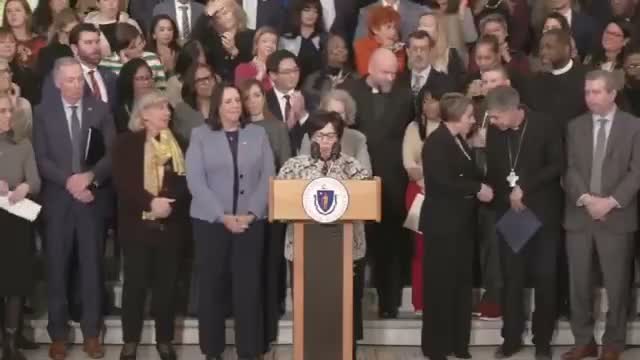
At a Jan. 22 press event where Governor Healy announced an executive order and new legislation restricting Immigration and Customs Enforcement operations in "sensitive" locations, multiple local officials described concrete harms to schools, health care and the courts.
Chelsea Schools Superintendent Aomie Abeita said the district saw a sharp drop in attendance after a local ICE action. Citing district figures, she said the district has 6,130 students and described a significant spike in absences in the days that followed, adding that schools are a critical access point for services and that fear of enforcement disrupted children's learning.
Maria Cheli, identified in the transcript as CEO of Brockton Neighborhood Health Center, told the gathering community health centers provide primary care, OB-GYN, behavioral health, addiction treatment and other services to nearly 40,000 patients and warned that fear of immigration enforcement drives people to skip preventive care. "When patients avoid primary care out of fear... delays in care can turn manageable health concerns into serious, sometimes life-threatening conditions," she said.
Gladys Vega, president and CEO of La Collaborativa, spoke emotionally about trauma in Chelsea after ICE activity and said agents staged operations near the Williams School and the Department of Revenue building, adding that the governor's protections "give us hope." Essex County District Attorney Paul Tucker said courthouse arrests "diminish access to justice," echoing the concern that victims and witnesses are deterred from participating in prosecutions.
These community accounts were offered as supporting evidence for the governor's executive order and legislative filing; the officials at the event urged implementation that preserves due process for criminal investigations while protecting routine access to schools, health care and worship.
Ending: Community leaders said the executive order and proposed law are immediate steps to reduce fear and restore trust; several speakers called for continued legal and legislative action to ensure access to services.
Chelsea Schools Superintendent Aomie Abeita said the district saw a sharp drop in attendance after a local ICE action. Citing district figures, she said the district has 6,130 students and described a significant spike in absences in the days that followed, adding that schools are a critical access point for services and that fear of enforcement disrupted children's learning.
Maria Cheli, identified in the transcript as CEO of Brockton Neighborhood Health Center, told the gathering community health centers provide primary care, OB-GYN, behavioral health, addiction treatment and other services to nearly 40,000 patients and warned that fear of immigration enforcement drives people to skip preventive care. "When patients avoid primary care out of fear... delays in care can turn manageable health concerns into serious, sometimes life-threatening conditions," she said.
Gladys Vega, president and CEO of La Collaborativa, spoke emotionally about trauma in Chelsea after ICE activity and said agents staged operations near the Williams School and the Department of Revenue building, adding that the governor's protections "give us hope." Essex County District Attorney Paul Tucker said courthouse arrests "diminish access to justice," echoing the concern that victims and witnesses are deterred from participating in prosecutions.
These community accounts were offered as supporting evidence for the governor's executive order and legislative filing; the officials at the event urged implementation that preserves due process for criminal investigations while protecting routine access to schools, health care and worship.
Ending: Community leaders said the executive order and proposed law are immediate steps to reduce fear and restore trust; several speakers called for continued legal and legislative action to ensure access to services.
View the Full Meeting & All Its Details
This article offers just a summary. Unlock complete video, transcripts, and insights as a Founder Member.
✓
Watch full, unedited meeting videos
✓
Search every word spoken in unlimited transcripts
✓
AI summaries & real-time alerts (all government levels)
✓
Permanent access to expanding government content
30-day money-back guarantee
