West Bend commission agrees to review park impact fees as staff outlines $495,000 balance and multi‑million projections
January 30, 2026 | West Bend City, Washington County, Wisconsin
This article was created by AI summarizing key points discussed. AI makes mistakes, so for full details and context, please refer to the video of the full meeting. Please report any errors so we can fix them. Report an error »
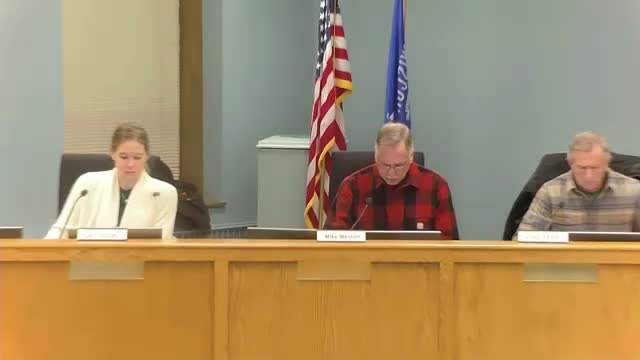
The West Bend Park and Recreation Commission on Jan. 29 directed staff to prepare comparables and a formal recommendation to review and likely raise the city’s park impact fees, after a staff presentation flagged two decades of unchanged rates and significant near‑term residential growth.
Staff told commissioners the city currently holds $495,000 in park acquisition/impact fees and that pending development could generate roughly $3.7 million in additional revenue between now and 2032. "I wouldn't spend $495,000 without a game plan," staff said, urging the commission to set priorities before authorizing significant expenditures.
Why it matters: impact fees must be spent on acquisition and development of new park land and facilities, not on routine maintenance or replacing existing structures, and Wisconsin law includes a seven‑year refund requirement if municipalities do not use fees in the allowed time frame. Staff said that restriction reinforces the need for timely planning.
What staff presented: the overview traced the practice back decades, cited a figure used in the slide material of $1,979 per dwelling unit (attributed to the presentation), and noted that comparable fees vary widely across nearby municipalities. Staff also described candidate uses for impact funds, including a planned skate park, Riverwalk and trail connections, expansion at Rails Park and utilities work for a proposed neighborhood park called Parkside 0.
On Parkside 0, staff said engineering and a planned 2027 reconstruction of South Main create an opportunity to stub utilities while the road work is occurring — a choice that could be cheaper than installing utilities later and digging up newly rebuilt streets. Staff highlighted a sanitary‑sewer depth difference (about 30 feet at one alignment versus 14 feet at another) that would materially affect cost estimates.
Commission response and next steps: commissioners said the fees have not been updated since about 2002 and signaled general agreement that staff should return with a comparables analysis and a recommended fee schedule. Staff also said tree‑surety fee adjustments will be developed as a separate request. The commission did not set a final dollar increase at the meeting but asked staff to bring back a formal proposal.
Budget and legal constraints: staff reiterated that interest earned on fees and any use of impact funds will be reviewed with the city attorney to ensure compliance with statutory limits and cited examples (new playground components, a nature playground addition, portions of the Aqua Park) where impact‑fee use had previously been found appropriate.
What happens next: staff will work with the development department to compile comparable fees and cost estimates, then present a recommendation to the commission and, if approved, onward to the Common Council for any ordinance change. The commission did not take a formal vote to change fees at the Jan. 29 meeting.
Staff told commissioners the city currently holds $495,000 in park acquisition/impact fees and that pending development could generate roughly $3.7 million in additional revenue between now and 2032. "I wouldn't spend $495,000 without a game plan," staff said, urging the commission to set priorities before authorizing significant expenditures.
Why it matters: impact fees must be spent on acquisition and development of new park land and facilities, not on routine maintenance or replacing existing structures, and Wisconsin law includes a seven‑year refund requirement if municipalities do not use fees in the allowed time frame. Staff said that restriction reinforces the need for timely planning.
What staff presented: the overview traced the practice back decades, cited a figure used in the slide material of $1,979 per dwelling unit (attributed to the presentation), and noted that comparable fees vary widely across nearby municipalities. Staff also described candidate uses for impact funds, including a planned skate park, Riverwalk and trail connections, expansion at Rails Park and utilities work for a proposed neighborhood park called Parkside 0.
On Parkside 0, staff said engineering and a planned 2027 reconstruction of South Main create an opportunity to stub utilities while the road work is occurring — a choice that could be cheaper than installing utilities later and digging up newly rebuilt streets. Staff highlighted a sanitary‑sewer depth difference (about 30 feet at one alignment versus 14 feet at another) that would materially affect cost estimates.
Commission response and next steps: commissioners said the fees have not been updated since about 2002 and signaled general agreement that staff should return with a comparables analysis and a recommended fee schedule. Staff also said tree‑surety fee adjustments will be developed as a separate request. The commission did not set a final dollar increase at the meeting but asked staff to bring back a formal proposal.
Budget and legal constraints: staff reiterated that interest earned on fees and any use of impact funds will be reviewed with the city attorney to ensure compliance with statutory limits and cited examples (new playground components, a nature playground addition, portions of the Aqua Park) where impact‑fee use had previously been found appropriate.
What happens next: staff will work with the development department to compile comparable fees and cost estimates, then present a recommendation to the commission and, if approved, onward to the Common Council for any ordinance change. The commission did not take a formal vote to change fees at the Jan. 29 meeting.
Don't Miss a Word: See the Full Meeting!
Go beyond summaries. Unlock every video, transcript, and key insight with a Founder Membership.
✓
Get instant access to full meeting videos
✓
Search and clip any phrase from complete transcripts
✓
Receive AI-powered summaries & custom alerts
✓
Enjoy lifetime, unrestricted access to government data
30-day money-back guarantee
