Agency seeks summer boilers and tank replacements after lab’s steam mismatch
January 30, 2026 | Corrections & Institutions, HOUSE OF REPRESENTATIVES, Committees, Legislative , Vermont
This article was created by AI summarizing key points discussed. AI makes mistakes, so for full details and context, please refer to the video of the full meeting. Please report any errors so we can fix them. Report an error »
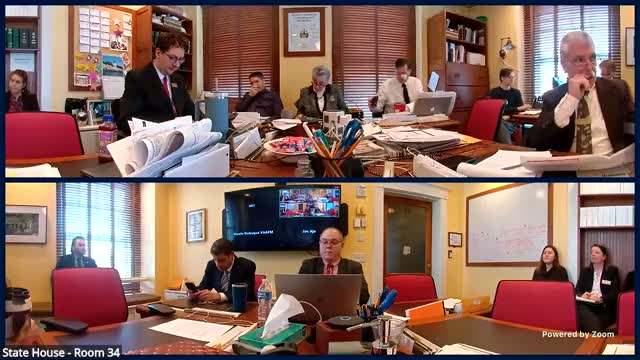
The House Corrections and Institutions Committee heard on Thursday that the Vermont Agricultural Environmental Lab (VAIL) built in 2019 at the Vermont Technical College campus is not receiving the steam pressure needed to run a critical autoclave, and state building managers are proposing summer boilers and tank work to fix the problem.
Joe Aja, director of design and construction for Building & General Services (BGS), told the committee the lab’s autoclave “we need 50 pounds of steam,” but the campus boilers run at a much lower pressure and often shut down during the summer. That mismatch forced boilers into short cycling, which “really takes a toll on the boiler,” Aja said, and led the agency to revisit its original plan of connecting to the campus heat plant.
Why it matters: the autoclave and humidity/air-conditioning systems in the lab require reliable steam and pressure for operations. Without a local summer source, the campus boiler configuration produces short cycles and equipment wear that could increase maintenance costs and risk downtime for an essential lab function.
What BGS proposes: Aja said the agency looked at building a separate heat plant but pivoted to installing summer boilers at the existing campus boiler facility and exploring a localized steam generator for the lab’s specific steam needs. He also described a fuel conversion—moving the campus from number 4 oil (high sulfur) to number 2, which the proposed summer boilers would use—and noted that some existing tanks are over 20 years old and may need replacement.
Funding and schedule: Aja reported prior appropriations for the project total about $6.8 million and that “we have it only expended to date a 144,000.” He said design work had produced RFP results but the construction manager contract had not yet been executed; once that contract is in place BGS will encumber funds and preorder long-lead items so they arrive on schedule. If procurement and deliveries proceed as planned, Aja said work “should be done by Christmas of this year.”
Committee concerns and clarifications: Members pressed BGS on the capital spreadsheet and FY-year accounting after a slide showed an FY27 $1.5 million line that was not visible on the governor’s recommendation; staff and presenters walked through the multi-year appropriation math and agreed the available balance covers the near-term needs but flagged a slide typo. Committee members also queried tank size and condition; presenters confirmed the tanks are underground, double-walled in many locations, and subject to monitoring and periodic cleaning, and said a single-wall tank failure could create an immediate hazardous-waste site.
Next steps: BGS expects to finalize contracting for a construction manager, encumber project funds, and pre-order boilers and electrical equipment with long lead times. The committee did not take a formal vote during this session; presenters offered to host site visits for members who want to inspect the lab and tank work in person.
Ending: The committee paused for a brief break at the end of the presentation; no formal action was recorded in the transcript.
Joe Aja, director of design and construction for Building & General Services (BGS), told the committee the lab’s autoclave “we need 50 pounds of steam,” but the campus boilers run at a much lower pressure and often shut down during the summer. That mismatch forced boilers into short cycling, which “really takes a toll on the boiler,” Aja said, and led the agency to revisit its original plan of connecting to the campus heat plant.
Why it matters: the autoclave and humidity/air-conditioning systems in the lab require reliable steam and pressure for operations. Without a local summer source, the campus boiler configuration produces short cycles and equipment wear that could increase maintenance costs and risk downtime for an essential lab function.
What BGS proposes: Aja said the agency looked at building a separate heat plant but pivoted to installing summer boilers at the existing campus boiler facility and exploring a localized steam generator for the lab’s specific steam needs. He also described a fuel conversion—moving the campus from number 4 oil (high sulfur) to number 2, which the proposed summer boilers would use—and noted that some existing tanks are over 20 years old and may need replacement.
Funding and schedule: Aja reported prior appropriations for the project total about $6.8 million and that “we have it only expended to date a 144,000.” He said design work had produced RFP results but the construction manager contract had not yet been executed; once that contract is in place BGS will encumber funds and preorder long-lead items so they arrive on schedule. If procurement and deliveries proceed as planned, Aja said work “should be done by Christmas of this year.”
Committee concerns and clarifications: Members pressed BGS on the capital spreadsheet and FY-year accounting after a slide showed an FY27 $1.5 million line that was not visible on the governor’s recommendation; staff and presenters walked through the multi-year appropriation math and agreed the available balance covers the near-term needs but flagged a slide typo. Committee members also queried tank size and condition; presenters confirmed the tanks are underground, double-walled in many locations, and subject to monitoring and periodic cleaning, and said a single-wall tank failure could create an immediate hazardous-waste site.
Next steps: BGS expects to finalize contracting for a construction manager, encumber project funds, and pre-order boilers and electrical equipment with long lead times. The committee did not take a formal vote during this session; presenters offered to host site visits for members who want to inspect the lab and tank work in person.
Ending: The committee paused for a brief break at the end of the presentation; no formal action was recorded in the transcript.
Don't Miss a Word: See the Full Meeting!
Go beyond summaries. Unlock every video, transcript, and key insight with a Founder Membership.
✓
Get instant access to full meeting videos
✓
Search and clip any phrase from complete transcripts
✓
Receive AI-powered summaries & custom alerts
✓
Enjoy lifetime, unrestricted access to government data
30-day money-back guarantee
