Addison County’s peer-led 'Interlude' urgent care seeks funding as grant ends; director cites reduced involuntary admissions
January 30, 2026 | Health Care, HOUSE OF REPRESENTATIVES, Committees, Legislative , Vermont
This article was created by AI summarizing key points discussed. AI makes mistakes, so for full details and context, please refer to the video of the full meeting. Please report any errors so we can fix them. Report an error »
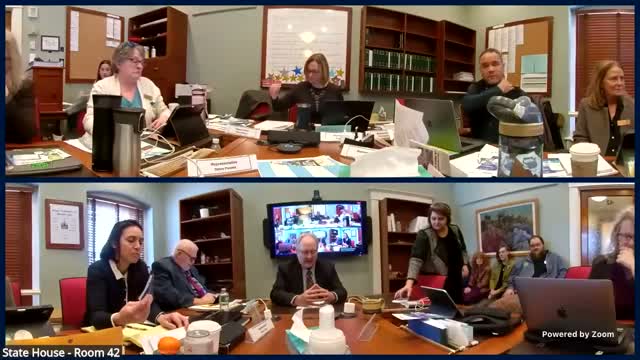
Alexander "Sandy" Smith, director of adult mental health services at the Counseling Service at Addison County, told the House Health Care Committee that Interlude, a largely peer‑staffed mental‑health urgent‑care program, offers a low‑barrier "living room" environment that prioritizes listening and mutuality over forms and billing.
Smith said Interlude emerged from a multi‑year workgroup and noted three advocacy priorities during the legislative session: protecting Interlude’s continued funding after a grant ends in June; supporting a "firehouse" funding model that pays for capacity rather than billing; and ensuring sustainable support for peer staff.
In performance data Smith presented, Interlude began in 2023, and "through the calendar years of 2024 and 2025, Interlude has met with 143 people with mental health crises through about 1,200 encounters," he said. He reported that since the program started only one guest has gone to the emergency department who then sought that care, and that CSAC’s population‑adjusted involuntary admission rate runs substantially below the state average "like a half to a third," a result Smith said Interlude helped sustain.
Smith described Interlude as unique among Vermont urgent‑care programs because it does not co‑locate clinical services inside the space; staff make referrals to clinical providers when needed and use intentional peer support and Open Dialogue–informed practices to de‑escalate crises and build trust.
Committee members asked whether Interlude could expand hours; Smith said the immediate concern is securing funding beyond the June grant but noted experiments with Saturday hours and interest in scaling if resources allow. Smith urged legislative consideration of funding models that support low‑barrier, peer‑run crisis options and highlighted the program’s role in diverting people from ER visits and hospitalizations.
The committee requested Smith’s written testimony; no formal vote or appropriation followed from this hearing.
Smith said Interlude emerged from a multi‑year workgroup and noted three advocacy priorities during the legislative session: protecting Interlude’s continued funding after a grant ends in June; supporting a "firehouse" funding model that pays for capacity rather than billing; and ensuring sustainable support for peer staff.
In performance data Smith presented, Interlude began in 2023, and "through the calendar years of 2024 and 2025, Interlude has met with 143 people with mental health crises through about 1,200 encounters," he said. He reported that since the program started only one guest has gone to the emergency department who then sought that care, and that CSAC’s population‑adjusted involuntary admission rate runs substantially below the state average "like a half to a third," a result Smith said Interlude helped sustain.
Smith described Interlude as unique among Vermont urgent‑care programs because it does not co‑locate clinical services inside the space; staff make referrals to clinical providers when needed and use intentional peer support and Open Dialogue–informed practices to de‑escalate crises and build trust.
Committee members asked whether Interlude could expand hours; Smith said the immediate concern is securing funding beyond the June grant but noted experiments with Saturday hours and interest in scaling if resources allow. Smith urged legislative consideration of funding models that support low‑barrier, peer‑run crisis options and highlighted the program’s role in diverting people from ER visits and hospitalizations.
The committee requested Smith’s written testimony; no formal vote or appropriation followed from this hearing.
Don't Miss a Word: See the Full Meeting!
Go beyond summaries. Unlock every video, transcript, and key insight with a Founder Membership.
✓
Get instant access to full meeting videos
✓
Search and clip any phrase from complete transcripts
✓
Receive AI-powered summaries & custom alerts
✓
Enjoy lifetime, unrestricted access to government data
30-day money-back guarantee
