Recovering Vermonter urges investment in residential treatment over incarceration
January 30, 2026 | Health Care, HOUSE OF REPRESENTATIVES, Committees, Legislative , Vermont
This article was created by AI summarizing key points discussed. AI makes mistakes, so for full details and context, please refer to the video of the full meeting. Please report any errors so we can fix them. Report an error »
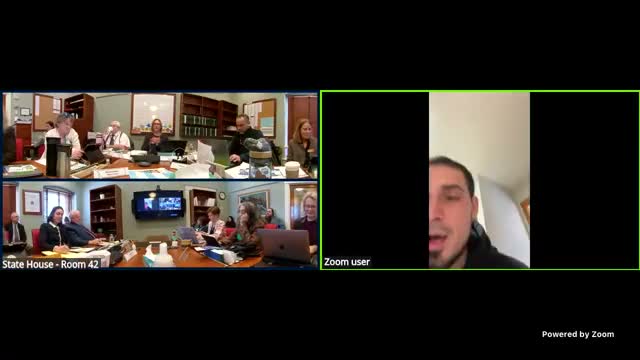
Tyler Sears, 35, addressed the committee remotely and described his history of incarceration and substance use, saying jails are not designed to treat chronic, relapsing substance‑use disorders. "Prisons are being asked to solve problems they were never designed for," he said, and recounted missing prescribed Suboxone for 11 days while jailed.
Sears urged the legislature to expand 3.1 residential treatment capacity and aftercare supports. He said residential treatment lengths should be extended (he cited the benefit of up to 90 days rather than shorter stays), and emphasized reintegration services such as transportation, post‑release planning and continuity of care. "The opposite of addiction is connection," Sears said, crediting programs such as Valley Vista and Vermonters for Criminal Justice Reform (VCJR) with helping his recovery.
Committee members asked Sears to clarify VCJR and contingency-management services; he described VCJR (Vermonters for Criminal Justice Reform) as providing substance‑use counseling, coordination with courts, reintegration services, and one‑on‑one support. Sears argued that incarceration often disrupts housing, employment and continuity of care and that brief jail stays without treatment can worsen trauma and relapse risk.
The committee thanked Sears for testifying; no formal action followed.
Sears urged the legislature to expand 3.1 residential treatment capacity and aftercare supports. He said residential treatment lengths should be extended (he cited the benefit of up to 90 days rather than shorter stays), and emphasized reintegration services such as transportation, post‑release planning and continuity of care. "The opposite of addiction is connection," Sears said, crediting programs such as Valley Vista and Vermonters for Criminal Justice Reform (VCJR) with helping his recovery.
Committee members asked Sears to clarify VCJR and contingency-management services; he described VCJR (Vermonters for Criminal Justice Reform) as providing substance‑use counseling, coordination with courts, reintegration services, and one‑on‑one support. Sears argued that incarceration often disrupts housing, employment and continuity of care and that brief jail stays without treatment can worsen trauma and relapse risk.
The committee thanked Sears for testifying; no formal action followed.
Don't Miss a Word: See the Full Meeting!
Go beyond summaries. Unlock every video, transcript, and key insight with a Founder Membership.
✓
Get instant access to full meeting videos
✓
Search and clip any phrase from complete transcripts
✓
Receive AI-powered summaries & custom alerts
✓
Enjoy lifetime, unrestricted access to government data
30-day money-back guarantee
