Gas utilities emphasize infrastructure replacement, affordability programs and choice as electrification pressures rise
January 23, 2026 | Environment and Transportation Committee, HOUSE OF REPRESENTATIVES, Committees, Legislative, Maryland
This article was created by AI summarizing key points discussed. AI makes mistakes, so for full details and context, please refer to the video of the full meeting. Please report any errors so we can fix them. Report an error »
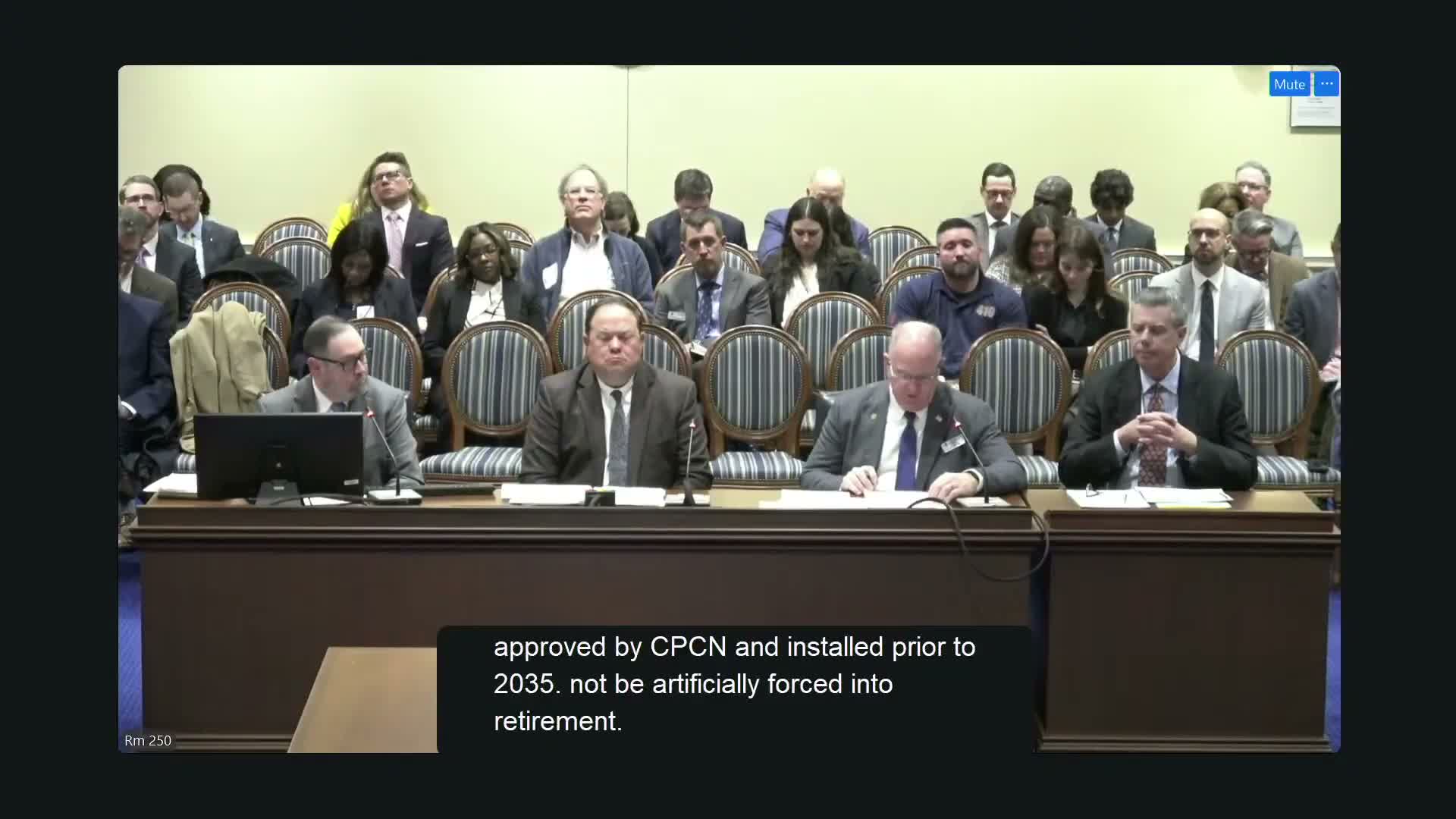
Representatives of Maryland gas utilities told the House Environment and Transportation Committee that proactive replacement of aging gas mains has reduced leaks and greenhouse‑gas emissions but that policies to accelerate electrification must consider affordability and local impacts.
John Dodge, speaking for Washington Gas, outlined the company’s consumer assistance work through the Washington Area Fuel Fund (WAF). He said WAF provided about $700,000 in assistance in 2025, including $123,000 for 400 customers when state funding was exhausted, and that administrative costs are borne by the company rather than customers.
On infrastructure, both Dodge and John Frey (BGE) cited federal and state safety drivers: BGE reported the gas main replacement program reduced annual greenhouse‑gas emissions by about 84,000 metric tons of CO2e since 2014 and reduced gas leaks by almost 40% from peak levels; Washington Gas said its STRIDE and pipe replacement efforts reduced leaks by 41% in six years, saved about 175,000 metric tons of CO2 and replaced more than 160 miles of mains.
Why it matters: Utilities warned that full electrification would impose substantial electric‑system upgrades — Easton and others said electrification could require doubling certain infrastructure — and urged the committee to account for distribution and generation costs, funding sources and potential harm to low‑ and moderate‑income households if gas choices were constrained.
Policy points: Dodge and Frey urged the committee to exercise caution in rulemaking on line extensions and to coordinate on the pace of replacements to preserve safety while minimizing affordability shocks. Frey cited PHMSA guidance and state statutory direction to proactively replace cast-iron mains and described BGE’s current replacement pace (~42 miles per year).
John Dodge, speaking for Washington Gas, outlined the company’s consumer assistance work through the Washington Area Fuel Fund (WAF). He said WAF provided about $700,000 in assistance in 2025, including $123,000 for 400 customers when state funding was exhausted, and that administrative costs are borne by the company rather than customers.
On infrastructure, both Dodge and John Frey (BGE) cited federal and state safety drivers: BGE reported the gas main replacement program reduced annual greenhouse‑gas emissions by about 84,000 metric tons of CO2e since 2014 and reduced gas leaks by almost 40% from peak levels; Washington Gas said its STRIDE and pipe replacement efforts reduced leaks by 41% in six years, saved about 175,000 metric tons of CO2 and replaced more than 160 miles of mains.
Why it matters: Utilities warned that full electrification would impose substantial electric‑system upgrades — Easton and others said electrification could require doubling certain infrastructure — and urged the committee to account for distribution and generation costs, funding sources and potential harm to low‑ and moderate‑income households if gas choices were constrained.
Policy points: Dodge and Frey urged the committee to exercise caution in rulemaking on line extensions and to coordinate on the pace of replacements to preserve safety while minimizing affordability shocks. Frey cited PHMSA guidance and state statutory direction to proactively replace cast-iron mains and described BGE’s current replacement pace (~42 miles per year).
Don't Miss a Word: See the Full Meeting!
Go beyond summaries. Unlock every video, transcript, and key insight with a Founder Membership.
✓
Get instant access to full meeting videos
✓
Search and clip any phrase from complete transcripts
✓
Receive AI-powered summaries & custom alerts
✓
Enjoy lifetime, unrestricted access to government data
30-day money-back guarantee
