Charter commission outlines new application pathways under Public Chapter 275 and timeline for replication applications
January 26, 2026 | Tennessee Public Charter School Commission, Deparments in Office of the Governor, Organizations, Executive, Tennessee
This article was created by AI summarizing key points discussed. AI makes mistakes, so for full details and context, please refer to the video of the full meeting. Please report any errors so we can fix them. Report an error »
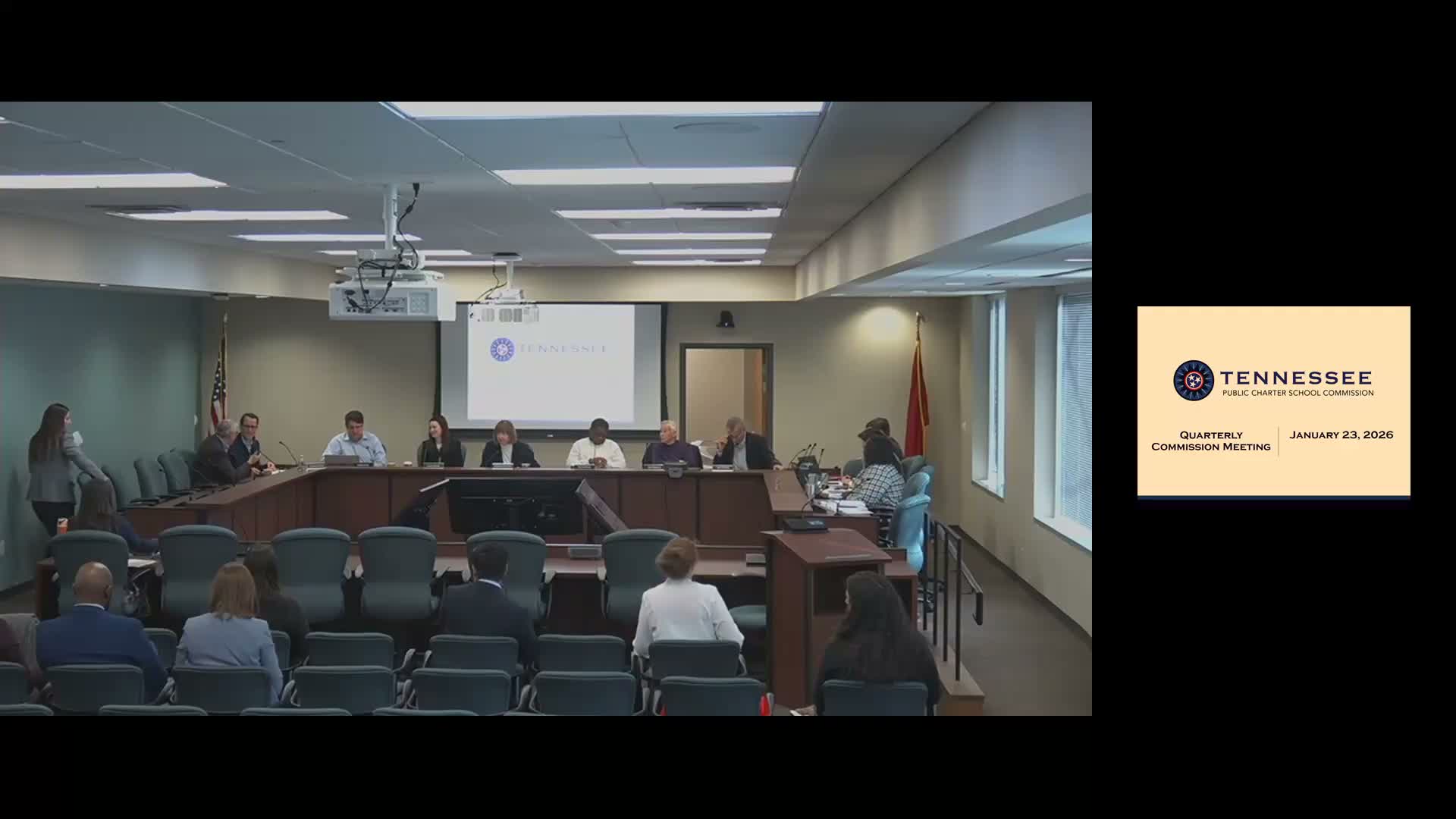
The commission’s authorizing staff presented a roadmap for the 2026 new‑start cycle under Public Chapter 275, including a new replication pathway and a direct application route that shifts certain application components to the State Board of Education.
Director of authorizing Beth Figueroa summarized the key changes: the State Board now creates the application and scoring rubrics; letters of intent will be filed directly with the commission and posted publicly; higher education institutions may sponsor schools and may apply directly; a replication pathway allows operators with at least one open school in the same LEA to file a streamlined replication application; and a separate direct application pathway exists in limited circumstances (for example, if the commission overturns an LEA denial three times in three years).
Timeline and process: Staff will receive direct/replication applications by Feb. 1; review committees comprised of academic, operations and finance experts will conduct 90‑minute capacity interviews; the review committee will recommend to the executive director and staff will present the executive director’s recommendation to the commission for a vote at the April meeting (with an amendment window and a July meeting for amended applications). The commission emphasized public hearings and community outreach as part of the process.
Staff said they will use the State Board rubric and commission policy standards (including quality authorizing standards) and that review teams will look for mission clarity, a sustainable budget, qualified leadership, and readiness to open. Beth Figueroa noted the commission will post letters of intent on its website for transparency and will continue to refine processes after the first cycle under the new law.
What to watch: replication applications are limited to opening in the same LEA where an operator already runs a school; direct applications have a narrow set of conditions. The commission also clarified that direct applicants do have the statutory option to exercise a one‑year delay after approval, though commissioners discussed whether the commission should scrutinize delays more closely for applicants coming directly to the commission.
Sources: Beth Figueroa, director of authorizing; Ashley Thomas, general counsel; commission meeting materials and timeline shared with commissioners.
Director of authorizing Beth Figueroa summarized the key changes: the State Board now creates the application and scoring rubrics; letters of intent will be filed directly with the commission and posted publicly; higher education institutions may sponsor schools and may apply directly; a replication pathway allows operators with at least one open school in the same LEA to file a streamlined replication application; and a separate direct application pathway exists in limited circumstances (for example, if the commission overturns an LEA denial three times in three years).
Timeline and process: Staff will receive direct/replication applications by Feb. 1; review committees comprised of academic, operations and finance experts will conduct 90‑minute capacity interviews; the review committee will recommend to the executive director and staff will present the executive director’s recommendation to the commission for a vote at the April meeting (with an amendment window and a July meeting for amended applications). The commission emphasized public hearings and community outreach as part of the process.
Staff said they will use the State Board rubric and commission policy standards (including quality authorizing standards) and that review teams will look for mission clarity, a sustainable budget, qualified leadership, and readiness to open. Beth Figueroa noted the commission will post letters of intent on its website for transparency and will continue to refine processes after the first cycle under the new law.
What to watch: replication applications are limited to opening in the same LEA where an operator already runs a school; direct applications have a narrow set of conditions. The commission also clarified that direct applicants do have the statutory option to exercise a one‑year delay after approval, though commissioners discussed whether the commission should scrutinize delays more closely for applicants coming directly to the commission.
Sources: Beth Figueroa, director of authorizing; Ashley Thomas, general counsel; commission meeting materials and timeline shared with commissioners.
Don't Miss a Word: See the Full Meeting!
Go beyond summaries. Unlock every video, transcript, and key insight with a Founder Membership.
✓
Get instant access to full meeting videos
✓
Search and clip any phrase from complete transcripts
✓
Receive AI-powered summaries & custom alerts
✓
Enjoy lifetime, unrestricted access to government data
30-day money-back guarantee
