Yeager outlines fixes for underused tax credits and updates on property-tax installment RFP
January 23, 2026 | Ways and Means Committee, HOUSE OF REPRESENTATIVES, Committees, Legislative, Maryland
This article was created by AI summarizing key points discussed. AI makes mistakes, so for full details and context, please refer to the video of the full meeting. Please report any errors so we can fix them. Report an error »
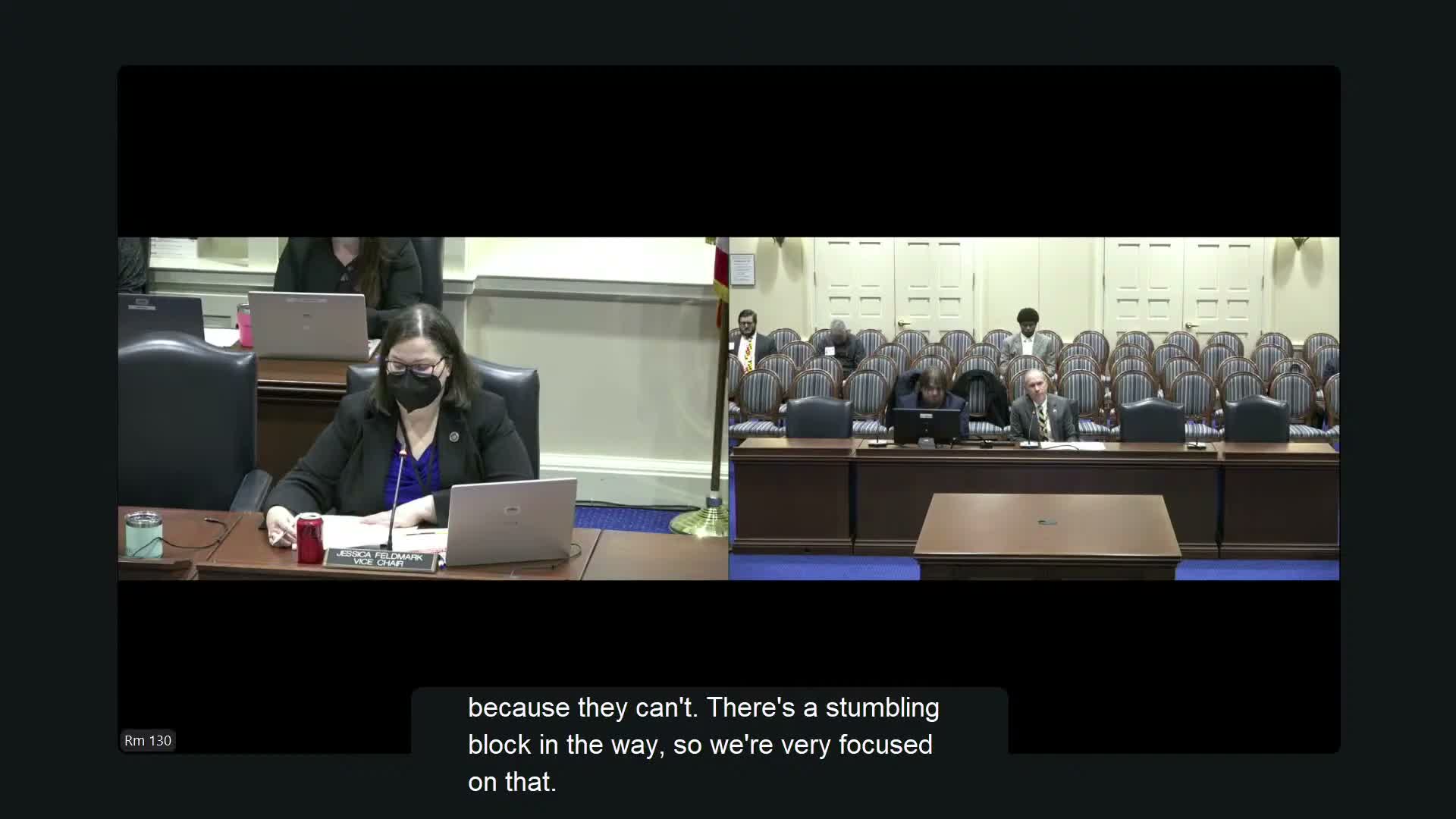
Bob Yeager, director of the State Department of Assessments and Taxation, told the Ways and Means Committee that SDAT is working to make homeowners’ tax-credit programs easier to access and to stand up a new property-tax installment option required by recent legislation.
On underused credits, Yeager said the agency is increasing community outreach and partnering with local nonprofits and lawmakers to reach eligible residents. To reduce rejections, SDAT plans application changes such as adding an authorization that lets staff screen applicants for homestead status via motor-vehicle records — a step Yeager said should reduce rejections based on principal-residence inconsistencies — and is reviewing documentation requirements with assistant attorneys general to allow more flexible evidence where appropriate.
Members asked about statutory deadlines for the homeowners property-tax credit. Yeager noted a statutory October 1 cutoff for that credit (with limited discretion to October 30 for special circumstances) but said homestead status may be accepted at any time of year. He said legislative changes could remove the statutory deadline if the General Assembly chooses to act.
On the installment payment plan, Yeager summarized SDAT’s procurement history: the agency issued an initial RFP and received no bids, revised the solicitation and issued a second RFP in December, and expects to review bids in February. "It was designed to have no cost to SDAT. The vendor will be compensated through reasonable fees that they pass on to the enrollee," Yeager said. He warned the committee that vendors will propose differing fee structures (enrollment or application fees, monthly interest rates) and that SDAT has limited ability to cap those charges unless the statute is changed.
Yeager explained operational complexities vendors must address: whether a vendor will pay counties up front or transmit monthly receipts, what customer-service burden SDAT retains, security for money transfers, and whether lien mechanics are necessary if enrollees default. He said some proposals may mirror escrow-company models that secure payment with liens; SDAT will evaluate vendor proposals to minimize punitive outcomes that would discourage enrollment.
Yeager said the agency hopes to have clearer rollout timelines after reviewing proposals in February and that he will follow up with committee members on technical details.
On underused credits, Yeager said the agency is increasing community outreach and partnering with local nonprofits and lawmakers to reach eligible residents. To reduce rejections, SDAT plans application changes such as adding an authorization that lets staff screen applicants for homestead status via motor-vehicle records — a step Yeager said should reduce rejections based on principal-residence inconsistencies — and is reviewing documentation requirements with assistant attorneys general to allow more flexible evidence where appropriate.
Members asked about statutory deadlines for the homeowners property-tax credit. Yeager noted a statutory October 1 cutoff for that credit (with limited discretion to October 30 for special circumstances) but said homestead status may be accepted at any time of year. He said legislative changes could remove the statutory deadline if the General Assembly chooses to act.
On the installment payment plan, Yeager summarized SDAT’s procurement history: the agency issued an initial RFP and received no bids, revised the solicitation and issued a second RFP in December, and expects to review bids in February. "It was designed to have no cost to SDAT. The vendor will be compensated through reasonable fees that they pass on to the enrollee," Yeager said. He warned the committee that vendors will propose differing fee structures (enrollment or application fees, monthly interest rates) and that SDAT has limited ability to cap those charges unless the statute is changed.
Yeager explained operational complexities vendors must address: whether a vendor will pay counties up front or transmit monthly receipts, what customer-service burden SDAT retains, security for money transfers, and whether lien mechanics are necessary if enrollees default. He said some proposals may mirror escrow-company models that secure payment with liens; SDAT will evaluate vendor proposals to minimize punitive outcomes that would discourage enrollment.
Yeager said the agency hopes to have clearer rollout timelines after reviewing proposals in February and that he will follow up with committee members on technical details.
Don't Miss a Word: See the Full Meeting!
Go beyond summaries. Unlock every video, transcript, and key insight with a Founder Membership.
✓
Get instant access to full meeting videos
✓
Search and clip any phrase from complete transcripts
✓
Receive AI-powered summaries & custom alerts
✓
Enjoy lifetime, unrestricted access to government data
30-day money-back guarantee
