Committee advances 'Starter Homes' strike-all amid wide testimony for and against statewide standards
January 27, 2026 | 2026 Legislature FL, Florida
This article was created by AI summarizing key points discussed. AI makes mistakes, so for full details and context, please refer to the video of the full meeting. Please report any errors so we can fix them. Report an error »
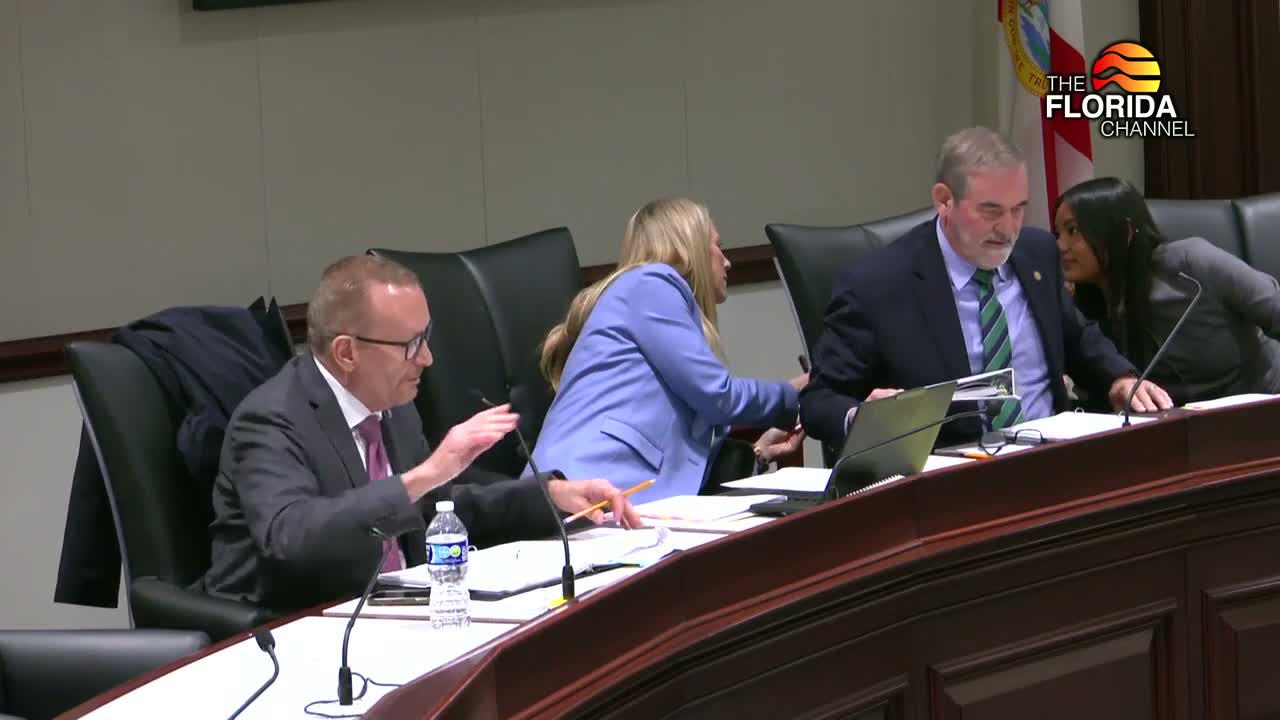
Senators reported CS for SB 9 48 (the Florida Starter Homes Act as amended) favorably after a lengthy debate and dozens of public comments for and against the measure.
Sponsors said the strike-all narrows and clarifies the bill's original goals: to increase starter-home supply by reforming minimum-lot rules, streamlining administrative approvals, and enabling smaller, lower-cost single-family products and off-site construction. Chair McLean and the sponsor described changes that allow neighborhood governing documents (HOAs, condo/co-op covenants and deed restrictions) to opt out, define starter-home and residential-lot terms, and exclude septic tanks when defining public sewer for the measure's purposes.
Why it matters: Supporters including Gainesville and housing-advocacy speakers said the provisions could increase production of smaller, more affordable single-family homes. Sam Staley of Florida State University’s DeVoe Moore Center told the committee SB 948 “is going to increase the number of starter homes” and highlighted off-site construction as a cost reducer. Brian Eastman, a Gainesville city commissioner, described local reforms (reduced lot sizes and setbacks) that produced new lots and argued regional coordination is needed.
Opponents including the Florida League of Cities, Florida Association of Counties, environmental groups and several local officials warned the bill imposes a statewide zoning regime on cities and counties, risks outpacing infrastructure, eliminates public participation for many administrative approvals, and contains retroactive language and an attorney-fee incentive that may invite litigation. The League’s testimony noted the bill could invalidate existing local development protections, including those related to flood protection and water quality.
Sponsor response and next steps: Committee sponsors said they will continue to work with stakeholders to address concerns and refine the language as the bill advances. The committee reported the bill favorably; sponsors emphasized commitment to stakeholder collaboration before subsequent committee stops and floor consideration.
What to watch: Changes to public-participation provisions, retroactivity language, and infrastructure safeguards (stormwater, flood, transportation) are likely subjects of amendment in later stages.
Sponsors said the strike-all narrows and clarifies the bill's original goals: to increase starter-home supply by reforming minimum-lot rules, streamlining administrative approvals, and enabling smaller, lower-cost single-family products and off-site construction. Chair McLean and the sponsor described changes that allow neighborhood governing documents (HOAs, condo/co-op covenants and deed restrictions) to opt out, define starter-home and residential-lot terms, and exclude septic tanks when defining public sewer for the measure's purposes.
Why it matters: Supporters including Gainesville and housing-advocacy speakers said the provisions could increase production of smaller, more affordable single-family homes. Sam Staley of Florida State University’s DeVoe Moore Center told the committee SB 948 “is going to increase the number of starter homes” and highlighted off-site construction as a cost reducer. Brian Eastman, a Gainesville city commissioner, described local reforms (reduced lot sizes and setbacks) that produced new lots and argued regional coordination is needed.
Opponents including the Florida League of Cities, Florida Association of Counties, environmental groups and several local officials warned the bill imposes a statewide zoning regime on cities and counties, risks outpacing infrastructure, eliminates public participation for many administrative approvals, and contains retroactive language and an attorney-fee incentive that may invite litigation. The League’s testimony noted the bill could invalidate existing local development protections, including those related to flood protection and water quality.
Sponsor response and next steps: Committee sponsors said they will continue to work with stakeholders to address concerns and refine the language as the bill advances. The committee reported the bill favorably; sponsors emphasized commitment to stakeholder collaboration before subsequent committee stops and floor consideration.
What to watch: Changes to public-participation provisions, retroactivity language, and infrastructure safeguards (stormwater, flood, transportation) are likely subjects of amendment in later stages.
Don't Miss a Word: See the Full Meeting!
Go beyond summaries. Unlock every video, transcript, and key insight with a Founder Membership.
✓
Get instant access to full meeting videos
✓
Search and clip any phrase from complete transcripts
✓
Receive AI-powered summaries & custom alerts
✓
Enjoy lifetime, unrestricted access to government data
30-day money-back guarantee
