House committee advances parental-consent bill after hours of public testimony
January 27, 2026 | 2026 Legislature FL, Florida
This article was created by AI summarizing key points discussed. AI makes mistakes, so for full details and context, please refer to the video of the full meeting. Please report any errors so we can fix them. Report an error »
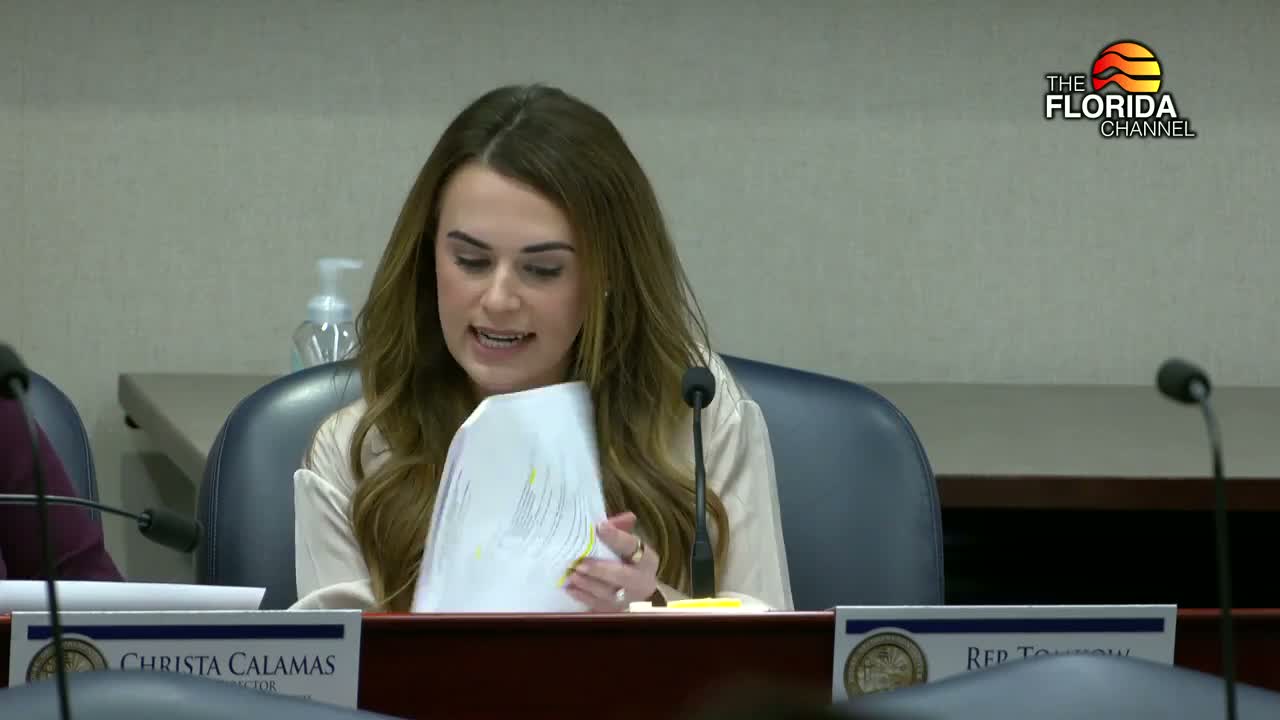
Tallahassee — The Florida House Health & Human Services Committee on Jan. 27 advanced HB 173, a measure that would tighten parental consent and access to minors' medical and mental-health records and require parental approval for certain treatments and school biomedical devices. The committee voted 19-7 to report the bill favorably after an extended public hearing that drew more than 45 speakers and hours of questioning.
Sponsor and context
Representative Kendall, the bill sponsor, told the committee HB 173 restores parents’ decision-making authority for minor children’s medical and mental-health care, grants parents access to nontraditional educational surveys, and requires parental consent before schools use biomedical devices for disciplinary purposes. Kendall said the bill is modeled on last year’s measure that advanced through both chambers but did not receive a final vote.
Why supporters back it
Supporters — including parents, some nurses, and parental-rights organizations — said parents need access to their children’s records and to be involved in medical decisions. Parent advocates argued that parental oversight prevents medical errors and provides continuous support for minors with complex conditions; sponsor Kendall noted the bill contains 16 statutory exceptions and vowed to review language to ensure emergencies remain covered.
Why opponents oppose it
Doctors, public-health groups, LGBTQ and youth organizations, and survivors testified that the bill could block timely care. Kara Gross, interim political director with the ACLU of Florida, said, “This bill will endanger the health of minor children in the name of parental rights,” warning it could delay STI treatment and make birth control harder to obtain. Dr. Paul Robinson of the Florida chapter of the American Academy of Pediatrics told lawmakers clinicians worry adolescents who fear parental notification will avoid care and face worse medical outcomes.
Members’ concerns and technical issues
Several committee members pressed the sponsor on whether common crisis hotlines and outpatient crisis-intervention services would remain available if the bill passed. Representative Bartleman asked specifically about 988 and 211; Kendall said emergencies — including suicide — are addressed by existing law such as the Emergency Medical Treatment and Labor Act (EMTALA) and that she would check the bill’s language to make sure hotlines are explicitly preserved.
Public safety and public-health trade-offs
Opponents cited state STI trends and child-abuse statistics to argue that confidential access to care can be life-saving for youth without safe home environments. Supporters countered with anecdotes about medically complex children whose parents must know medical histories to avoid dangerous drug interactions. The hearing featured both personal survivor accounts and clinical testimony on risks to minors and to public health.
Outcome and next steps
After debate and public testimony, the committee recorded 19 ayes and 7 nays and reported HB 173 favorably. The committee action sends the bill to the next stage of the legislative process; committee minutes show the sponsor agreed to revisit and clarify hotline and exception language.
What to watch for
Observers should watch for revised language clarifying access to crisis hotlines (988, 211) and outpatient crisis interventions, and for any amendments that further define the 16 exceptions the sponsor referenced. The bill’s handling of carve-outs for STI treatment and emergency care will determine how courts and health systems interpret the statute if it becomes law.
Sponsor and context
Representative Kendall, the bill sponsor, told the committee HB 173 restores parents’ decision-making authority for minor children’s medical and mental-health care, grants parents access to nontraditional educational surveys, and requires parental consent before schools use biomedical devices for disciplinary purposes. Kendall said the bill is modeled on last year’s measure that advanced through both chambers but did not receive a final vote.
Why supporters back it
Supporters — including parents, some nurses, and parental-rights organizations — said parents need access to their children’s records and to be involved in medical decisions. Parent advocates argued that parental oversight prevents medical errors and provides continuous support for minors with complex conditions; sponsor Kendall noted the bill contains 16 statutory exceptions and vowed to review language to ensure emergencies remain covered.
Why opponents oppose it
Doctors, public-health groups, LGBTQ and youth organizations, and survivors testified that the bill could block timely care. Kara Gross, interim political director with the ACLU of Florida, said, “This bill will endanger the health of minor children in the name of parental rights,” warning it could delay STI treatment and make birth control harder to obtain. Dr. Paul Robinson of the Florida chapter of the American Academy of Pediatrics told lawmakers clinicians worry adolescents who fear parental notification will avoid care and face worse medical outcomes.
Members’ concerns and technical issues
Several committee members pressed the sponsor on whether common crisis hotlines and outpatient crisis-intervention services would remain available if the bill passed. Representative Bartleman asked specifically about 988 and 211; Kendall said emergencies — including suicide — are addressed by existing law such as the Emergency Medical Treatment and Labor Act (EMTALA) and that she would check the bill’s language to make sure hotlines are explicitly preserved.
Public safety and public-health trade-offs
Opponents cited state STI trends and child-abuse statistics to argue that confidential access to care can be life-saving for youth without safe home environments. Supporters countered with anecdotes about medically complex children whose parents must know medical histories to avoid dangerous drug interactions. The hearing featured both personal survivor accounts and clinical testimony on risks to minors and to public health.
Outcome and next steps
After debate and public testimony, the committee recorded 19 ayes and 7 nays and reported HB 173 favorably. The committee action sends the bill to the next stage of the legislative process; committee minutes show the sponsor agreed to revisit and clarify hotline and exception language.
What to watch for
Observers should watch for revised language clarifying access to crisis hotlines (988, 211) and outpatient crisis interventions, and for any amendments that further define the 16 exceptions the sponsor referenced. The bill’s handling of carve-outs for STI treatment and emergency care will determine how courts and health systems interpret the statute if it becomes law.
View the Full Meeting & All Its Details
This article offers just a summary. Unlock complete video, transcripts, and insights as a Founder Member.
✓
Watch full, unedited meeting videos
✓
Search every word spoken in unlimited transcripts
✓
AI summaries & real-time alerts (all government levels)
✓
Permanent access to expanding government content
30-day money-back guarantee
