Maryland Environmental Service seeks higher small-procurement threshold, delegation and modern notice options
January 21, 2026 | Education, Energy, and the Environment Committee, SENATE, SENATE, Committees, Legislative, Maryland
This article was created by AI summarizing key points discussed. AI makes mistakes, so for full details and context, please refer to the video of the full meeting. Please report any errors so we can fix them. Report an error »
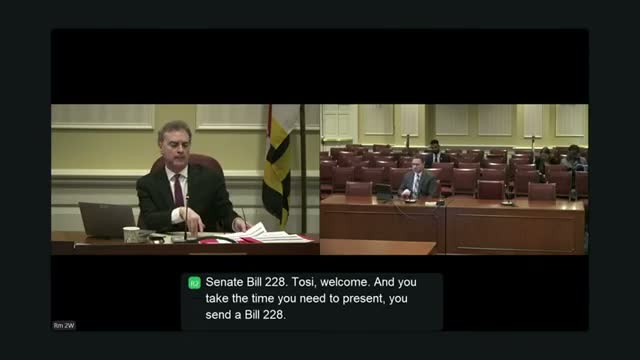
ANNAPOLIS — Jeff Tosi of the Maryland Environmental Service asked the Senate committee to advance SB228, a departmental bill that would make three technical changes intended to improve MES operations and client responsiveness.
Tosi said the bill would raise MES’s internal small procurement threshold from $25,000 to $50,000, noting that the state raised its threshold to $100,000 in 2023 but MES’s authorizing statute was not included in that change. "By increasing the threshold to $50,000, we would need to obtain 2 quotes, and those goods and services could be procured, in a matter of days or, you know, a week," Tosi said, arguing the change would speed commonly recurring procurements while affecting only about 3% of MES’s total dollar volume but about 26% of procurement events.
The bill also would allow the board treasurer to delegate a broader set of responsibilities to the MES CFO to reflect modern corporate practice; Tosi framed the change as correcting statutory language left over from earlier governance structures. Finally, the bill adds modern notice methods for changes to service-district rates — such as email, website posting and direct mail — while retaining the statutory requirement to publish notices in a newspaper of general circulation for two consecutive weeks.
Committee members asked about audit and oversight safeguards given past governance concerns; MES noted the 2021 Reform Act restructured the board, removed voting employee-board members and created clearer governance roles. Tosi said procurements above the threshold still go to the board for approval or notification and that MES serves mostly state and local government clients across Maryland.
The committee took testimony and questions but recorded no formal vote during the hearing.
Tosi said the bill would raise MES’s internal small procurement threshold from $25,000 to $50,000, noting that the state raised its threshold to $100,000 in 2023 but MES’s authorizing statute was not included in that change. "By increasing the threshold to $50,000, we would need to obtain 2 quotes, and those goods and services could be procured, in a matter of days or, you know, a week," Tosi said, arguing the change would speed commonly recurring procurements while affecting only about 3% of MES’s total dollar volume but about 26% of procurement events.
The bill also would allow the board treasurer to delegate a broader set of responsibilities to the MES CFO to reflect modern corporate practice; Tosi framed the change as correcting statutory language left over from earlier governance structures. Finally, the bill adds modern notice methods for changes to service-district rates — such as email, website posting and direct mail — while retaining the statutory requirement to publish notices in a newspaper of general circulation for two consecutive weeks.
Committee members asked about audit and oversight safeguards given past governance concerns; MES noted the 2021 Reform Act restructured the board, removed voting employee-board members and created clearer governance roles. Tosi said procurements above the threshold still go to the board for approval or notification and that MES serves mostly state and local government clients across Maryland.
The committee took testimony and questions but recorded no formal vote during the hearing.
View the Full Meeting & All Its Details
This article offers just a summary. Unlock complete video, transcripts, and insights as a Founder Member.
✓
Watch full, unedited meeting videos
✓
Search every word spoken in unlimited transcripts
✓
AI summaries & real-time alerts (all government levels)
✓
Permanent access to expanding government content
30-day money-back guarantee
