Lawmakers hear from workers and lenders on LD2102 to fix shutdown loan program
January 27, 2026 | 2026 Legislature ME, Maine
This article was created by AI summarizing key points discussed. AI makes mistakes, so for full details and context, please refer to the video of the full meeting. Please report any errors so we can fix them. Report an error »
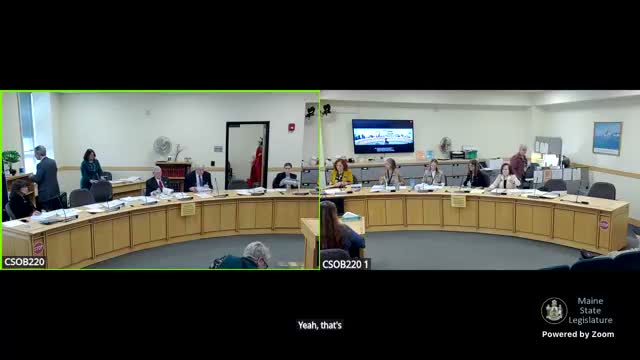
Representative Christy Matheson introduced LD2102 to clarify and strengthen Maine's government shutdown loan guarantee program enacted last year. Matheson said the bill removes barriers she and constituents encountered during the recent 43‑day shutdown: workers should not be required to apply for unemployment, should not be forced to undergo credit checks, and should be able to verify Maine residency remotely when deployed.
"When these workers are furloughed or required to work without pay, they face immediate financial strain," Matheson said, and she described program results: three participating lenders made 151 loans totaling about $758,600, including 84 loans to Portsmouth Naval Shipyard employees.
Workers and union leaders testified that the program's rollout created confusion and uneven access. Elena Schafer, a journeyman marine pipefitter and shipyard union leader, described being able to access a loan but said many colleagues were denied or faced 3% interest and hard credit checks: "Lighthouse Credit Union ... was only offering $5,000 loans at 3% interest," she said, and many who needed help could not access it because local lenders did not participate or imposed eligibility hurdles.
Labor witnesses and local unions said the program provided a lifeline to some but failed to reach many in need; several asked for higher guarantees, clearer rules, and funding for administrative support for lenders. The Finance Authority of Maine (FAME) testified neither for nor against LD2102, reporting program figures and relay of lender feedback (credit‑risk concerns, administrative staffing constraints) and suggested additional language to address fund exhaustion and lender confidence.
Credit union and banking trade groups told the committee some institutions already offered 0% programs outside the state program and that administrative complexity, underwriting differences and uncertainty about the guarantee limited participation. Committee members probed whether loans have been repaid yet (a 90‑day grace period applies) and asked FAME for follow‑up data on loan locations, repayment status and lender operational experience for the work session.
The chair closed the public hearing and asked staff to assemble additional technical details for a work session, including repayment and utilization data and suggested possible amendments to clarify guarantee mechanics and lender protections.
"When these workers are furloughed or required to work without pay, they face immediate financial strain," Matheson said, and she described program results: three participating lenders made 151 loans totaling about $758,600, including 84 loans to Portsmouth Naval Shipyard employees.
Workers and union leaders testified that the program's rollout created confusion and uneven access. Elena Schafer, a journeyman marine pipefitter and shipyard union leader, described being able to access a loan but said many colleagues were denied or faced 3% interest and hard credit checks: "Lighthouse Credit Union ... was only offering $5,000 loans at 3% interest," she said, and many who needed help could not access it because local lenders did not participate or imposed eligibility hurdles.
Labor witnesses and local unions said the program provided a lifeline to some but failed to reach many in need; several asked for higher guarantees, clearer rules, and funding for administrative support for lenders. The Finance Authority of Maine (FAME) testified neither for nor against LD2102, reporting program figures and relay of lender feedback (credit‑risk concerns, administrative staffing constraints) and suggested additional language to address fund exhaustion and lender confidence.
Credit union and banking trade groups told the committee some institutions already offered 0% programs outside the state program and that administrative complexity, underwriting differences and uncertainty about the guarantee limited participation. Committee members probed whether loans have been repaid yet (a 90‑day grace period applies) and asked FAME for follow‑up data on loan locations, repayment status and lender operational experience for the work session.
The chair closed the public hearing and asked staff to assemble additional technical details for a work session, including repayment and utilization data and suggested possible amendments to clarify guarantee mechanics and lender protections.
Don't Miss a Word: See the Full Meeting!
Go beyond summaries. Unlock every video, transcript, and key insight with a Founder Membership.
✓
Get instant access to full meeting videos
✓
Search and clip any phrase from complete transcripts
✓
Receive AI-powered summaries & custom alerts
✓
Enjoy lifetime, unrestricted access to government data
30-day money-back guarantee
