Advocates urge Kansas to cover $12.1M SNAP administrative shortfall and fund error-rate reduction
January 22, 2026 | Committee on Social Services Budget, Standing, HOUSE OF REPRESENTATIVES, Committees, Legislative, Kansas
This article was created by AI summarizing key points discussed. AI makes mistakes, so for full details and context, please refer to the video of the full meeting. Please report any errors so we can fix them. Report an error »
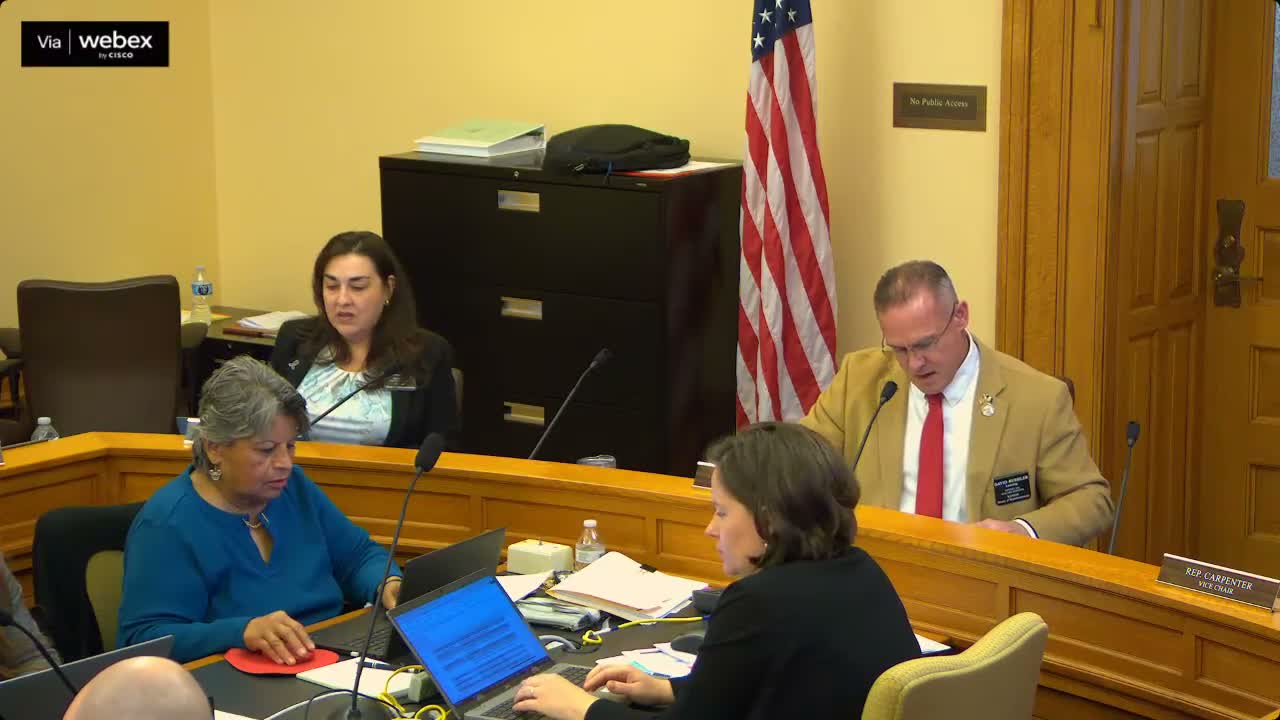
Advocates for food security told the Committee on Social Services Budget that Kansas must step up funding for SNAP administration after a federal funding shift that increases state liability.
Elizabeth Keever of Harvesters and Haley Cutler of Kansas Appleseed both testified that changes enacted in HR 1 shifted a larger share of SNAP administrative costs to states and that state underfunding risks higher error rates and disrupted benefits. "Fully funding SNAP administration allows DCF to improve accuracy and protect Kansas families," Cutler said.
Why it matters: Witnesses argued that administrative shortfalls would translate into program errors, reduced access and ultimately greater cost to Kansans. Megan Leepold of Kansas Action for Children told the committee the agency asked the Legislature to add $2,100,000 to reduce SNAP payment error rates and to "fully fund the increased state share of administrative costs" at $12,100,000 in state general funds for FY27.
What the witnesses said: Keever described the strain on the charitable food system and the role of SNAP in the local economy, citing that the network distributed more than 46 million pounds of food last year and that SNAP delivers roughly $404,000,000 in federal grocery benefits annually to Kansans. She warned that cuts to staff or technology at DCF would jeopardize program access and increase errors. Carla Hagenmeister of Flint Hills Breadbasket emphasized the user barriers in the application process, saying the SNAP application is "32 pages long" and requires uploads and scans that can deter or exclude applicants.
Committee questions and outstanding detail: Committee members asked how the $12.1 million would be spent — whether for salaries, technology, or third-party administrative fees — and whether the state's obligation is a fixed amount or volume dependent on benefit issuance. DCF staff present said they would provide a breakdown and confirm whether the state share is volume dependent; that information was not available at the hearing.
Next steps: Witnesses urged the committee to seek the requested breakdown of administrative costs and to consider the prevention value of funding accuracy efforts. No formal vote occurred during this hearing; committee staff said they would gather the requested cost and match-structure details for later consideration.
Ending: The committee heard multiple aligned nonprofit requests and closed the SNAP discussion with a commitment from staff to provide detailed budget allocations and the relationship (if any) between SNAP benefit volume and the administrative match.
Elizabeth Keever of Harvesters and Haley Cutler of Kansas Appleseed both testified that changes enacted in HR 1 shifted a larger share of SNAP administrative costs to states and that state underfunding risks higher error rates and disrupted benefits. "Fully funding SNAP administration allows DCF to improve accuracy and protect Kansas families," Cutler said.
Why it matters: Witnesses argued that administrative shortfalls would translate into program errors, reduced access and ultimately greater cost to Kansans. Megan Leepold of Kansas Action for Children told the committee the agency asked the Legislature to add $2,100,000 to reduce SNAP payment error rates and to "fully fund the increased state share of administrative costs" at $12,100,000 in state general funds for FY27.
What the witnesses said: Keever described the strain on the charitable food system and the role of SNAP in the local economy, citing that the network distributed more than 46 million pounds of food last year and that SNAP delivers roughly $404,000,000 in federal grocery benefits annually to Kansans. She warned that cuts to staff or technology at DCF would jeopardize program access and increase errors. Carla Hagenmeister of Flint Hills Breadbasket emphasized the user barriers in the application process, saying the SNAP application is "32 pages long" and requires uploads and scans that can deter or exclude applicants.
Committee questions and outstanding detail: Committee members asked how the $12.1 million would be spent — whether for salaries, technology, or third-party administrative fees — and whether the state's obligation is a fixed amount or volume dependent on benefit issuance. DCF staff present said they would provide a breakdown and confirm whether the state share is volume dependent; that information was not available at the hearing.
Next steps: Witnesses urged the committee to seek the requested breakdown of administrative costs and to consider the prevention value of funding accuracy efforts. No formal vote occurred during this hearing; committee staff said they would gather the requested cost and match-structure details for later consideration.
Ending: The committee heard multiple aligned nonprofit requests and closed the SNAP discussion with a commitment from staff to provide detailed budget allocations and the relationship (if any) between SNAP benefit volume and the administrative match.
View the Full Meeting & All Its Details
This article offers just a summary. Unlock complete video, transcripts, and insights as a Founder Member.
✓
Watch full, unedited meeting videos
✓
Search every word spoken in unlimited transcripts
✓
AI summaries & real-time alerts (all government levels)
✓
Permanent access to expanding government content
30-day money-back guarantee
