Panel votes to pass HB540 by indefinitely after sharp debate over victims' safety and risks
January 23, 2026 | 2026 Legislature VA, Virginia
This article was created by AI summarizing key points discussed. AI makes mistakes, so for full details and context, please refer to the video of the full meeting. Please report any errors so we can fix them. Report an error »
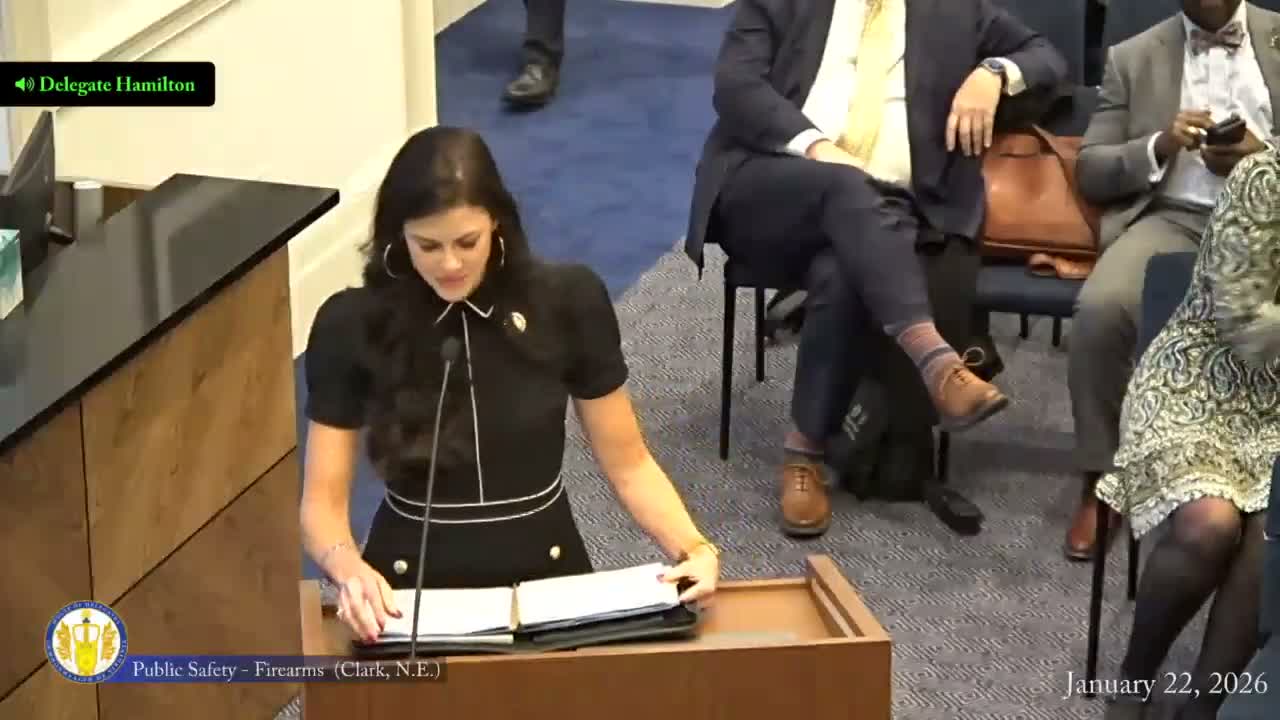
The subcommittee debated HB540, a bill to carve a narrow exception to prohibited-location restrictions for a verified victim of family abuse who holds an active protective order.
Patron Delegate Cameron Hamilton described the bill as "narrowly tailored" to ensure a verified victim is not forced to choose between obeying the law and protecting herself. "This bill recognizes a practical reality," Hamilton said, arguing that protective orders are an imperfect shield and some victims face imminent danger.
Supporters — including the NRA and several former first responders — said expedited ability to lawfully carry would save lives in the narrow window after abuse is reported. John Weber of the National Rifle Association testified the bill would "help ensure that current victims of family abuse with protective orders are not made defenseless at public places, airports, or election facilities." Several witnesses recounted delays in concealed-carry permit processing as a rationale for the exception.
Opponents, including domestic violence advocates and public-safety groups, warned the policy could increase risk. Laurie Haas and other advocates cited research that the presence of a firearm in intimate-partner violence situations substantially raises homicide risk; some witnesses also warned about verification, training, and clinical implications in treatment settings.
Committee members questioned constitutionality and implementation details, including how security at airports or Capitol Square would identify legally exempt individuals. Counsel noted constitutional equal-protection concerns and the committee discussed potentially broadening the bill to gender-neutral language.
A motion to pass HB540 by indefinitely carried on a recorded vote of 7 to 3. The clerk recorded the passage "by indefinitely" rather than advancement to the floor, effectively ending consideration in committee at this time.
Next steps: HB540 was passed by indefinitely; sponsors and members discussed possible future amendments addressing verification, training, and gender-neutral language.
Patron Delegate Cameron Hamilton described the bill as "narrowly tailored" to ensure a verified victim is not forced to choose between obeying the law and protecting herself. "This bill recognizes a practical reality," Hamilton said, arguing that protective orders are an imperfect shield and some victims face imminent danger.
Supporters — including the NRA and several former first responders — said expedited ability to lawfully carry would save lives in the narrow window after abuse is reported. John Weber of the National Rifle Association testified the bill would "help ensure that current victims of family abuse with protective orders are not made defenseless at public places, airports, or election facilities." Several witnesses recounted delays in concealed-carry permit processing as a rationale for the exception.
Opponents, including domestic violence advocates and public-safety groups, warned the policy could increase risk. Laurie Haas and other advocates cited research that the presence of a firearm in intimate-partner violence situations substantially raises homicide risk; some witnesses also warned about verification, training, and clinical implications in treatment settings.
Committee members questioned constitutionality and implementation details, including how security at airports or Capitol Square would identify legally exempt individuals. Counsel noted constitutional equal-protection concerns and the committee discussed potentially broadening the bill to gender-neutral language.
A motion to pass HB540 by indefinitely carried on a recorded vote of 7 to 3. The clerk recorded the passage "by indefinitely" rather than advancement to the floor, effectively ending consideration in committee at this time.
Next steps: HB540 was passed by indefinitely; sponsors and members discussed possible future amendments addressing verification, training, and gender-neutral language.
View the Full Meeting & All Its Details
This article offers just a summary. Unlock complete video, transcripts, and insights as a Founder Member.
✓
Watch full, unedited meeting videos
✓
Search every word spoken in unlimited transcripts
✓
AI summaries & real-time alerts (all government levels)
✓
Permanent access to expanding government content
30-day money-back guarantee
