Subcommittee advances a slate of public‑safety bills on training, Marcus Alert and trail rangers
January 23, 2026 | 2026 Legislature VA, Virginia
This article was created by AI summarizing key points discussed. AI makes mistakes, so for full details and context, please refer to the video of the full meeting. Please report any errors so we can fix them. Report an error »
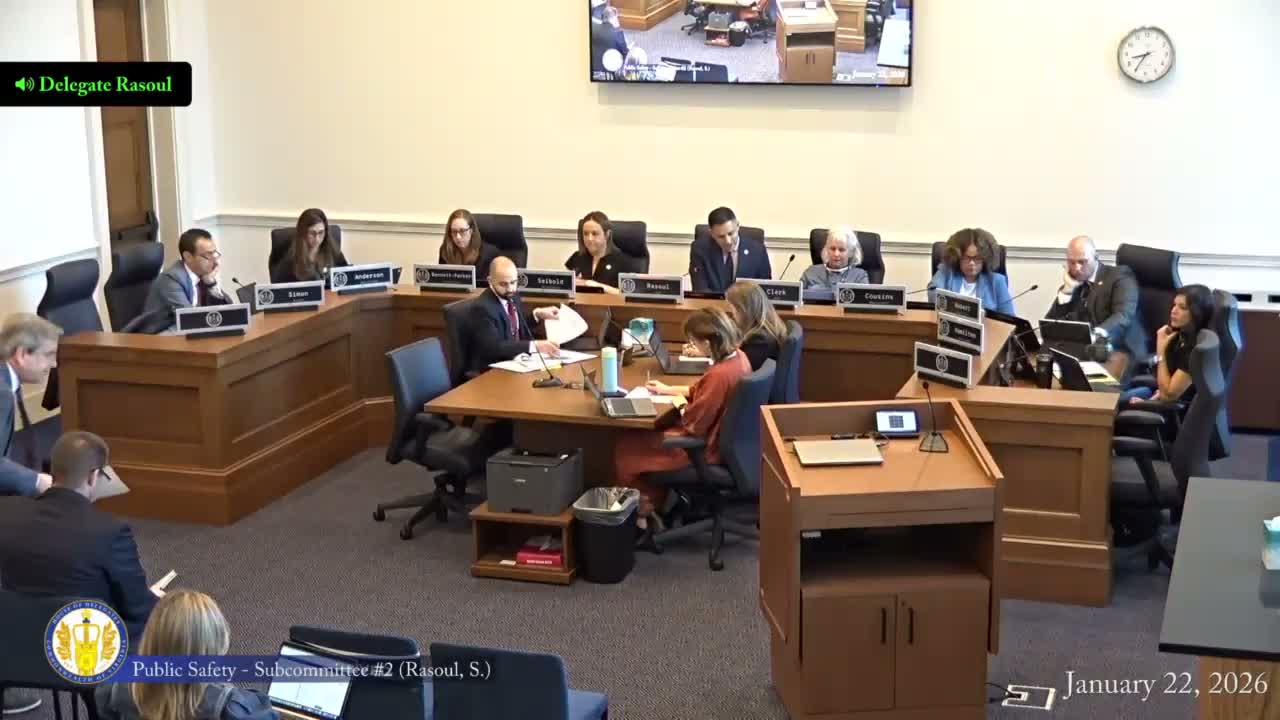
Lawmakers advanced a package of public‑safety measures with relatively brief debate.
HB 325 would direct the Virginia Department of Fire Programs (VDFP) to develop an online mental‑health awareness module for firefighters, EMS personnel and communications officers to improve access and consistency of training. The patron said compliance has been spotty and that a central online module would increase participation; the bill was reported and referred to Appropriations by a 7–0 vote. Jennifer Pike of the Virginia Professional Firefighters and representatives of the Virginia Fire Chiefs Association voiced support.
Two Marcus Alert bills were advanced. HB 248 allows localities to create multi‑jurisdictional crisis co‑response teams so neighboring law‑enforcement officers can participate in behavioral‑health responses when needed; the subcommittee reported the bill 7–0. HB 249 addresses the retention and purge of behavioral‑health profiles created on third‑party platforms when someone crosses from minor to adult status; Richmond’s emergency communications staff cited RapidSOS as an example of an external platform; the bill reported 6–1.
Other bills advanced with little debate: HB 7 26 fixes credit-for-time-served rules for people held out of state (reported 7–0), and HB 63 allows the Southwest Recreational Authority to pursue full law enforcement accreditation for trail rangers who operate in remote areas (reported 7–0). The committee completed its business and adjourned.
HB 325 would direct the Virginia Department of Fire Programs (VDFP) to develop an online mental‑health awareness module for firefighters, EMS personnel and communications officers to improve access and consistency of training. The patron said compliance has been spotty and that a central online module would increase participation; the bill was reported and referred to Appropriations by a 7–0 vote. Jennifer Pike of the Virginia Professional Firefighters and representatives of the Virginia Fire Chiefs Association voiced support.
Two Marcus Alert bills were advanced. HB 248 allows localities to create multi‑jurisdictional crisis co‑response teams so neighboring law‑enforcement officers can participate in behavioral‑health responses when needed; the subcommittee reported the bill 7–0. HB 249 addresses the retention and purge of behavioral‑health profiles created on third‑party platforms when someone crosses from minor to adult status; Richmond’s emergency communications staff cited RapidSOS as an example of an external platform; the bill reported 6–1.
Other bills advanced with little debate: HB 7 26 fixes credit-for-time-served rules for people held out of state (reported 7–0), and HB 63 allows the Southwest Recreational Authority to pursue full law enforcement accreditation for trail rangers who operate in remote areas (reported 7–0). The committee completed its business and adjourned.
View the Full Meeting & All Its Details
This article offers just a summary. Unlock complete video, transcripts, and insights as a Founder Member.
✓
Watch full, unedited meeting videos
✓
Search every word spoken in unlimited transcripts
✓
AI summaries & real-time alerts (all government levels)
✓
Permanent access to expanding government content
30-day money-back guarantee
