Subcommittee advances a suite of housing bills, from local grant changes to statewide targets
January 23, 2026 | 2026 Legislature VA, Virginia
This article was created by AI summarizing key points discussed. AI makes mistakes, so for full details and context, please refer to the video of the full meeting. Please report any errors so we can fix them. Report an error »
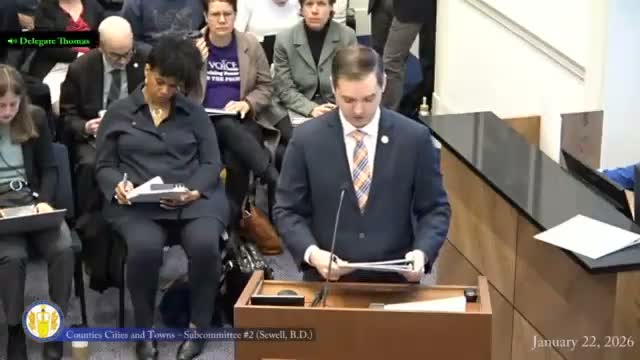
A sequence of housing bills dominated the subcommittee’s agenda, with members and a broad coalition of housing advocates, developers and local officials testifying for several measures intended to accelerate housing production.
House Bill 164 would remove a $25,000 cap on local grant programs that assist local employees with housing; supporters including local associations and Realtors said the change allows localities more flexibility and does not create state funding flows. The bill reported as amended by a vote of 9 to 0.
House Bill 352 seeks to replicate a Richmond tax-abatement model that abates the increase in assessed value on affordable-housing projects so proceeds can be reinvested into developments. Advocates said Richmond’s program produced thousands of units; proponents argued the measure empowers localities to structure similar programs. The subcommittee reported HB 352 on a vote of 8 to 0.
House Bill 594 would give localities an optional administrative expedited approval process for affordable housing projects. Dozens of housing advocates, legal-aid groups and industry associations supported the bill as a tool to shorten long rezoning and approval timelines; HB 594 passed the committee on a vote of 7 to 0.
On statewide-policy proposals, House Bill 804 would establish a 1.5% annual housing-growth target and a set of best-practice options for localities; the bill drew support from housing coalitions and fiscal-policy groups and opposition from county associations and preservation groups concerned about local control. The subcommittee reported HB 804 by a vote of 6 to 1.
House Bill 816, described as "housing near jobs," would allow by-right multifamily housing on a significant share of commercial-zoned land with guardrails (exemptions for heavy canopy, limits near military air installations, developer-responsible infrastructure improvements and incentives for at least 10% affordable units). The bill drew broad coalition support and some county and preservation opposition; it reported as amended by a vote of 6 to 1.
Together, the items show the subcommittee moving a broad package of state and local tools aimed at increasing housing supply, with several bipartisan votes and ongoing conversations about local control, historic-preservation carve-outs and implementation details.
House Bill 164 would remove a $25,000 cap on local grant programs that assist local employees with housing; supporters including local associations and Realtors said the change allows localities more flexibility and does not create state funding flows. The bill reported as amended by a vote of 9 to 0.
House Bill 352 seeks to replicate a Richmond tax-abatement model that abates the increase in assessed value on affordable-housing projects so proceeds can be reinvested into developments. Advocates said Richmond’s program produced thousands of units; proponents argued the measure empowers localities to structure similar programs. The subcommittee reported HB 352 on a vote of 8 to 0.
House Bill 594 would give localities an optional administrative expedited approval process for affordable housing projects. Dozens of housing advocates, legal-aid groups and industry associations supported the bill as a tool to shorten long rezoning and approval timelines; HB 594 passed the committee on a vote of 7 to 0.
On statewide-policy proposals, House Bill 804 would establish a 1.5% annual housing-growth target and a set of best-practice options for localities; the bill drew support from housing coalitions and fiscal-policy groups and opposition from county associations and preservation groups concerned about local control. The subcommittee reported HB 804 by a vote of 6 to 1.
House Bill 816, described as "housing near jobs," would allow by-right multifamily housing on a significant share of commercial-zoned land with guardrails (exemptions for heavy canopy, limits near military air installations, developer-responsible infrastructure improvements and incentives for at least 10% affordable units). The bill drew broad coalition support and some county and preservation opposition; it reported as amended by a vote of 6 to 1.
Together, the items show the subcommittee moving a broad package of state and local tools aimed at increasing housing supply, with several bipartisan votes and ongoing conversations about local control, historic-preservation carve-outs and implementation details.
Don't Miss a Word: See the Full Meeting!
Go beyond summaries. Unlock every video, transcript, and key insight with a Founder Membership.
✓
Get instant access to full meeting videos
✓
Search and clip any phrase from complete transcripts
✓
Receive AI-powered summaries & custom alerts
✓
Enjoy lifetime, unrestricted access to government data
30-day money-back guarantee
