Debate over consolidating aging and Alzheimer advisory councils centers on child‑welfare oversight
January 23, 2026 | 2026 Legislature NE, Nebraska
This article was created by AI summarizing key points discussed. AI makes mistakes, so for full details and context, please refer to the video of the full meeting. Please report any errors so we can fix them. Report an error »
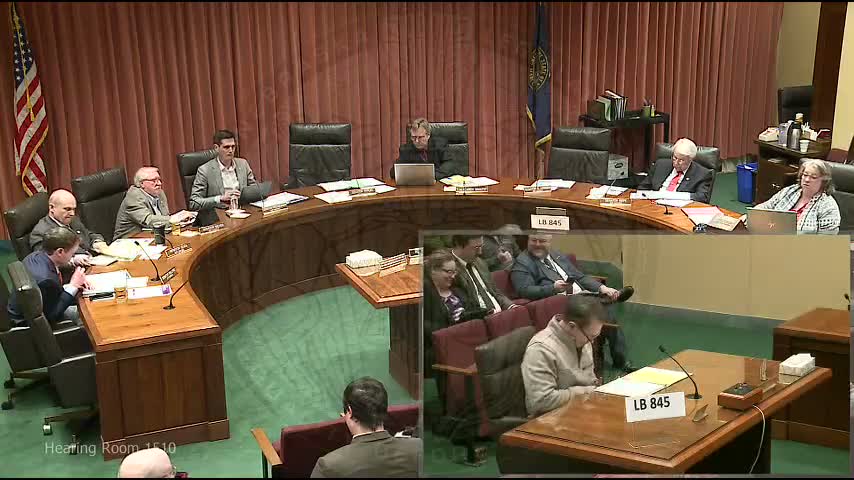
A committee bill, LB845, would consolidate two advisory bodies — the Alzheimer’s disease and other dementia advisory council and the Medicaid and long‑term care advisory committee on aging — into a single Aging, Alzheimer and Dementia Advisory Council, rename a state mental‑health advisory committee to reflect substance‑use responsibilities, and eliminate an Alternative Response (AR) advisory committee.
DHHS and stakeholder proponents, including Tony Green (DHHS Division of Developmental Disabilities), Randy Jones (Nebraska Area Agencies on Aging), Tracy Lichty (chair of the Alzheimer’s advisory council), and AARP Nebraska, said consolidation will reduce duplication, improve data collection, and better align advisory work. Testimony proposed increasing membership from 15 to 17 to ensure broad representation.
Opponents focused tightly on section 1 of the bill, which would remove the AR advisory committee. Chloe Fowler of the Nebraska Children’s Commission said removing AR oversight would “remove the only standing body charged by statute with ongoing policy level review of alternative response practices,” noting that AR cases are not subject to routine court oversight and that the AR committee is codified in Nebraska Revised Statutes (cited in testimony). Monica Gross of the Foster Care Review Office and Corrie Kielty of CASA echoed those concerns and presented data showing more than one in five children served by the Division of Children and Family Services are in AR cases. Gross urged the committee to delete section 1 or strengthen AR oversight rather than eliminate it.
Jennifer Carter, the inspector general of child welfare, testified neutrally that the OIG investigates deaths and serious injuries in AR cases and can request data but does not routinely receive automatic AR program data for systemic monitoring; she said resource limits constrain routine OIG monitoring. Sponsors said they are open to additional discussions and amendments to address oversight concerns and noted they would consider expanding membership and clarifying statutory language.
No formal votes were taken during the hearing. The committee recorded online comments and indicated staff and the sponsor would engage with stakeholders on possible amendments, including preserving oversight mechanisms for AR.
DHHS and stakeholder proponents, including Tony Green (DHHS Division of Developmental Disabilities), Randy Jones (Nebraska Area Agencies on Aging), Tracy Lichty (chair of the Alzheimer’s advisory council), and AARP Nebraska, said consolidation will reduce duplication, improve data collection, and better align advisory work. Testimony proposed increasing membership from 15 to 17 to ensure broad representation.
Opponents focused tightly on section 1 of the bill, which would remove the AR advisory committee. Chloe Fowler of the Nebraska Children’s Commission said removing AR oversight would “remove the only standing body charged by statute with ongoing policy level review of alternative response practices,” noting that AR cases are not subject to routine court oversight and that the AR committee is codified in Nebraska Revised Statutes (cited in testimony). Monica Gross of the Foster Care Review Office and Corrie Kielty of CASA echoed those concerns and presented data showing more than one in five children served by the Division of Children and Family Services are in AR cases. Gross urged the committee to delete section 1 or strengthen AR oversight rather than eliminate it.
Jennifer Carter, the inspector general of child welfare, testified neutrally that the OIG investigates deaths and serious injuries in AR cases and can request data but does not routinely receive automatic AR program data for systemic monitoring; she said resource limits constrain routine OIG monitoring. Sponsors said they are open to additional discussions and amendments to address oversight concerns and noted they would consider expanding membership and clarifying statutory language.
No formal votes were taken during the hearing. The committee recorded online comments and indicated staff and the sponsor would engage with stakeholders on possible amendments, including preserving oversight mechanisms for AR.
View the Full Meeting & All Its Details
This article offers just a summary. Unlock complete video, transcripts, and insights as a Founder Member.
✓
Watch full, unedited meeting videos
✓
Search every word spoken in unlimited transcripts
✓
AI summaries & real-time alerts (all government levels)
✓
Permanent access to expanding government content
30-day money-back guarantee
