Grass Valley pilot proposed: a peace officer who is a licensed clinical social worker to connect people to services
January 30, 2026 | Nevada County, California
This article was created by AI summarizing key points discussed. AI makes mistakes, so for full details and context, please refer to the video of the full meeting. Please report any errors so we can fix them. Report an error »
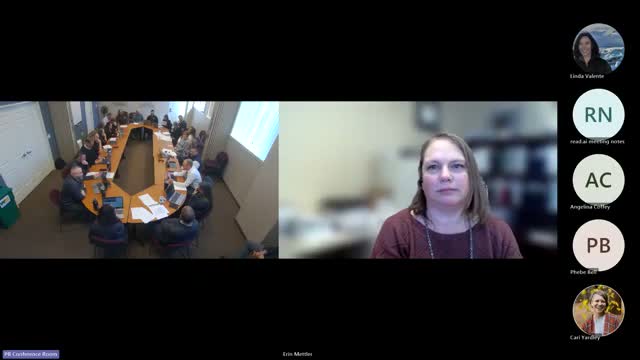
Paul Litchfield presented a proposal to fund a specialty assignment: a peace officer who is also a licensed clinical social worker (LCSW) to perform case management, outreach and pre-arrest diversion in Grass Valley. Litchfield described the role as intended to reach people ‘‘as far upstream as possible’’ and said the pilot could run one to three years while the county measures outcomes and explores sustainable funding.
The proposal and rationale: the presenter framed the role as a way to reduce recurring low-level arrests and repeated brief bookings by connecting individuals to housing, treatment and employment services before criminal justice involvement escalates. "This person would be a licensed clinical social worker who's also an officer and would take on ... case management, outreach, pre-arrest diversion," the presenter said.
Member concerns and clarifications: committee members asked whether the proposed role duplicates the county’s mobile crisis teams, whether the position could bill under CalAIM or other mechanisms, and how HIPAA and CJIS rules would affect sharing case information. One member cautioned that a Grass Valley-limited pilot may be geographically isolated and questioned whether the investment would produce countywide benefits given Nevada County’s large rural area.
Operational issues raised included the candidate-dependence of the model (several members asked whether the program would be viable if the individual in the role left), whether the county wants to become a billing entity, and how referrals and releases of information (ROIs) would be handled among law enforcement and behavioral-health partners.
Why it matters: proponents said the model targets a subpopulation that generates high calls for service but often falls through service gaps, and that success might justify city or county continuation or allow pursuit of billing pathways. Opponents and cautious members said the program needs stronger connectivity to behavioral-health billing and data systems and clearer ROIs before CCP funding is committed.
Next steps: committee members asked staff to refine the proposal, address data-sharing and billing mechanisms, and return with clearer operational details and cost/benefit measures at the next workshop or meeting.
The proposal and rationale: the presenter framed the role as a way to reduce recurring low-level arrests and repeated brief bookings by connecting individuals to housing, treatment and employment services before criminal justice involvement escalates. "This person would be a licensed clinical social worker who's also an officer and would take on ... case management, outreach, pre-arrest diversion," the presenter said.
Member concerns and clarifications: committee members asked whether the proposed role duplicates the county’s mobile crisis teams, whether the position could bill under CalAIM or other mechanisms, and how HIPAA and CJIS rules would affect sharing case information. One member cautioned that a Grass Valley-limited pilot may be geographically isolated and questioned whether the investment would produce countywide benefits given Nevada County’s large rural area.
Operational issues raised included the candidate-dependence of the model (several members asked whether the program would be viable if the individual in the role left), whether the county wants to become a billing entity, and how referrals and releases of information (ROIs) would be handled among law enforcement and behavioral-health partners.
Why it matters: proponents said the model targets a subpopulation that generates high calls for service but often falls through service gaps, and that success might justify city or county continuation or allow pursuit of billing pathways. Opponents and cautious members said the program needs stronger connectivity to behavioral-health billing and data systems and clearer ROIs before CCP funding is committed.
Next steps: committee members asked staff to refine the proposal, address data-sharing and billing mechanisms, and return with clearer operational details and cost/benefit measures at the next workshop or meeting.
Don't Miss a Word: See the Full Meeting!
Go beyond summaries. Unlock every video, transcript, and key insight with a Founder Membership.
✓
Get instant access to full meeting videos
✓
Search and clip any phrase from complete transcripts
✓
Receive AI-powered summaries & custom alerts
✓
Enjoy lifetime, unrestricted access to government data
30-day money-back guarantee
