Trump says he asked Putin to pause strikes on Kyiv for a week; Ukrainian officials and analysts report confusion
This article was created by AI summarizing key points discussed. AI makes mistakes, so for full details and context, please refer to the video of the full meeting. Please report any errors so we can fix them. Report an error »
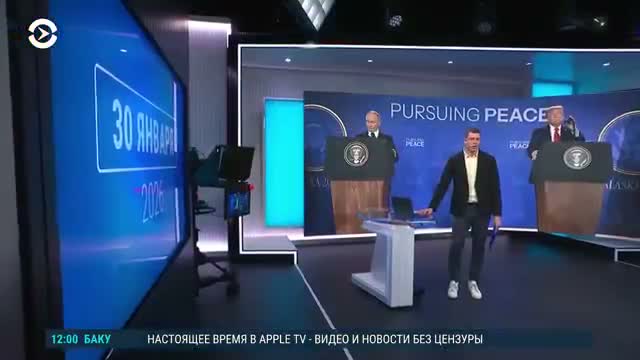
U.S. President Donald Trump said he personally asked Russian President Vladimir Putin to refrain from striking Kyiv and other Ukrainian cities for a week, and he told reporters that Putin agreed.
The claim, read and discussed on the January 30 edition of the program Utro on Nastoyaschee Vremya, has not been confirmed by either Moscow or Kyiv. The show cited a Financial Times reporter saying Ukrainian officials learned of the reported pause only from Trump’s public remarks. Hours after the statement, a strike hit a residential area of Zaporizhzhia, regional officials reported.
Why it matters: If true, a bilateral pause would immediately affect civilians in affected cities during a severe cold snap—but a lack of formal agreement between Moscow and Kyiv would limit any humanitarian protections and leave residents exposed if strikes resume.
Trump’s statement, quoted on-air, said: “I personally asked President Putin not to fire on Kyiv and various cities for a week, and he agreed.” The program noted that some U.S. advisers had discouraged the call but that, according to the broadcast, Trump “did it and we are very glad they did.”
The Kremlin did not publicly confirm any truce. Press secretary Dmitry Peskov told Russian media he could not comment for now on reports of an "energy truce," according to the program. The show also cited remarks by Volodymyr Zelensky thanking Trump for "allowing, for the time of winter cold, to provide security to Kyiv and other cities." The broadcast did not provide evidence of a written or jointly agreed cease-fire.
Vladimir Fisenko, a Ukrainian political scientist and head of the Center for Applied Political Studies Penta, told the program that there was no formal cease-fire between Russia and Ukraine and characterized the reported pause as "an informal, temporary arrangement" between Trump and Putin. "If you speak of a truce, that is not a truce agreed by the two sides," Fisenko said, arguing the move amounted to a tactical gesture directed at Trump rather than a durable humanitarian agreement.
The program reported that, despite the statement, Russian forces struck a residential neighborhood in Zaporizhzhia hours later; regional head Ivan Fedorov posted video and said windows were blown out, there were injuries and fires. The broadcast also cited reports of missile and drone activity elsewhere overnight.
What remains unclear: the program said there were no details about when any pause would begin or end, which targets—if any—were to be exempt, or whether any reciprocal commitments were made. It quoted analysts and local officials who warned that such informal arrangements are fragile and that past, nonbinding pauses have quickly broken down.
Next steps: The program noted Kyiv had not received formal confirmation from Moscow and that Ukrainian officials remained skeptical. The lack of a formal, verifiable agreement means international monitors and humanitarian agencies do not have an enforceable framework to protect civilians should strikes resume.
The claim, read and discussed on the January 30 edition of the program Utro on Nastoyaschee Vremya, has not been confirmed by either Moscow or Kyiv. The show cited a Financial Times reporter saying Ukrainian officials learned of the reported pause only from Trump’s public remarks. Hours after the statement, a strike hit a residential area of Zaporizhzhia, regional officials reported.
Why it matters: If true, a bilateral pause would immediately affect civilians in affected cities during a severe cold snap—but a lack of formal agreement between Moscow and Kyiv would limit any humanitarian protections and leave residents exposed if strikes resume.
Trump’s statement, quoted on-air, said: “I personally asked President Putin not to fire on Kyiv and various cities for a week, and he agreed.” The program noted that some U.S. advisers had discouraged the call but that, according to the broadcast, Trump “did it and we are very glad they did.”
The Kremlin did not publicly confirm any truce. Press secretary Dmitry Peskov told Russian media he could not comment for now on reports of an "energy truce," according to the program. The show also cited remarks by Volodymyr Zelensky thanking Trump for "allowing, for the time of winter cold, to provide security to Kyiv and other cities." The broadcast did not provide evidence of a written or jointly agreed cease-fire.
Vladimir Fisenko, a Ukrainian political scientist and head of the Center for Applied Political Studies Penta, told the program that there was no formal cease-fire between Russia and Ukraine and characterized the reported pause as "an informal, temporary arrangement" between Trump and Putin. "If you speak of a truce, that is not a truce agreed by the two sides," Fisenko said, arguing the move amounted to a tactical gesture directed at Trump rather than a durable humanitarian agreement.
The program reported that, despite the statement, Russian forces struck a residential neighborhood in Zaporizhzhia hours later; regional head Ivan Fedorov posted video and said windows were blown out, there were injuries and fires. The broadcast also cited reports of missile and drone activity elsewhere overnight.
What remains unclear: the program said there were no details about when any pause would begin or end, which targets—if any—were to be exempt, or whether any reciprocal commitments were made. It quoted analysts and local officials who warned that such informal arrangements are fragile and that past, nonbinding pauses have quickly broken down.
Next steps: The program noted Kyiv had not received formal confirmation from Moscow and that Ukrainian officials remained skeptical. The lack of a formal, verifiable agreement means international monitors and humanitarian agencies do not have an enforceable framework to protect civilians should strikes resume.
Don't Miss a Word: See the Full Meeting!
Go beyond summaries. Unlock every video, transcript, and key insight with a Founder Membership.
✓
Get instant access to full meeting videos
✓
Search and clip any phrase from complete transcripts
✓
Receive AI-powered summaries & custom alerts
✓
Enjoy lifetime, unrestricted access to government data
30-day money-back guarantee
